Drones Detect More Sharks at US Beaches: Safety Boost?
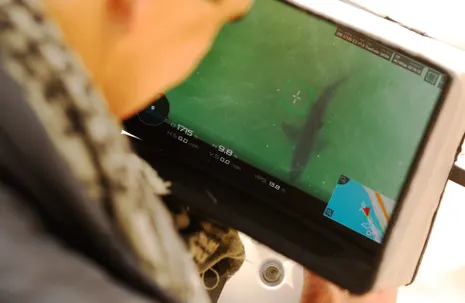
Drones are detecting more sharks at US beaches, raising questions about whether this technology truly enhances public safety. While coastal states invest heavily in aerial monitoring, marine experts suggest these flying machines provide only modest protection for beachgoers. Contrary to popular belief, scientific data shows shark encounters near shorelines have not actually increased recently. What has changed is our ability to see them—largely because we deploy more surveillance equipment to scan the waters above.
The Perception Problem
Marine biologists warn that this technological expansion might create an illusion of danger. As more aerial units hover overhead searching for finned predators, the sheer volume of sightings naturally climbs. This phenomenon could trigger unnecessary panic among local authorities and vacationers alike, particularly given how uncommon shark attacks truly remain. Greg Skomal, a senior fisheries scientist with Massachusetts’ marine division, captured this dynamic perfectly.
“The truth of the matter is, the number of sharks may not have increased, but certainly the fear factor can go up.”
This creates what researchers call a feedback loop: governments notice more reported sightings, respond by buying additional aircraft, which then detect even more sharks, reinforcing the perception that danger is growing. The statistics tell a different story entirely. According to the Woods Hole Oceanographic Institution, your chances of being bitten by a shark stand at approximately one in 4.3 million. Furthermore, the Florida Museum of Natural History documented just 65 unprovoked shark bites globally in 2025—a figure notably lower than the ten-year average of 72 incidents.
New York’s Growing Investment
Despite these reassuring numbers, New York continues allocating substantial funds toward shark monitoring infrastructure. Governor Kathy Hochul first announced plans in 2022 to boost lifeguard coverage by twenty-five percent through overtime pay while simultaneously acquiring new aerial units. By the following year’s Shark Awareness Day, she revealed a million-dollar commitment dedicated to purchasing equipment and training personnel. That initial wave brought sixty drones into service across state waters.
“We’re going to be harnessing the power of technology [and] the human capital of our lifeguards and making sure we’re doing everything we can to literally take the bite out of any future shark encounters,” Hochul stated during a 2023 announcement.
Most recently, the state allocated $322,000 for sixteen additional units according to the office of parks, recreation and historic preservation. Officials have not clarified whether this represents supplementary spending beyond the original million-dollar pledge or falls within that same budget envelope. Meanwhile, Australia’s New South Wales government unveiled a thirty-four-million-dollar program to broaden its own monitoring network.
Limitations of Aerial Surveillance
Chris Lowe, who directs the Shark Lab at California State University, Long Beach, acknowledges several advantages to drone technology. These devices excel at identifying surface-level sharks, operate cost-effectively, require minimal training, and cover extensive ocean areas quickly. However, they face significant environmental constraints.
“The problem is, if visibility is bad, a shark can literally be 5ft (1.5 meters) below the surface, and you can’t see them,” Lowe explained.
To compensate for these blind spots, his laboratory employs complementary methods including acoustic receivers positioned along shorelines and satellite tagging programs. When a tagged animal approaches within three hundred to four hundred yards of one of these underwater sensors, the device records precise timestamps, dates, and identification codes. This data flows directly to local emergency management teams.
“We always tell lifeguards, this is not an early warning system, this is a science tool,” Lowe clarified.
He cautioned that while basic surveillance followed by beach evacuations remains feasible, such approaches might prove excessive and carry unintended economic repercussions if visitors choose alternative destinations due to heightened alert levels. Importantly, his research team has conducted thousands of flight operations without capturing a single instance of aggressive shark behavior directed toward humans.
Local Perspectives
Communities like Wellfleet, Massachusetts, have experienced their own shifts in shark presence. A growing seal population has attracted greater numbers of great white sharks to these waters. Following a fatal attack in 2018, the municipality installed detection receivers and acquired aerial monitoring equipment to better track predator movements. Local officials emphasize that technology should complement—not replace—traditional lifeguard vigilance and community awareness programs.