Snow and Ice on Swiss Glaciers Melting at Alarming Rate Amid Heatwave, Expert Says
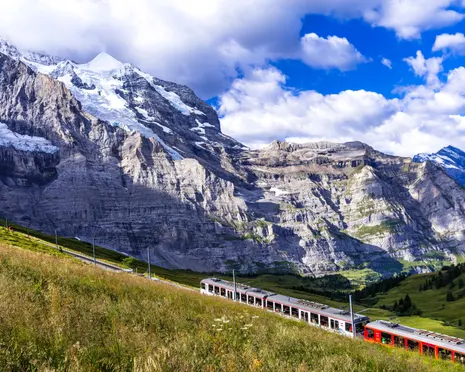
Snow and ice on Swiss glaciers – Swiss glaciers are facing an unprecedented decline in ice coverage, accelerated by a prolonged heatwave sweeping across Europe, according to Matthias Huss, head of Glacier Monitoring in Switzerland (Glamos). The melting process, which has already pushed the critical threshold of glacier loss day to its second-earliest recorded date, threatens to reshape the region’s icy landscapes within weeks. This dramatic shift underscores the escalating impact of climate change on Alpine ecosystems, as the current conditions mirror those of 2022, a year marked by extreme melt rates. With the melting of winter snowfall now complete, the consequences of this early onset are expected to ripple through the Swiss Alps well into the fall.
Glacier loss day, a term used to describe the point at which summer melt exceeds winter accumulation, has arrived three months earlier than usual this year. According to Huss, the rate of ice loss has surged dramatically, with visible effects across multiple mountain ranges. “We’re witnessing massive ablation, with both ice and snow melting at extraordinary speeds,” he said in a statement to AFP on Friday. “This is a clear sign that the glaciers are in a severely compromised state.” Data from Swiss weather stations, which recorded temperatures exceeding historical averages, supports this assessment. The combined effects of the recent heatwave and an unusually warm May have created a perfect storm for accelerated melting, leaving the glaciers vulnerable to further shrinkage as the summer progresses.
The record-early arrival of glacier loss day is not an isolated incident but a symptom of broader climate trends. Since the 19th century, glaciers in the Swiss Alps have been retreating, though the pace has intensified in recent decades. This century, the critical threshold has typically been reached in mid-August, yet this year’s timeline has shattered that norm. The situation is exacerbated by a series of consecutive high-temperature days, which have drained the snowpack and left the glaciers exposed. “The more days with extreme heat, regardless of the specific temperature, the worse it becomes for the glaciers,” Huss emphasized, highlighting the cumulative damage inflicted by prolonged periods of warmth.
Glaciers in the Swiss Alps are vital sources of freshwater, feeding major rivers like the Rhine and Rhone. These rivers sustain agriculture, hydropower, and biodiversity across Europe. Huss noted that during his recent visit to the Rhone Glacier, he observed a staggering loss of ice. “In just 10 days, there was a metre of ice melted vertically,” he explained. “This is just the result of the heatwave’s relentless impact.” The melting is not only a concern for Switzerland but also for downstream regions reliant on glacial water supplies. With glaciers shrinking at a staggering rate, experts warn of long-term consequences for water availability and ecological stability.
Environmental scientists attribute the current crisis to a combination of factors, including insufficient snowfall and the presence of Saharan dust in March. This dust, carried by wind currents, acts as a catalyst for melting by darkening glacier surfaces and increasing heat absorption. “The glaciers are suffering from a perfect storm of bad conditions,” Huss said. “Less snowfall and the Saharan dust have compounded the effects of the heatwave.” The 2026 melting season has already seen 25% less snow replenishment compared to the 2010-2020 average, further weakening the glaciers’ resilience. This depletion is part of a larger pattern of decline, with the volume of Swiss glaciers shrinking by 38% since 2000.
Historically, the Swiss Alps have experienced gradual glacier retreat, but the 21st century has marked a sharp acceleration in this process. Over the past 50 years, Switzerland has lost 1,200 glaciers, leaving only 1,300 remaining. These remaining glaciers are critical to the region’s environment, though even their survival is uncertain. “If warming continues as it has over the last decades, we may be left with only remnants of ice by 2100,” Huss warned. The loss of small glaciers, which once contributed to regional hydrology, has already begun to affect local ecosystems and water resources.
Experts stress that the current situation is a direct result of climate change, with global warming pushing glaciers into a precarious state. The heatwave, which has gripped Europe for several weeks, is part of a trend of increasingly frequent and intense weather events linked to rising temperatures. Huss highlighted that the melt rates observed this year are comparable to those in 2022, a year that set a new benchmark for glacier loss in the Alps. “It’s surprising how similar this year is to 2022,” he said. “We’ve seen melt rates that broke everything we previously thought possible.” The comparison underscores the severity of the crisis, as both years were marked by extreme conditions that outpaced historical norms.
While the immediate effects of the heatwave are striking, the long-term implications are even more concerning. The Swiss glaciers have become a bellwether for climate change, with their rapid decline serving as a warning for other mountainous regions worldwide. “The situation is alarming, but it’s also a clear indicator of what’s to come,” Huss stated. He urged greater attention to the issue, emphasizing the need for immediate action to mitigate further damage. “This isn’t just a local problem; it’s a global one.”
The early arrival of glacier loss day has sparked discussions about the future of Alpine ice. Scientists warn that without significant intervention, the region’s glaciers could disappear entirely within a century. The melting of these ancient ice formations not only affects freshwater availability but also contributes to rising sea levels and altered weather patterns. “The glaciers are part of a larger climate system, and their decline is a symptom of deeper environmental changes,” said one researcher, underscoring the interconnected nature of global climate challenges.
As the summer progresses, the focus will shift to how much additional ice will be lost before the end of the season. Glamos estimates that the current melt rate could lead to a further reduction in glacier size, with the impact felt for decades. “The more time we have, the more damage we do,” Huss said. “We’re already seeing the effects of this early melting, and it’s only going to get worse.” The data from the past two years suggests that the Alps are on the brink of a new era in glacial history, one defined by rapid loss and ecological uncertainty. The Swiss glaciers, once a symbol of natural resilience, now stand as a stark reminder of the urgency to address climate change.