German Swimming Lake Faces Criticism Over Language-Based Entry Ban
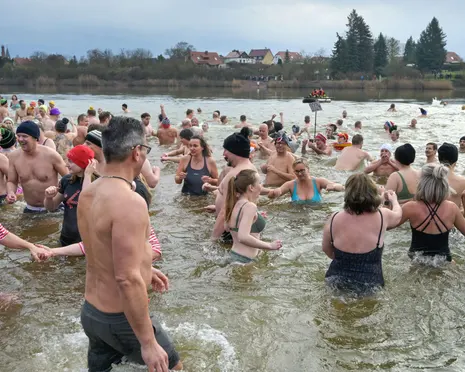
German swimming lake criticised for ban – Residents of Halle, a city in eastern Germany, are expressing concern after a local public swimming lake, Heidesee, implemented a rule requiring bathers to speak German to gain access. The policy, which has sparked debate about discrimination and public access, could lead to legal challenges if not revised. The lake, located in a former open-cast mine that was flooded to create a recreational space, recently introduced a screening process at its entrance to ensure visitors understood safety instructions in German. This decision has drawn accusations of creating a language barrier that targets specific population groups, raising questions about its fairness and necessity.
The Manager’s Justification
Mathias Nobel, the manager of the Heidesee lido, defended the measure, stating that it was necessary to enforce safety protocols. He cited incidents in which non-German speakers had disregarded rules, such as not wearing life jackets or failing to heed warnings from lifeguards. “I’m responsible for the bathing here. If anything happened, everyone would point the finger at me,” Nobel explained to local media. His argument hinges on the idea that clear communication is critical in a setting where the water is deeper than in standard pools and the shoreline is steeply sloping, making language barriers a potential risk to safety.
“You can’t reverse death,” Nobel added, emphasizing that the ban was a practical response to real concerns. “If visitors don’t understand the German safety instructions, they might not recognize dangers in time.”
Authorities and Critics React
Halle’s city officials have called the rule “unproportional,” arguing that it undermines the public nature of the lido. They urged Nobel to adopt alternatives like pictograms or multilingual signage to address communication challenges without excluding non-German speakers. “The operator has to take into account the necessity of guaranteeing public access to the lido,” a spokesperson stated. “The public character of the facility cannot be undermined by rules that act as a barrier for entire population groups.”
The national anti-discrimination agency has also weighed in, suggesting that the policy might be perceived as xenophobic. A representative noted: “Imagine how much of a fuss there would be if German-speaking tourists in Mallorca had to prove their Spanish or Catalan fluency before entering a pool?” This comparison highlights the growing sensitivity around language requirements in public spaces, with critics accusing the Heidesee lido of using a safety measure to justify exclusion.
Political Backing and Rhetoric
The controversy has gained traction in the political arena, particularly with the far-right Alternative für Deutschland (AfD) party seizing the issue as a campaign tool. AfD, which leads the polls in Saxony-Anhalt with around 42% support, has linked the language rule to broader concerns about immigration. In a Facebook post, the party claimed that “public swimming pools, once safe havens of recreation, are increasingly becoming danger zones under the misguided policies of the established parties.” They published a poster with the slogan: “Those who don’t understand German, stay out,” a phrase that has become emblematic of their anti-immigrant stance.
Historically, AfD has used swimming pools in its propaganda, including a controversial children’s coloring book that featured racist stereotypes. One image showed women in full-body veils swimming while men with knives and pistols stood nearby, symbolizing the party’s perception of cultural and ethnic threats. This imagery has resonated with its supporters, who view the Heidesee policy as a reflection of their vision for public spaces. The party’s focus on language requirements has been framed as a way to “protect” German culture and ensure safety in a setting they argue is vulnerable to misinterpretation.
Broader Implications for Germany
Heidesee’s rule is part of a larger trend in Germany, where swimming pools and public facilities have become flashpoints for racial tensions and debates over immigration. In recent years, the DLRG, Germany’s life-saving association, has distanced itself from the ban, stressing that the measure was not inherently racist. However, the organization has acknowledged the potential for such policies to be misused, especially in contexts where language skills are tied to cultural identity.
Analysts note that the issue reflects a growing divide in society, with some groups advocating for stricter language requirements as a symbol of national integration. Others see it as a step toward xenophobia, arguing that the policy could alienate non-German speakers who are otherwise law-abiding visitors. The timing of the debate is also significant, as Saxony-Anhalt prepares for a September election where AfD’s influence is expected to shape public opinion. The party’s ability to co-opt local policies for its political agenda underscores the role of such controversies in amplifying its message.
Community Response and Legal Concerns
While some residents support the ban, citing safety as a primary concern, others have condemned it as discriminatory. A local activist described the policy as a “silent form of exclusion,” noting that it disproportionately affects non-native German speakers, including children and elderly visitors. The city’s legal counsel has raised questions about the policy’s constitutionality, particularly under Germany’s laws on equal treatment and freedom of access to public facilities.
Nobel has maintained that his decision was not racially motivated. He emphasized that the lake’s unique environment—its depth and unpredictable currents—requires clear understanding of safety instructions. “It’s not about language itself, but about ensuring everyone is prepared for the risks involved,” he said. However, critics argue that the policy’s implementation could be seen as a way to enforce cultural norms, especially in a city where AfD has been gaining momentum.
The Road Ahead
As the debate continues, the city of Halle is pushing for a compromise, urging the lido to adopt more inclusive measures. Options under consideration include visual aids like pictograms, translated safety messages, and audio announcements in multiple languages. These solutions aim to address the communication challenges without imposing a language barrier. Yet, the question remains whether such measures can fully eliminate the perception of exclusion.
Meanwhile, the broader implications of the policy are being scrutinized. In Germany, as in the United States and other Western nations, public facilities have increasingly become arenas for cultural and political discourse. The Heidesee case exemplifies how a seemingly practical rule can be leveraged to fuel broader narratives about immigration and national identity. With Halle’s election looming, the issue may soon become a battleground for competing visions of integration and tradition.
For now, the city is waiting to see whether the ban will be upheld or revised. “We need to ensure the lido remains a place for all,” the city spokesperson reiterated. “It’s not just about safety—it’s about inclusivity.” The outcome could set a precedent for how language requirements are handled in public spaces, shaping the future of cultural dialogue in Germany.