Nearly Half of UK Girls Saw Harmful Social Media Content in a Week, Study Reveals
Research Highlights Persistent Risks for Teenagers Despite New Safeguards
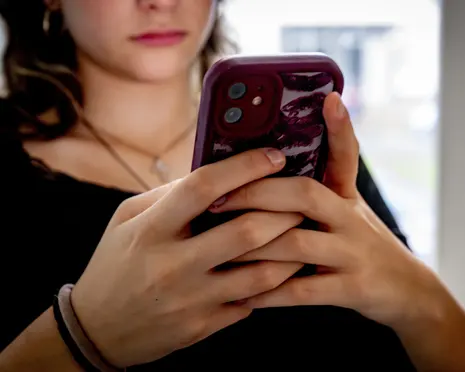
Wanderstayfinder.com – A recent study has uncovered that over 40% of adolescent girls in the UK encountered content linked to self-harm, suicide, and eating disorders within a single week. This finding, published by the Molly Rose Foundation (MRF), underscores the continued prevalence of harmful online material, even in the wake of updated safety regulations. The research, which surveyed 1,825 children aged 13 to 17 in April 2026, also noted that a third of all teenagers—approximately 34%—were exposed to similar content during the same timeframe.
Historical Context and the Role of the Foundation
The Molly Rose Foundation, established in honor of 14-year-old Molly Russell, whose life was tragically affected by online content, has long been advocating for stronger measures to protect young users. Russell’s story, which gained national attention after her 2017 passing, became a catalyst for the foundation’s mission. The latest research builds on this legacy, emphasizing that despite recent policy changes, children remain vulnerable to “a tsunami of harmful content.” The study’s authors argue that the current measures are insufficient to mitigate the risks posed by the vast amount of damaging material available on social platforms.
Survey Methodology and Key Findings
The research was conducted by MEL Research in collaboration with the PSHE Association, focusing on the experiences of UK adolescents. Participants were asked to report the frequency of exposure to specific types of content, including suicide, self-harm, and eating disorder material. The results indicate that while the proportion of girls exposed to such content has remained stable, a significant number of teenagers—particularly those in lower wellbeing categories—continue to face heightened risks. The survey found that 57% of children with poor mental health and 40% of those with special educational needs were more likely to encounter harmful content.
New Safety Measures and Their Impact
Last summer, the UK government introduced new online safety regulations aimed at reducing exposure to harmful content for young users. These rules include mandatory age checks to block access to pornography and other risky material for children under a certain age. Additionally, social media platforms are now required to adjust their algorithms to minimize the spread of content related to self-harm, eating disorders, and depression. However, the study suggests that these changes have only slightly reduced the prevalence of such material, with 34% of teenagers still viewing it weekly compared to 37% before the measures were enacted.
Consequences for Non-Compliance
The new legislation includes strict penalties for platforms that fail to meet safety standards. Companies that violate the rules could face fines of up to £18 million or 10% of their global revenue, whichever is higher. In severe cases, court orders might be issued to restrict access to harmful content within the UK. These measures are intended to hold platforms accountable and ensure they actively monitor and curtail the distribution of damaging material.
Political Response and Future Plans
Prime Minister Keir Starmer is set to propose a ban on under-16s accessing harmful social media sites, following a government consultation that received over 116,000 responses. This consultation, the second-largest in history, has sparked debate on the best approach to safeguard young users. While Starmer’s plan focuses on outright restrictions, critics argue that a blanket ban may not be effective in the long term. Ian Russell, Molly’s father, has voiced concerns about the “weak implementation” of the Online Safety Act, stating that it has allowed preventable harm to persist.
Scottish Government’s Advocacy for Stronger Action
The Scottish government has joined the call for more robust protections, urging the UK to take immediate steps to address online harm. Children’s minister Siobhian Brown is scheduled to meet with the UK’s AI and online safety minister, Kanishka Narayan, to discuss potential solutions. Brown emphasized the need for the UK government to leverage its regulatory powers, including banning social media use for children and utilizing Ofcom’s authority to enforce accountability. “We’ve been consistently pushing the UK government to act,” she said, highlighting the urgency of the issue.
Public Opinion on Online Safety
A separate survey by the Institute for Public Policy Research (IPPR), involving over 2,000 adults, revealed mixed views on who should regulate social media platforms. The poll, conducted by YouGov, found that 51% of respondents trusted parents to choose suitable platforms for their children, while 49% supported an independent regulatory body. Only 16% placed confidence in technology companies, and 15% in government ministers. When it came to specific policies, 44% of participants backed a ban on under-16s using social media, compared to 39% who favored stricter regulation.
Long-Term Strategies for Addressing Harmful Content
In addition to immediate restrictions, Brown has proposed the introduction of a social media levy. This would involve charging platforms a fee that could be redirected toward mental health programs for young people. She framed the issue as a public health concern, noting that harmful content and excessive online use can lead to a range of negative outcomes. “There is a spectrum of harm caused by exposure to hateful material and unhealthy platform engagement,” she explained, underscoring the need for a multifaceted approach.
Quotes from Key Figures
Ian Russell, Molly Russell’s father, expressed his frustration with the current state of online safety. “It is shocking but sadly unsurprising that millions of teens continue to be shown appalling suicide, self-harm, and depression content,” he said in a statement. “We’ve repeatedly warned that weak implementation of the Online Safety Act would leave preventable harm unchecked, and regrettably, this research endorses those warnings.” He criticized the proposed ban as a “politically expedient” solution, arguing that it would quickly fail without addressing the underlying risks posed by social media algorithms.
Government Commitment to Change
A Downing Street spokesperson reiterated the government’s dedication to improving online safety. “We have undertaken a thorough consultation and will set out next steps in due course,” they stated. “The prime minister has been clear that the status quo is not good enough, and we need to do more to protect children.” The spokesperson stressed that the measures are driven by a genuine concern for youth welfare, not political convenience.
Broader Implications for Digital Health
The findings highlight the urgent need for ongoing vigilance in monitoring the impact of social media on mental health. While the new regulations are a step forward, they may not be enough to fully address the problem. Experts suggest that a combination of stricter policies, public education, and algorithmic reforms is necessary to create a safer online environment. As the debate continues, the focus remains on balancing innovation with protection, ensuring that children can benefit from digital tools without being exposed to harmful influences.
Call to Action and Collaborative Efforts
With both the UK and Scottish governments actively involved, the pressure to implement effective solutions is mounting. The consultation’s results indicate strong public support for action, but translating this into policy requires careful consideration. As the discussion unfolds, the emphasis is on creating a framework that prioritizes the well-being of young users while holding platforms accountable for their role in shaping online experiences. The path forward involves collaboration between policymakers, educators, and technology companies to ensure that the digital world remains a safe space for the next generation.