Dutch Far-Right Party Faces AI Image Controversy
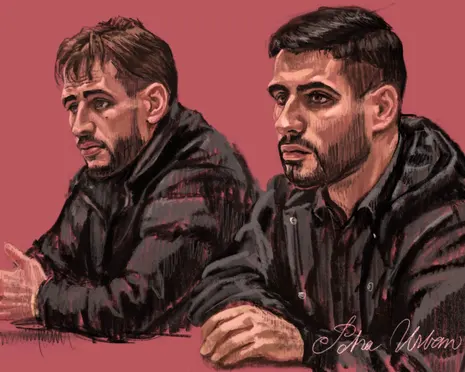
Wanderstayfinder.com – The Dutch far-right party pays damages following a dispute with a court artist over an AI-altered image. Petra Urban, a veteran court artist with 19 years of experience, was awarded compensation after an MP from the far-right Party for Freedom (PVV) modified one of her drawings without consent. The artwork originally depicted two Syrian brothers imprisoned for their sister’s murder, but Boon, the PVV’s regional representative in Noord-Brabant, used artificial intelligence to make the subjects appear more menacing, prompting a legal challenge.
AI Alteration Sparks Artist’s Concerns
Urban discovered the manipulated image after sharing it with fellow court reporters in May, sparking widespread debate. The original drawing, featured in a social media video, had been used to convey a neutral narrative, but Boon’s AI adjustments transformed its message. “I had three main issues,” she explained. “First, my work was used without permission. Second, it was tied to a political party, which undermines neutrality. Third, the AI’s role in distorting the image is deeply troubling.”
Her union launched a legal action to secure licensing rights and compensation, leading to the PVV MP’s public apology. However, the exact amount of damages remains undisclosed, highlighting ongoing concerns about how AI tools are being applied in political contexts. Urban’s case has set a precedent, emphasizing the need for creators to protect their integrity against digital alterations.
Legal Framework and Ethical Implications
Under Dutch law, creators retain moral rights to object to image distortions that harm their reputation. Even if AI-generated versions are technically original, the artist’s right to maintain the authenticity of her work remains valid. “This isn’t just a creative choice,” she added. “It’s a deliberate strategy to influence public perception.”
The incident has amplified discussions about AI’s role in shaping visual narratives. As the technology becomes more accessible, its potential to manipulate facts for political gain grows. Urban’s legal victory underscores the importance of transparency in media, particularly when AI is used to modify content. “If we can’t trust images, how can we trust the truth?” she questioned.
Political Messaging and Artist Neutrality
The PVV, led by Geert Wilders, is known for its anti-immigration stance and reliance on media to frame its message. Boon’s AI manipulation of Urban’s artwork aligns with the party’s tendency to portray migrants as threats. Yet, Urban stressed that her neutrality was compromised, regardless of political alignment. “Even if the PVV shared my values, this act still felt wrong,” she said.
The case reflects a broader trend of political actors leveraging AI to shape narratives. While Boon acknowledged his actions as “a very stupid act,” the incident raises questions about accountability in digital media. Urban’s union and legal team continue to advocate for stricter guidelines, ensuring artists’ work is not weaponized for political purposes.
Broader Impact on Media Trust
Urban’s experience has sparked conversations about the credibility of visual storytelling in the age of AI. “This could erode public trust if left unchecked,” she warned. The removal of the altered video from online platforms signals a step toward correcting the mistake, but the episode serves as a reminder of the challenges ahead. As AI tools become more sophisticated, the line between factual representation and political manipulation grows thinner.
While the compensation marks a symbolic victory, the case highlights the evolving landscape of media ethics. Urban’s union is now working with legal experts to draft policies that protect artists from unauthorized AI modifications. The Dutch far-right party pays a growing cost as its reliance on digital tools faces scrutiny, both legally and culturally.