Mourners Line Bangkok Streets for Thailand’s Princess Bha
Wanderstayfinder.com – As evening descended over the iconic spires and ornate rooftops of Bangkok’s Grand Palace, the city prepared to welcome a royal figure back into its heart. The day marked the final journey of Princess Bajrakitiyabha, who had spent nearly four years in a medical coma following her collapse during a routine dog-training session in December 2022. Her passing this week sent ripples through the nation, prompting a somber yet heartfelt procession through the city’s center, where traffic was halted and streets adorned with black-bordered banners.
A Royal Farewell in the Heart of the City
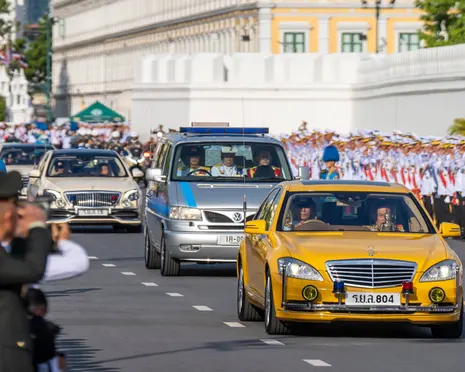
The funeral procession, a blend of sleek motorcycles and motorcade vehicles, moved slowly through the capital’s empty avenues. Citizens, draped in black, lined the route for miles, their presence a testament to the princess’s enduring legacy. Officials in crisp white suits and black armbands joined them, offering silent tributes as the silver van carrying her remains passed by. The crowd, seated on sidewalks, bowed their heads in reverence, their expressions a mix of grief and admiration. Many wept as the royal motorcade wound its way toward the palace, where her final rites were to be held.
Earlier that morning, the streets had already been alive with activity. Mourners gathered at the edges, clutching umbrellas and fans to shield themselves from the oppressive heat. Wanida Lainun, one of those present, wore a brooch featuring the princess’s likeness. She shared that her aunt was a key figure in the princess’s efforts to support underprivileged communities in Chiang Mai, Thailand’s northern region. “Her compassion extended beyond the palace walls,” Wanida said, her voice trembling as she spoke.
Legacy of Service and Empathy
Princess Bajrakitiyabha, affectionately known as Princess Bha, was not only a member of the royal family but also a legal professional and advocate for social causes. She had held several prestigious positions, including roles as an ambassador to Austria and a member of the royal security command. Yet, it was her tireless work with ordinary citizens that resonated most deeply with the public. Her campaigns for the rights of female prisoners and initiatives aimed at disaster relief had become central to her identity as a beloved figure.
“The work she’s done in Thailand has touched my heart,” said Anchalee, who requested her last name remain private. Anchalee, a long-time admirer of the princess, cited her involvement in the “Friends in Need (of ‘Pa’)” project, established under the Thai Red Cross Society. This initiative, launched in October 1995, focused on installing weather stations in high-risk zones to serve as early-warning systems. “Her team and she would rush to affected areas immediately,” Anchalee recalled. “They provided frontline support, helping people escape poverty after floods.”
“She wouldn’t remember me, but I will always remember her,” Anchalee said, reflecting on their first meeting as college students. The princess’s sudden illness had left the community in shock, with hopes lingering for a recovery that never came. “We all prayed she’d wake up,” Anchalee added. “We waited years, and even prayed for her to return to us.”
Princess Bha’s dedication to aiding those in need had been evident long before her hospitalization. During the 1995 floods that devastated Bangkok, she and her mother personally delivered meals and medical supplies to stranded residents. Local reports described the princess wading through flooded neighborhoods, her presence a beacon of hope during the crisis. Her efforts extended beyond immediate relief, as the Friends in Need project evolved into a lasting infrastructure for disaster preparedness.
Government Observances and Public Rituals
As the royal motorcade neared the palace, the prime minister, Anutin Charnvirakul, led the Thai cabinet in performing the traditional bathing ceremony. This Buddhist ritual involved pouring holy water over a ceremonial bowl placed before a portrait of the princess, symbolizing purification and transition to the afterlife. Officials, including cabinet members and military officers, wore their white suits with black armbands as they carried out the rites, their movements synchronized with the solemn atmosphere.
The government has yet to release full details of the funeral, but directives for the event have been issued. Flags across the nation will be flown at half-mast for 15 days, and all public officials are required to don black attire during the mourning period. In a gesture of solidarity, workers distributed free meals to those who had stayed out all day, their patience and devotion to the cause evident in the long lines of mourners.
Princess Bha’s life, though brief, had left an indelible mark on Thailand. Her legal background and royal responsibilities were complemented by a deep commitment to humanitarian efforts. From her early days as a lawyer to her later work in disaster response, she embodied the spirit of service that defined her. As the city processed her final journey, the people of Bangkok stood united, not just in grief, but in gratitude for a princess who had chosen to serve beyond the confines of the palace.