Jury deliberations begin in Lindsay Clancy murder trial after her attorney blames medical system

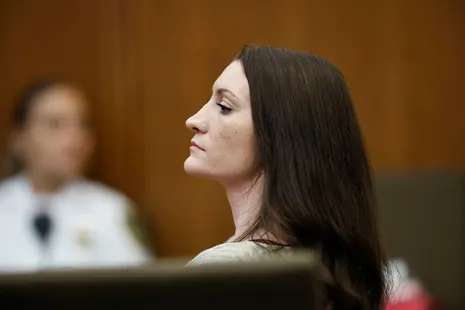
Table of Contents
Jury Weighs Fate of Former Nurse Accused of Killing Three Children
Wanderstayfinder.com – After five weeks of testimony, expert witnesses, and emotionally charged arguments, the jury in the Lindsay Clancy case has retired to deliberate. The question before them is stark: whether the 36-year-old former labor-and-delivery nurse bears criminal responsibility for strangling her three young children to death in January 2023, or whether a severe psychiatric episode rendered her incapable of forming intent.
The trial, widely described as “America’s saddest murder trial,” has done more than fill courtrooms in Plymouth County. It has reignited a national conversation about how postpartum mental illness is detected, treated, and — when it goes unrecognized — allowed to escalate into tragedy. Postpartum psychosis, the condition at the center of Clancy’s defense, is estimated to affect roughly two women for every 1,000 births. It is rare, sudden, and often devastating, yet it remains far less understood by the general public than postpartum depression.
The Defense Case: A Mind Unraveling
Kevin Reddington, Clancy’s defense attorney, opened closing arguments on Thursday by directing jurors’ attention to what happened immediately after the children died. Clancy cut her own wrists and neck, then leapt from the second story of her home. The fall left her paralyzed from the waist down.
“She made a very, very significant suicide effort,” Reddington told the jury, pushing back against what he characterized as the prosecution’s minimization of that act. “They were arguing that it was a fake suicide. Dinky little cuts. No bleeding … You know that’s not what happened.”
Reddington painted a picture of a woman already lost to despair before the killings. He held up a poster bearing several short messages Clancy had scrawled while battling her mental health, noting that the handwriting had deteriorated to near-illegibility.
“There’s nothing other than little chicken scratches because her mind was gone,” he said. “You have the medical records. You heard the testimony. You know her concerns. You know her fears.”
He pressed the jury to consider Clancy’s repeated attempts to obtain help: researching postpartum depression support online, calling a suicide hotline, visiting multiple providers, and voluntarily admitting herself to a psychiatric hospital.
“My God, what does she have to do? She was reaching out for help and she wasn’t getting it,” Reddington said.
Throughout the trial, Reddington had also argued that Clancy was overmedicated, suggesting that pharmaceutical interventions compounded rather than alleviated her condition.
“Does this sound like a young lady that didn’t care and wanted to score more drugs off somebody? That’s another repulsive allegation,” he told jurors.
The Prosecution Case: Planning and Concealment
Jennifer Sprague of the Plymouth County district attorney’s office took a sharply different view. She framed the trial not as a referendum on the mental-health system but as a question of criminal intent.
“This isn’t about the mental health system or how it treats women,” Sprague said. “That’s a distraction to get you angry and passionate about an important issue, but an issue that’s not on trial here.”
Sprague acknowledged Clancy’s documented struggles but emphasized the breadth of resources available to her.
“This wasn’t a woman suffering from a lack of care, a lack of resources … She had an abundance of health, an abundance of care. She had all of that and more.”
The prosecutor argued that Clancy, trained as a nurse, understood the proper course of treatment yet chose to manage her condition on her own terms.
“She wanted to get better, but she wanted to get better on her own terms … And as a nurse, she knew that’s not the right way to approach it.”
A central pillar of the state’s case was the allegation that in December 2022, Clancy concealed thoughts about harming her children from mental-health providers because she feared they would be taken from her. Sprague turned that concealment into evidence of awareness.
“That’s a rational thought,” Sprague said. “It also shows you that she knew it was a bad thought, a wrong thought.”
The Night of January 2023
Sprague walked the jury through the sequence of events on the night of the killings. Clancy sent her then-husband, Patrick Clancy, to a takeout restaurant. Prosecutors alleged she checked a map beforehand to calculate precisely how long the round trip would take, giving herself a fixed window of time.
“What she needed to know was how long specifically on that night it would take to get there … because she knew she would have a limited amount of time to do what she wanted to do. And what she had decided to do was to kill the children and then kill herself,” Sprague said.
The prosecutor added that Clancy asked Patrick to also stop at a nearby pharmacy for medication, interpreting the added errand as a way to extend her uninterrupted window.
“She’s adding to this errand and she has to make sure she’s not interrupted.”
Sprague closed by offering the state’s explanation for the motive behind the killings — not malice toward the children, but exhaustion and self-directed despair.
“She was depressed. She was exhausted. She was done. She didn’t want to try anymore. She felt damaged … But those kids, those kids were her protective factor. Those kids were keeping her from ending her misery.”
“She left them discarded on the basement floor like broken toys because she was done playing the game … You know to a moral certain.”
Why the Verdict Matters Beyond One Family
Whatever the jury decides, the trial has already shifted public discourse. Postpartum psychosis, though rare, carries a mortality rate for mother and infant that dwarfs most other obstetric complications. Advocacy groups have long argued that the condition is undertreated because it is misdiagnosed as ordinary postpartum depression or dismissed as transient mood disturbance. Clancy’s own history — multiple help-seeking attempts met, in her account, with inadequate response — has become a case study in how quickly a psychiatric crisis can outpace the care system designed to catch it.
The deliberation now underway will determine whether the law treats Clancy as a rational actor who planned a sequence of acts, or as a person whose capacity for rational choice had been obliterated by psychosis. Either answer carries weight. Either answer leaves three families in grief and a nation asking whether the safety net around new mothers is wide enough, fast enough, and compassionate enough to prevent the next tragedy.
Related Reading
Frequently Asked Questions
What is Jury deliberations begin in Lindsay Clancy?
Jury deliberations begin in Lindsay Clancy is the main topic of this guide. The article explains the context, practical details, and next steps readers should understand.
Why does Jury deliberations begin in Lindsay Clancy matter?
Jury deliberations begin in Lindsay Clancy matters because readers are looking for a useful answer, not just a short summary. Good content should match search intent and help them decide what to do next.