
The new Halloween video game has been banned in Australia – and not because of the violence

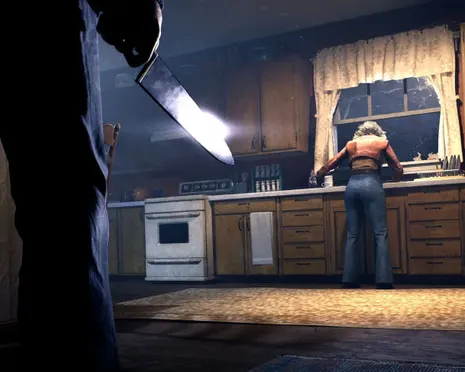
Table of Contents
A Horror Game Banned in Australia — Not for Its Killings, but for a Joint of Weed
Wanderstayfinder.com – Michael Myers has stalked cinema audiences since 1978, and his on-screen victims have endured some of the most graphic deaths in horror history. When US developer Illfonic set out to translate that dread into interactive form with Halloween: The Game, it leaned hard into the gore: players can crush an opponent’s skull through a toilet seat or send a rival’s head smashing through a television screen to liquefy the brain. Yet none of that brutality is what kept the title off Australian shelves. The country’s Classification Board has refused to classify the game, effectively banning its sale to Australian consumers — and the trigger was a single mechanic involving marijuana.
The Rule That Doomed the Title
In Halloween: The Game, players have the option to smoke a joint of cannabis, which temporarily reveals Michael Myers’ position on the map, letting them steer clear of the killer. That small convenience, however, tripped a specific clause in the Guidelines for the Classification of Computer Games 2023. Under those rules, a title is denied classification if it features “illicit or proscribed drug use related to incentives or rewards.”
The board’s written explanation left no ambiguity:
“Halloween: The Game contains illicit drug use that is linked to an incentive or reward, in that use of the drug provides a gameplay advantage to the player. It is on this basis that the game has been refused classification, as required under the Code and Guidelines.”
In practical terms, Australians cannot purchase or legally distribute the game until the mechanic is removed or the guidelines are amended. The violence, the murders, the stomp-through-toilet-sequence — all permissible. The weed, not.
A Flood of Complaints and a Resurfaced Grievance
The decision landed like a grenade in an already tense relationship between Australian gamers and their regulators. Illfonic’s social media channels were quickly buried under angry comments from fans who felt the ruling was absurd. An official handling freedom-of-information requests confirmed the board had logged more than 500 formal complaints about the title within days of the announcement.
The backlash has reignited a debate that has simmered for years: why do Australian adults face restrictions on interactive media that their neighbours in North America, Europe, and Asia can buy without ceremony? The classification framework for games operates under a different philosophical premise than the one governing film and television, and that gap has produced a long catalogue of titles unavailable to local audiences.
A Pattern, Not an Anomaly
Halloween: The Game is far from the first title caught by the same clause. State of Decay, Wasteland 3, and Saints Row IV were all refused classification in Australia for featuring drug use tied to in-game benefits. Each was eventually reclassified after developers censored or removed the offending mechanics — a process that required re-releasing patched versions specifically for the Australian market.
Claire Henry, associate professor in screen at Flinders University and an Australian Research Council Decra fellow, acknowledged that the board applied its own written rules correctly. Yet she argued the episode exposes a deeper structural problem:
“A mismatch between the community standards and the classification standards.”
In other words, most Australians do not view a fictional joint in a video game as a moral crisis, but the regulatory architecture treats it as one.
The Interactivity Assumption
At the heart of the Australian system sits a premise articulated most clearly by Dan Golding, professor of media at Monash University. He identifies two baked-in assumptions that shape how games are judged:
“Games have always been regulated based on the assumption there is something more impactful about doing, in a game, than there is about watching, in a film.”
The second assumption, Golding notes, is that games are primarily children’s media, or at minimum that the regulatory apparatus exists chiefly to shield minors. The guidelines introduced alongside the R18+ rating in 2013 codified this view, stating that “as a general rule computer games may have a higher impact than similarly themed depictions of the classifiable elements in film, and therefore greater potential for harm or detriment, particularly to minors.”
Government-commissioned research, however, has suggested that interactivity does not necessarily amplify the psychological impact of violent content, and that evidence on interactivity surrounding drug use, sex, gambling, and nudity remains thin. The presumption of heightened danger, critics argue, outpaces the science.
Ron Curry’s Two-Decade Campaign
For nearly twenty years as chief executive of the Interactive Games & Entertainment Association (IGEA), Ron Curry has waged a sustained campaign against those assumptions. Working alongside journalists and industry advocates, the IGEA succeeded in having the R18+ category introduced in 2013 — a rating whose absence had previously blocked multiple titles from reaching Australian stores.
Curry is candid that the victory was incomplete. The trade-off for securing the adult rating was that games remained categorised as a distinct media form carrying elevated risk.
“It still very clearly said games are different to all other media, it’s more dangerous, and we need to treat it more carefully.”
That sentence, embedded in the guidelines, continues to shape every subsequent classification decision — including the one that kept Halloween: The Game locked out of Australian retail.
Inside the Board
Margaret Anderson, who served as director of the Classification Board for seven years, has spoken openly about the friction caused by the interactivity emphasis. She points to decades of survey data showing that the majority of video-game players are adults, not children, and argues that the regulatory posture has not kept pace with who actually sits in front of the screen.
For now, Australian gamers who want to experience Illfonic’s take on the Myers franchise will have to wait — either for a patched build that excises the joint, or for a regulatory shift that decouples fictional drug use from the incentive-reward clause. Until then, the most feared boogeyman in horror cinema remains, paradoxically, safer in Australia than a single puff of virtual smoke.
Related Reading
Frequently Asked Questions
What is The new Halloween video game has been?
The new Halloween video game has been is the main topic of this guide. The article explains the context, practical details, and next steps readers should understand.
Why does The new Halloween video game has been matter?
The new Halloween video game has been matters because readers are looking for a useful answer, not just a short summary. Good content should match search intent and help them decide what to do next.
