The lesson from Canada’s collapsed trade talks with the US: negotiation may be futile

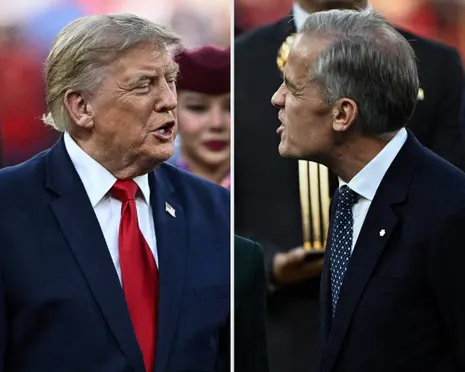
Table of Contents
The Lesson from Canada’s Collapsed Trade Talks
Wanderstayfinder.com – When the Saturday midnight deadline struck — 12:00 a.m. Eastern, 5:00 a.m. British Summer Time — no signed accord existed. Washington proceeded with 50 percent tariffs on approximately $20 billion (£14.6 billion) of Canadian imports, rattling North American supply chains and validating a growing consensus among trade analysts: the lesson from Canada’s collapsed negotiations is that weeks of frantic back-channel diplomacy with the current White House amount to theatre, not resolution.
The implications radiate far beyond Ottawa and Washington. Governments across Asia, Europe, and the Global South still attempting to strike trade arrangements with the United States now face a cautionary blueprint. Multiple political scientists and trade strategists have drawn the same conclusion from the Canadian episode: pursuing a balanced, reciprocal agreement from this administration may be futile from the first meeting onward.
Walking Away: Carney’s Rejection
Prime Minister Mark Carney left no ambiguity on Saturday morning. He recalled his negotiating team to Ottawa, cancelled every remaining bilateral session, and publicly dismissed the compromise package that had been taking shape. His framing was blunt:
“They asked too much and they offered too little … you’re at war when you’re attacked, and we got attacked.”
Carney pledged to mirror American tariff rates domestically, matching them “dollar for dollar.” By characterizing the breakdown as economic aggression rather than a routine impasse, he set the tone for what has since hardened into a deepening trade confrontation between the continent’s two largest economies.
The Alcohol Flashpoint and Sovereignty Lines
The specific trigger that crystallized Ottawa’s rejection involved last-minute American demands touching provincial retail regulation. The White House had long cited Canada’s prohibition on selling U.S.-produced spirits, wine, and beer in eight of its ten provinces and all three territories as proof of unfair discrimination. Those shelf bans, enacted after Trump’s initial tariff round imposed on Canada in early 2025, had effectively erased American labels from Canadian liquor stores.
This week, Manitoba Premier Wab Kinew and Nova Scotia Premier Tim Houston confirmed that Carney had asked provincial governments to reverse the bans — restoring American alcohol to shelves — as a condition for sealing the tariff deal. Kinew pushed back publicly, telling reporters Canada “should fight” Trump rather than capitulate, and adding that “you can’t get a good deal with a bad person.” He urged ordinary Canadians to boycott U.S. alcohol even if premiers ultimately complied with Ottawa’s request.
The sovereignty dimension proved decisive. Carney’s stated reason for walking away was that the final American package contained demands eroding Canada’s authority over its own domestic commercial regulation. In a trade war between two sovereign states, the line between tariff concessions and structural subordination is the one Ottawa decided it would not cross.
The Three-Day Mirage and Internal Fractures
The collapse caught many off guard because, just days earlier, Washington’s tone had suggested a deal was imminent. On Tuesday, Trump told reporters a three-day extension to the tariff deadline would be granted because an agreement was “all but signed.” By Wednesday, he described the emerging framework as a “very fair deal for both” sides. Then details began leaking into Canadian media, and alarm spread quickly through provincial capitals and trade councils that Carney’s team was conceding far more than the public had been led to expect, particularly on steel, aluminium, and automotive categories.
A high-level briefing call convened by Mark Wiseman, Canada’s ambassador to the United States, with members of the Canada-U.S. trade council, sharpened the internal debate. According to participants, Steve Verheul, who served as Canada’s chief trade negotiator in earlier administrations, warned that any concessions made under pressure now would simply invite further American demands down the road — a pattern of escalating asks with no stable endpoint.
Adding to the pressure, JD Vance, the U.S. vice-president, was captured on video at a private gathering, apparently mocking Carney for standing down on “a lot of issues” while the negotiations were still technically underway. Whether or not that clip was intended for public consumption, it landed in Ottawa as evidence that Washington was treating the talks as a leverage exercise rather than a genuine path to mutual agreement.
FAQ: Practical Questions on Canada’s Collapsed Trade Talks
What happened at the Saturday midnight deadline? No agreement was signed. The United States moved forward with 50 percent tariffs on roughly $20 billion of Canadian imports, and Prime Minister Carney recalled his negotiating team to Ottawa.
Why did Canada walk away from the deal? Carney stated that the final American package contained demands that would have eroded Canada’s sovereignty over domestic commercial regulation, including provincial alcohol retail rules. He framed the breakdown as economic aggression.
What is the broader lesson for other countries negotiating with Washington? Analysts and political scientists cited in coverage of the episode argue that seeking a balanced, reciprocal trade agreement from the current administration may be futile from the outset, making the Canadian experience a cautionary case study for governments worldwide.
What did Carney pledge after the collapse? He committed to mirroring American tariff rates on Canadian soil, matching them “dollar for dollar,” and cancelled all further bilateral meetings with Washington.