Airbus bows to remote working demands after series of strikes

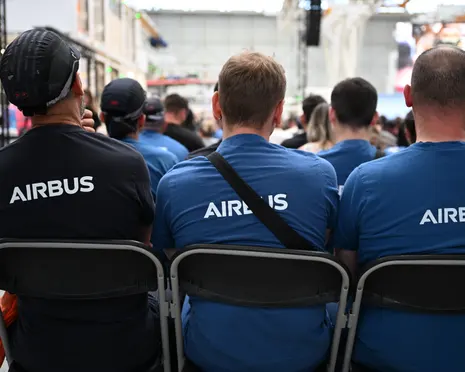
Table of Contents
Airbus Retreats on Mandatory Office Return After Multi-Country Strike Wave
Wanderstayfinder.com – The world’s largest aircraft manufacturer has scaled back a sweeping mandate to pull employees back into physical offices, conceding ground to workers who spent months walking out across Europe in protest. The compromise, effective from September, allows staff to work remotely an average of two days per week rather than the single day originally planned — a significant dilution of the policy championed by chief executive Guillaume Faury.
The reversal comes after sustained industrial action in Spain, France, and the United Kingdom disrupted operations and forced leadership to recalibrate its hybrid-work strategy. What began as a top-down directive to concentrate talent under one roof has now been reframed as a gradual, manager-led transition, with teams given latitude to shape their own schedules within existing collective bargaining agreements.
The Original Mandate and Its Rationale
Faury had framed the return-to-office push as a business imperative rather than a cultural preference. In a June memo addressed to the workforce, he argued that the flexibility which sustained operations through the pandemic had become a liability in the current environment. Airbus, he contended, needed employees physically co-located to share specialised knowledge, accelerate product development, and absorb the skills of thousands of newly hired staff tasked with meeting unprecedented order-book demand.
“I count on all of you to support this,” Faury wrote in the memo.
The underlying logic was straightforward: Airbus sits at the centre of Europe’s aerospace and defence supply chain, and its Toulouse, Hamburg, Getafe, and Broughton facilities produce components that feed programmes from commercial wide-bodies to military transport aircraft. Leadership believed that in-person collaboration was essential to compress development timelines and maintain quality standards as the company scaled up headcount.
Strikes Across Three Countries
The policy met organised resistance almost immediately. In Spain, where Airbus employs roughly 14,000 workers at its Getafe and Seville sites, stoppages have occurred intermittently since July. At peak, approximately 40 per cent of the local workforce participated in walkouts over a bundle of grievances that included remote-working limits, transport provision, paid-leave entitlements, and salary progression.
French sites saw sporadic demonstrations centred on a separate but related proposal: forcing white-collar personnel into the office four days a week. British operations also joined the wave of disruption in recent months, compounding pressure on headquarters.
Despite the industrial action, Airbus production lines — which underpin a substantial share of European defence manufacturing output — were not materially affected. The strikes targeted administrative and engineering functions rather than final-assembly throughput, limiting direct impact on delivery schedules.
The Compromise
Managers have now received guidance permitting staff to work from home an average of two days per week, effectively halving the original restriction. The new framework delegates scheduling authority to team leaders, who are expected to organise hybrid arrangements in a manner that “maximises collective efficiency and reflects the reality of their working environments,” while remaining within the boundaries of Airbus’s existing collective agreements on hybrid work.
An Airbus spokesperson confirmed the shift in approach:
“Our objective remains the same: we aim for increased on-site presence to ensure better collective efficiency, knowledge transfer and faster decision-making. However, effective change requires listening to our people. Based on employee feedback, we have decided to implement this transition more gradually.”
The spokesperson added that managers would be “empowered” to tailor arrangements pragmatically, signalling a move away from a uniform corporate mandate toward decentralised, team-level negotiation.
Broader Implications
The episode underscores a tension now playing out across large European industrial employers: the gap between leadership assumptions about post-pandemic workplace norms and the expectations of a workforce that has spent five years normalising remote flexibility. Aerospace and defence firms, long characterised by rigid site-based cultures, are discovering that their employees’ bargaining power — amplified by tight labour markets and the criticality of their roles — makes unilateral policy shifts politically costly.
For Airbus specifically, the stakes extend beyond internal morale. The company is simultaneously ramping production to clear a multi-year delivery backlog, integrating thousands of new hires into complex engineering workflows, and preparing next-generation platforms. Any prolonged friction over working arrangements risks slowing knowledge transfer at precisely the moment the organisation most needs it.
The two-day compromise may prove a temporary equilibrium. Whether Airbus ultimately converges on a higher on-site ratio, or whether the concession becomes a de facto permanent norm, will depend on whether the productivity gains Faury originally cited materialise under the new, more flexible arrangement — and on whether union structures in Spain, France, and the UK accept the gradualist framing or press for further concessions in upcoming bargaining cycles.
Related Reading
Frequently Asked Questions
What is Airbus bows to remote working demands?
Airbus bows to remote working demands is the main topic of this guide. The article explains the context, practical details, and next steps readers should understand.
Why does Airbus bows to remote working demands matter?
Airbus bows to remote working demands matters because readers are looking for a useful answer, not just a short summary. Good content should match search intent and help them decide what to do next.