Florida sets record for sea turtle nests but Trump move could stall recovery

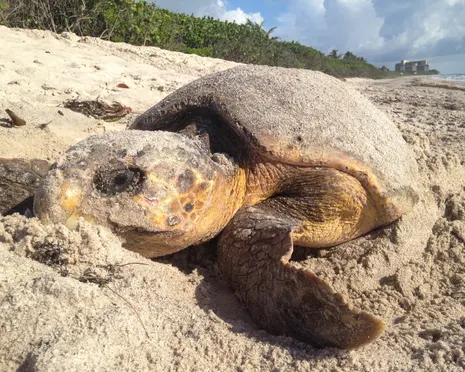
Table of Contents
Florida’s Sea Turtles Hit Record Nesting Numbers — But a Federal Rollback Looms
Wanderstayfinder.com – Along an 8.5-mile ribbon of Atlantic shoreline near Juno Beach, loggerhead sea turtles have already dug out 13,770 nests this season. That figure dwarfs every previous annual count recorded by the Loggerhead Marinelife Center, which monitors that stretch of coast. On the Gulf side of the state, Sanibel Island has logged 922 loggerhead nests so far, eclipsing the prior record of 878 set in 2023, per data tracked by the Sanibel-Captiva Conservation Foundation. With more than two months of summer nesting still ahead, both coastlines are on pace to shatter historical benchmarks simultaneously — a milestone wildlife biologists have waited decades to see.
Why the Numbers Carry Weight
The significance of these counts extends far beyond a single season’s tally. Sea turtles grow extraordinarily slowly. A hatchling emerging from sand in Juno Beach may not return to nest for another two, three, or four years — and reaching full reproductive maturity typically demands twenty to thirty years of oceanic wandering. Every adult female now hauling herself onto those beaches represents decades of uninterrupted survival: dodging fishing nets, avoiding bycatch, navigating warming currents, and finding enough food across thousands of miles of open water.
The trajectory behind today’s numbers stretches back to the 1970s, when commercial harvesting, unregulated poaching, and coastal development drove several species toward collapse. In the Caribbean alone, roughly 95 percent of the green turtle population vanished during that era. What followed was a slow, painstaking rebuild anchored by federal legislation passed in 1973 — the Endangered Species Act (ESA) — which locked in habitat protections, restricted take-and-harvest activities, and mandated recovery planning for listed taxa.
The Threat: A Federal Repeal Aimed at the Law’s Core
Last month, President Donald Trump signed what critics have called a “death sentence” repeal of key ESA provisions, carving out exemptions to accommodate oil drilling, mineral extraction, timber operations, and large-scale development projects. Environmental and wildlife organizations moved swiftly: an alliance of conservation groups has filed suit against the administration, challenging in particular a new rule that grants outsized deference to so-called “economic considerations” when agencies weigh protections for endangered species and designate critical habitat.
The stakes are not abstract. If the repeal stands, the legal architecture that kept loggerheads, greens, hawksbills, leatherbacks, and Kemp’s ridleys alive through their most vulnerable decades could be dismantled mid-recovery. Biologists warn that the current nesting surge may represent a high-water mark — the last peak before protections erode and populations slide back toward the precipice.
Voice from the Field
“What we’re seeing is the result of several decades of sustained protection of these species under the ESA and various other measures to protect their habitat in different ways.” — David Godfrey, executive director, Sea Turtle Conservancy
Godfrey’s organization is not a named plaintiff in the pending litigation but has voiced strong public support for it. He frames the debate in terms that cut through political rhetoric:
“The detractors of the ESA sometimes say, ‘Oh, this thing is a failure. Look at all these animals that are still on the list. We haven’t removed a lot from the list.’ And I come right back and say, yeah, but look at all these animals that are on the list that we haven’t lost.”
He adds that sea turtles remain listed precisely because they were once creeping toward extinction, and their continued presence — and growing numbers — is attributable to the statute. Nesting counts have not yet reached thresholds that would justify delisting, but the direction of travel, he stresses, has been upward “unless we reverse things.”
Multiple Forces Converging
Justin Perrault, vice-president of research at the Loggerhead Marinelife Center, attributes this year’s elevated figures to a convergence of factors: years of consistent legal protection, favorable oceanographic conditions in recent seasons, measurable reductions in coastal pollution, and a generation of residents and visitors more attuned to marine conservation than their predecessors.
“It’s incredibly exciting and encouraging because the world needs some good nature stories, and it’s important to celebrate that we are doing some things well.”
Perrault also underscores the biological cost borne by nesting females. A mother loggerhead does not lay a single clutch per season; she excavates multiple nests over several nights, an energetically expensive process that depletes her reserves. Between nesting events she typically withdraws from the beach for two to four years. The fact that more females are returning at all signals population stability, though Perrault cautions against declaring full recovery.
“We’re still cautiously optimistic about saying that they’ve recovered, but we can say stability.”
The Broader Ledger
The ESA is credited with shielding more than 1,700 species and their associated habitats since enactment. Of those listed, roughly 99 percent have been kept from extinction — a statistic that conservation scientists regard as the statute’s most powerful argument for continued existence. Stripping its enforcement mechanisms to clear the way for extractive industries would, in effect, withdraw the guardrail from every species still climbing out of the pit.
The Loggerhead Marinelife Center itself operates as a marine-life hospital, treating and rehabilitating sick or injured turtles before releasing them back into the Gulf. It shares research data with partner organizations across the country and collaborates on public-education campaigns. One of its longest-running outreach initiatives has focused on responsible beach behavior — keeping lights dimmed at night so hatchlings can find the sea rather than wandering inland toward roads.
As nesting season presses into its final months, Florida’s beaches will likely produce figures no one alive has seen before. Whether those numbers become a springboard for continued recovery or a farewell peak will depend, in large measure, on what happens in federal courtrooms and congressional chambers over the coming year. The turtles have done their part: they came back. The question now is whether the legal framework that made their return possible will survive long enough to let them stay.
Related Reading
Frequently Asked Questions
What is Florida sets record for sea turtle?
Florida sets record for sea turtle is the main topic of this guide. The article explains the context, practical details, and next steps readers should understand.
Why does Florida sets record for sea turtle matter?
Florida sets record for sea turtle matters because readers are looking for a useful answer, not just a short summary. Good content should match search intent and help them decide what to do next.