Halting the march of the African armyworm: a natural cure offers hope to farmers

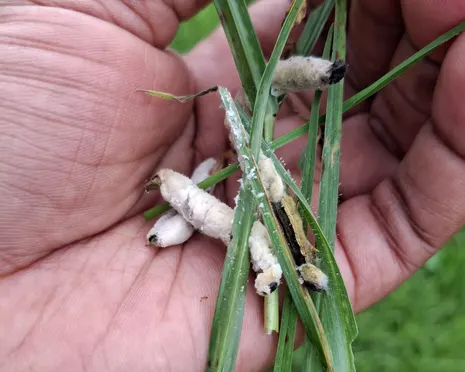
Table of Contents
Natural Fungus Offers New Hope Against Devastating African Armyworm Plague
Wanderstayfinder.com – A remarkable biological discovery emerging from South African farmlands could transform how farmers across the continent combat one of agriculture’s most relentless enemies. Letodi Luki Mathulwe, an entomologist with the South African agriculture department, stumbled upon a naturally occurring fungus that appears to be systematically eliminating populations of the African armyworm – a pest responsible for billions in crop losses and widespread food insecurity throughout eastern and southern Africa.
The serendipitous finding came during Mathulwe’s routine fieldwork in KwaZulu-Natal province, where she encountered fields of Kikuyu grass – a vital livestock feed – suddenly covered in what looked like white mold. Upon closer examination, she realized the white substance was a fungus actively killing armyworm caterpillars, a phenomenon she had not observed in neighboring regions where the insects continued their destructive march through crops.
A Scientific Breakthrough in the Field
Mathulwe’s initial observations quickly evolved into rigorous scientific investigation. She collected samples of both the deceased caterpillars and the mysterious white fungus, transporting them to her laboratory in Pietermaritzburg for detailed analysis. Her research team’s findings, now published in a peer-reviewed scientific paper, confirmed what her instincts had suggested: the fungus possessed remarkable properties capable of controlling armyworm populations without the need for synthetic chemical interventions.
“Something was killing the insects naturally. I was intrigued because in other areas the insects were alive and destroying the grass but as soon as they come here, there’s something that is killing them,” Mathulwe explained during her field observations.
The timing of this discovery proved particularly fortuitous. A major outbreak of African armyworm (Spodoptera exempta) had erupted in northern South Africa during 2025, spreading rapidly southward until it reached KwaZulu-Natal by April. During this period, Mathulwe received daily panicked calls from local farmers desperate for solutions as their crops faced annihilation.
Why Mature Populations Matter
What makes this discovery especially significant is its effectiveness against mature armyworm populations. While conventional chemical treatments can successfully eliminate caterpillars during their early developmental stages, farmers have long struggled with controlling fully grown insects that have already established themselves in grazing fields and crop lands. The armyworm’s ability to transform into a highly mobile moth further complicates traditional control methods, as these winged adults can migrate across vast distances and establish new infestations.
“When we discovered this fungus, we realised we could develop this into a product that can be eventually used when the next outbreak happens,” Mathulwe noted. “I think it will be a great thing – it will eventually eliminate the fear for farmers that the insect creates because once it’s present within grazing fields, farmers start to panic.”
Economic Stakes for African Farmers
The economic consequences of armyworm infestations extend far beyond individual farm losses. The pest consumes staple crops including maize and sorghum while simultaneously releasing chemical compounds into grass that can cause livestock illness. These dual threats create cascading effects throughout agricultural economies.
Historical data illustrates the severity of the problem. A particularly devastating outbreak in 2017 was estimated to have destroyed up to forty percent of Zambia’s entire maize production. Beyond direct crop destruction, armyworm infestations trigger food price inflation and place enormous strain on government agricultural budgets and social safety nets.
The timing of last year’s outbreak proved especially challenging for vulnerable economies. Zimbabwe, where inflation had already surged to seven hundred thirty-six percent in 2024, faced additional pressure on its food supply chains. Similarly, Malawi, experiencing thirty-five percent inflation during the same period, struggled to maintain agricultural stability for its rural populations.
Looking Toward a Sustainable Future
Mathulwe emphasized that while the discovery represents a promising development, additional research and field testing remain necessary before the fungal treatment can be commercialized for widespread farmer use. The development process involves optimizing the fungus’s effectiveness, determining proper application methods, and ensuring consistent results across different environmental conditions.
“I think it will create a lot of hope for farmers, because it will mean that their animals won’t get sick if the farmer is able to control the presence of the insects within their field,” she said.
The potential implications of this discovery extend beyond immediate pest control. Natural fungal treatments offer a sustainable alternative to chemical pesticides, reducing environmental contamination and protecting beneficial insect populations. For smallholder farmers across Africa who bear the brunt of agricultural volatility, such innovations could provide crucial resilience against climate-related crop failures and pest outbreaks that threaten food security across the continent.
As research continues, the white fungus discovered in KwaZulu-Natal’s grasslands may well become one of Africa’s most important agricultural tools in the ongoing battle against food insecurity and economic instability caused by devastating pest infestations.
Related Reading
Frequently Asked Questions
What is Halting the march of the African?
Halting the march of the African is the main topic of this guide. The article explains the context, practical details, and next steps readers should understand.
Why does Halting the march of the African matter?
Halting the march of the African matters because readers are looking for a useful answer, not just a short summary. Good content should match search intent and help them decide what to do next.