
Your guitar may depend on elephant poop. Here’s why
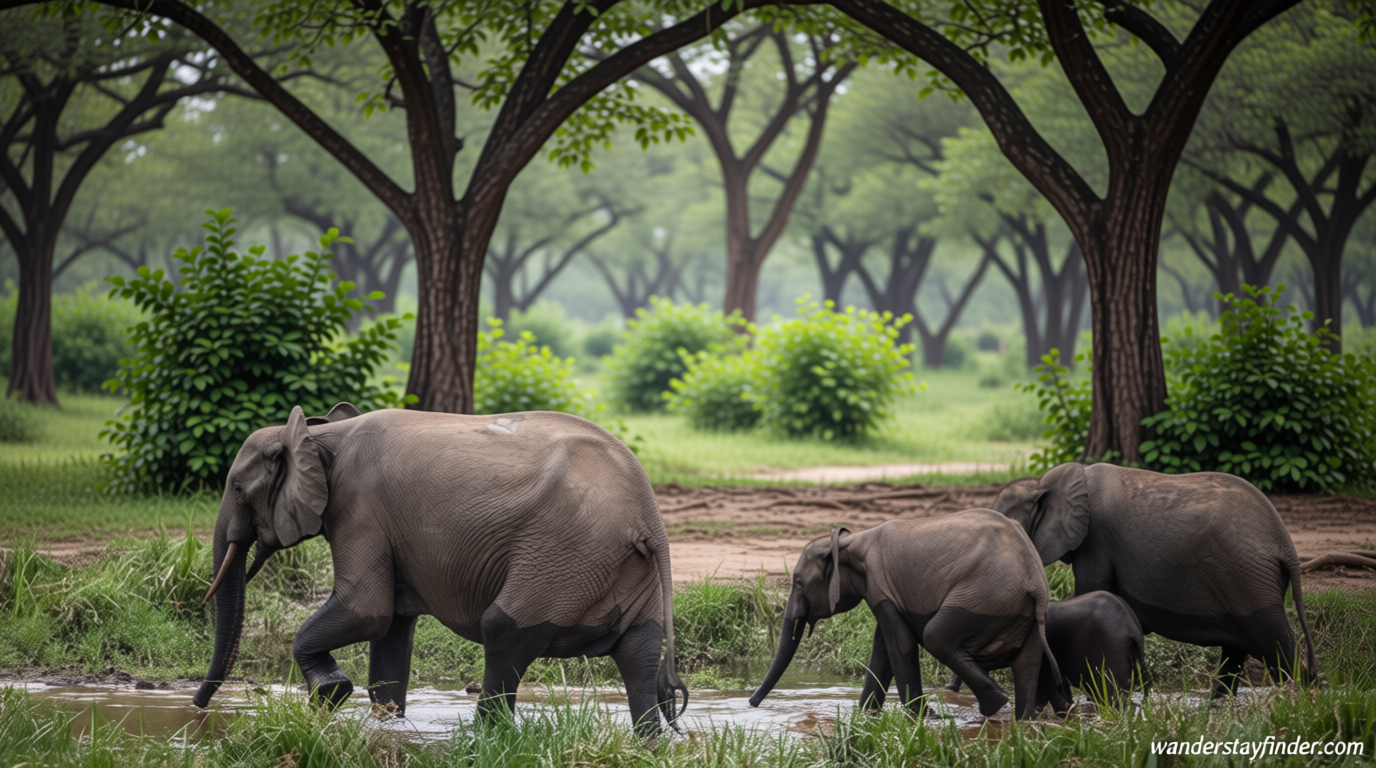
Your guitar may depend on elephant – In the dense, ancient forests of central Africa, a peculiar relationship between elephants and ebony trees has emerged as a critical factor in the survival of both species. A recent study reveals that the fate of these trees—and the musical instruments crafted from their wood—rests on the activities of African forest elephants. The research, led by the UCLA’s Congo Basin Institute (CBI), underscores how these large mammals play an essential role in the propagation of ebony seeds, a process that could unravel without their presence.
The Elephant-Dung Connection
The decline of African forest elephants, once a staple of the region’s ecosystems, has drawn attention to their impact on the environment. According to the International Union for Conservation of Nature (IUCN), the population of these elephants has dropped by an estimated 80% over the past three decades due to habitat loss and the illegal ivory trade. This loss is not just a concern for conservationists but also for the future of ebony trees, which rely on elephants to spread their seeds across vast distances.
Elephants, through their natural behaviors, act as key dispersers of ebony seeds. When they consume the tree’s fruit, the seeds travel with them, eventually being deposited onto the forest floor. This process not only extends the reach of the trees but also reduces the risk of genetic isolation among populations. Additionally, the dung serves as a protective barrier, deterring rodents from consuming the seeds. Without elephants, the regeneration of ebony trees has been severely hindered, with the study noting a 68% decrease in saplings in areas where elephants are absent.
Eric Onguene, a research assistant with the CBI, highlighted the urgency of the situation. “The results are quite frightening,” he told CNN. “Initially, we assumed seeds could be spread by various animals, and we expected natural regeneration. However, if elephants vanish, we must prepare for the extinction of the ebony species.” His words emphasize the delicate balance between the elephants and the trees, a balance that is increasingly threatened by human activities.
A Musical Investment in Conservation
The connection between ebony trees and elephants has not gone unnoticed by the music industry. California-based Taylor Guitars, a prominent U.S. guitar manufacturer, has invested heavily in research to address the declining supply of ebony wood. The company’s decision stems from the fact that ebony is a vital component in the construction of guitar bridges and fretboards, known for its dense, durable, and smooth texture. This unique material has contributed to Taylor Guitars’ global success, with artists like Taylor Swift and Jason Mraz using their instruments.
Bob Taylor, co-founder of Taylor Guitars, recognized the growing threat to ebony resources. As a co-owner of the Crelicam ebony mill in Yaoundé, Cameroon, he became concerned about the sustainability of the wood supply. “In most regions where ebony had been harvested, the supply had run out,” said Matthew LeBreton, director of the Crelicam Mill. This realization prompted Taylor to fund the study, driven by the belief that investing in the inevitable is crucial for long-term survival.
The research, which began in 2016, evolved into a broader initiative known as the Ebony Project. This collaborative effort involves businesses, local communities, and scientists, aiming to secure the future of the ebony tree. The CBI’s approach focuses on involving Indigenous Baka communities, who share the forest with elephants, in conservation efforts. By distributing seeds to these groups, the project seeks to foster sustainable growth and ensure the trees continue to thrive.
“To protect the ecosystem of the Congo Basin, you must not decree protection or place a police officer in front of each tree,” explained Zac Tchoundjeu, a CBI researcher. “Engaging the local population and showing them the value of preserving these trees is essential.” This strategy reflects a shift from top-down conservation methods to community-driven solutions, emphasizing the importance of local involvement in environmental preservation.
The study’s findings have sparked a renewed interest in the ecological role of elephants. Their absence could lead to a cascading effect, not only impacting ebony trees but also the biodiversity of the rainforest. The CBI’s work has shed light on how elephants contribute to the health of the ecosystem, acting as natural gardeners by spreading seeds and maintaining the forest’s balance. This understanding has reshaped the way researchers and conservationists view the interconnectedness of species and the need for holistic approaches to preservation.
Taylor Guitars’ financial backing of the research exemplifies how industries can drive conservation efforts. By investing in scientific studies, the company is not only safeguarding its own supply chain but also contributing to the survival of a critical resource. This partnership highlights the potential for cross-sector collaboration in addressing environmental challenges, blending corporate interests with ecological stewardship.
The Ebony Project serves as a model for how conservation can be achieved through innovation and community engagement. By leveraging the elephants’ role in seed dispersal, the initiative aims to create a sustainable future for both the trees and the people who depend on them. As the study demonstrates, the survival of ebony trees is intertwined with the survival of elephants, making their protection a priority for the region’s ecological stability.
Ultimately, the relationship between these two species is a testament to the intricate web of life in the Congo Basin. The decline of elephants poses a significant threat to the ebony trees, which in turn affect the music industry and the livelihoods of local communities. This interconnectedness reminds us that conservation is not just about preserving individual species but about maintaining the balance of entire ecosystems. The research and collaboration efforts underscore the importance of understanding and acting on these connections to ensure a sustainable future for all involved.





