No Time to Waste: Greece’s Bid for Mount Olympus UNESCO Recognition
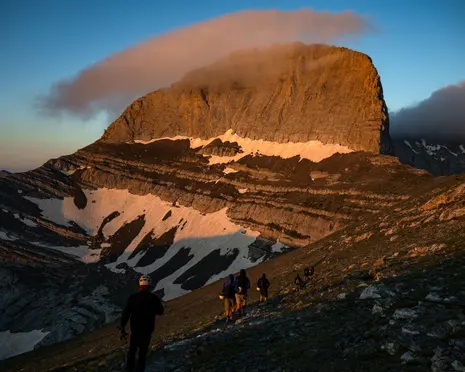
Wanderstayfinder.com – No time to waste — that is the message echoing from the summit of Mount Olympus, where more than four decades have passed since Evangelos Geroliolios first reached the peak of Greece’s highest mountain. Standing atop the rocky crown of this legendary mountain, he experienced pure wonder. “I’ve never forgotten that unique moment, that unique feeling up there on the throne of Zeus,” recalled Geroliolios, who now serves as mayor of Dion-Olympus and dedicates considerable time to managing the region surrounding this sacred site.
Described by Homer as the “seat of the immortals,” the mountain’s craggy summit — where Zeus, father of the gods, is said to have held court — rises 2,918 metres above sea level. “You get this incredible sense of place, fused by myth, beauty and the weight of history — all of which we want to share and hope will be recognised internationally,” he explained. Greek officials have long advocated for Mount Olympus to join the Unesco list of world heritage sites, and soon supporters of this cause will discover whether the mountain will finally receive this prestigious designation.
The UNESCO Committee Decision Approaches
The World Heritage Committee is set to begin deliberations on the nomination on Sunday during its 48th session in Busan, South Korea. This annual gathering concludes on 29 July. Greece initially submitted the mountain’s candidacy in 2014, highlighting both its cultural and environmental importance.
The region earned national forest status — Greece’s first — in 1938, honoring the distinctive landscape featuring lush forests, alpine meadows, gorges, ravines, and springs, all situated near the coastline. Litochoro, the closest town to Mount Olympus, sits just three miles (5km) from stunning beaches at the mountain’s base. Recognizing its rich biodiversity, Unesco designated Olympus as a biosphere reserve in 1981.
“But becoming a world heritage site would not only be important for Greeks. It would speak to the entire planet. Olympus is up there with the Parthenon and it’s vital that we safeguard this environment of myth and history. For us, protection is the alpha and omega.”
Additional environmental safeguards arrived through a presidential decree in 2021, when the mountain became a national park. Last year, the committee added 26 new properties to Unesco’s World Heritage list, raising the global total to 1,428 sites across 170 countries. Among Greece’s 21 designated locations, only two hold mixed cultural and natural world heritage status.
Under an international treaty administered by Unesco, these treasures — including landmarks like the Great Wall of China, the Egyptian Pyramids, and the Taj Mahal — automatically receive protected zone status. This designation increasingly serves as protection against development pressures and overtourism. Like much of Greece, Mount Olympus has seen popularity surge over the past decade, welcoming approximately 500,000 visitors last year.
Looking Ahead: Preservation and Tourism Balance
This visitor count is expected to grow following renewed global interest in ancient mythology after the 17 July release of Christopher Nolan’s The Odyssey. The record-breaking film, inspired by Homer’s epic, was partially shot in Greece, which also provided financial support for production. “We’re happy to have tourists but more of them will mean more risks,” warned Dimitris Pappas, deputy director of the Olympus national park management agency.
“There’s no doubt that if the area is declared a Unesco world heritage site it will help contribute to the mountain’s protection. If we lose what we have it will be a catastrophe.” Pappas identified forest fires, intensified by climate change, as the primary threat to the region. “They could be averted with extra funds to improve fire protection measures, including clearing walking paths and building shelters. River bridges and roads could be upgraded, too.”
World heritage sites receive technical support and financial assistance from Unesco, along with expert guidance for monument preservation. Visitors currently exploring the site expressed that the designation is both deserved and overdue. “It’s not just a good idea, it’s the best idea,” said Lenka Hotmarova, 62, from the Czech Republic. “There’s room for improvement along the trails and it would help raise awareness about the need for preservation. It should have happened earlier.”
Greece has also emphasized the region’s religious importance, pointing to the discovery of an open-air sanctuary on one of Mount Olympus’s lower peaks in its nomination documentation. This sanctuary is believed to have been described by Plutarch, the philosopher-historian, in the second century AD regarding animal sacrifices offered to Zeus.
Mount Olympus is considered to house the highest altitude chapel in the Christian Orthodox world, alongside Byzantine monasteries and other places of worship built throughout history.
Frequently Asked Questions
When will the UNESCO decision for Mount Olympus be announced? The World Heritage Committee will begin discussions on Sunday during its 48th session in Busan, South Korea, with the meeting concluding on 29 July 2026.
What makes Mount Olympus eligible for UNESCO World Heritage status? Greece’s nomination highlights both cultural significance (Homer’s descriptions, Plutarch’s writings, religious sanctuaries) and environmental importance (biosphere reserve since 1981, national park since 2021, diverse flora and fauna).
How many visitors does Mount Olympus receive annually? Approximately 500,000 visitors were recorded last year, with numbers expected to rise following the release of Christopher Nolan’s The Odyssey film.
What are the main threats to Mount Olympus? Forest fires exacerbated by climate breakdown represent the biggest threat, though overtourism and development pressures are also concerns that UNESCO designation could help address.