Côte d’Ivoire Wary of Jihadist Threat in North 10 Years On From Major Attack
A Survivor’s Routine
Côte d Ivoire wary of jihadist – Rose Ebirim, a local activist in Grand Bassam, spends her days organizing the annual International Day of Reggae events while also dedicating time to cleaning up litter on the beach. These activities, once simple tasks, have evolved into a therapeutic outlet for her since witnessing the tragic events of March 13, 2016. That day marked a turning point for the port town, as three gunmen systematically attacked three adjacent hotels along the coastline, unleashing a 45-minute shooting spree that claimed 19 lives, including nine foreigners.
“13 March 2016 was a Black Sunday for me,” she recalled. “I saw three gunmen open fire at close range, targeting the hotels with ruthless precision.”
The attack, which left the nation reeling, was attributed to Al-Qaida in the Islamic Maghreb (AQIM), which claimed it was a response to Côte d’Ivoire’s arrest of its operatives and handover to Mali. It took nearly six years for justice to be served, with an Abidjan court finally sentencing 11 individuals—seven of whom were in absentia—to death for their roles in the incident.
The 2016 Attack and Its Aftermath
The tragedy in Grand Bassam, now recognized as the first major terrorist event on Ivorian soil, has left a lasting psychological imprint. Ten years later, the memory of the attack still haunts citizens, who remain vigilant against the possibility of similar incidents. Defense Minister Téné Birahima Ouattara reiterated this concern at a March commemoration ceremony, stating, “Our forces have strengthened their operational vigilance to ensure such tragedies never recur.”
The attack underscored the growing influence of jihadist networks in the region. While Grand Bassam itself has since regained a sense of normalcy, with its historic charm and UNESCO-recognized status attracting visitors again, the north remains a hotspot for jihadist activity. This area, bordering Mali and Burkina Faso, has become a battleground where extremist groups exploit local instability.
Rising Threats in the North
In the north, the threat of jihadism persists, with violence spilling across borders. Both Mali and Burkina Faso have expelled French and American troops following political shifts, aligning more closely with Russian allies. This strategic pivot has left Côte d’Ivoire as a crucial Western partner in counterinsurgency efforts, positioned as a buffer between the Gulf of Guinea and the heart of the Sahel.
The influx of refugees from neighboring countries has heightened tensions in the north. As conflict intensifies in the Sahel, thousands have sought shelter in Côte d’Ivoire’s border regions. The 2016 attack was a precursor to the broader jihadist surge, with terrorism incidents linked to groups like Al-Qaida-affiliated Jama’at Nusrat ul-Islam wa al-Muslimin (JNIM) nearly tripling in coastal West Africa. This escalation reflects the region’s growing militancy, as armed non-state actors expand their reach.
JNIM, which absorbed AQIM, has demonstrated increasing tactical sophistication. According to Héni Nsaibia, a senior analyst at the conflict monitoring group Acled, “The groups are beginning to employ more advanced strategies, capable of executing complex raids in a region now classified as the world’s most active zone of Islamist militancy.” Recent data highlights this trend, with JNIM’s use of armed drones soaring from fewer than 10 strikes in 2024 to around 80 in 2025.
Military and Civilian Efforts
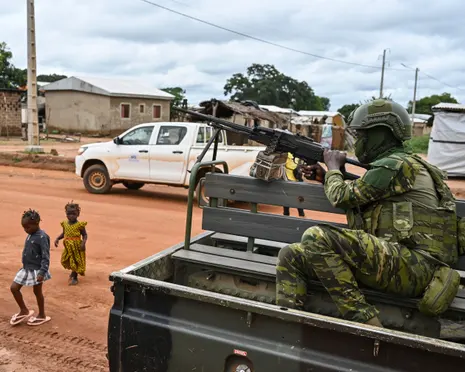
In response to these threats, Côte d’Ivoire has bolstered its security infrastructure. Since the Kafolo attack in June 2020, which killed 14 soldiers near the Burkinabé border, the number of police and gendarmerie officers in the north has more than doubled. The government has also invested in counter-terrorism initiatives, such as the EU-backed academy in Jacqueville, where elite units are trained to address evolving challenges.
Parallel to military efforts, the state has focused on community development in remote border areas. Through international development funding, primary schools have been constructed, mobile health clinics deployed, and vocational micro-loans provided to young cashew farmers. These programs aim to reduce economic vulnerability, which can make individuals susceptible to militant recruitment.
Despite these measures, concerns linger. The Ivorian government’s spokesperson declined to comment on ongoing discussions about a potential US drone base or the collaboration between American troops and Ivorian forces at existing airbases. Citizens, however, remain apprehensive about the country’s porous borders and dense forests, which provide ideal terrain for ambushes and hidden movements.
Uncertainty Lingers
While Grand Bassam’s three hotels are now reopened, their presence serves as a reminder of the vulnerability the region once faced. Ebirim, who continues her advocacy work, noted, “I occupy myself with those activities. After 10 years, I’m starting to sort myself out.” Her efforts to promote environmental awareness and cultural heritage reflect a broader resilience among locals, who balance daily life with the shadow of potential violence.
Yet, the specter of jihadism remains. With JNIM and AQIM expanding their operations, the Ivorian government faces an ongoing challenge to maintain security. The commemoration of the 2016 attack has become a symbol of both progress and persistence, as the nation strives to secure its borders while fostering stability in the region. For now, the focus remains on vigilance, with the hope that lessons learned from the past will safeguard the future.