
Liberal Party Captures All Three Byelections, Cementing Carney’s Mandate
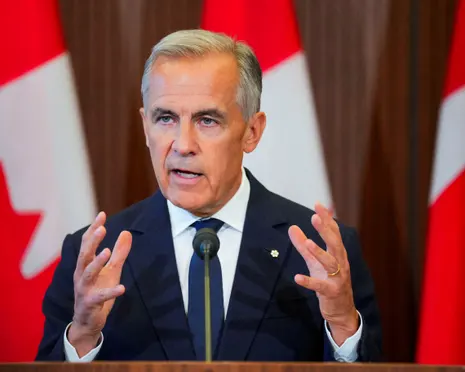
Wanderstayfinder.com – Prime Minister Mark Carney’s governing Liberals emerged unscathed — indeed strengthened — from a triple byelection contest held Monday, converting a moment of partisan vulnerability into a decisive reaffirmation of his leadership. The party took all three seats up for grabs, including one it had never held in the district since 2018, in a result that lands amid a bitter and widening trade confrontation with Washington.
The Canadian Press, the country’s national newswire, called Liberal victories in Chicoutimi-Le Fjord (Quebec), Beaches-East York (Toronto), and North Vancouver-Capilano (British Columbia). Together, the wins push the governing party to 173 seats in the 343-member House of Commons, deepening its parliamentary majority at a moment when Carney’s government faces its most consequential external challenge since taking office.
The Quebec Flip: A Watershed Moment
Of the three contests, the Quebec result carried the greatest symbolic weight. Chicoutimi-Le Fjord, a riding anchored by aluminium smelters, dairy operations, and other heavy industry, had been a Conservative stronghold since the 2018 federal election. Liberal candidate Daniel Gobeil was projected to win by a wide margin, effectively erasing the opposition’s presence in a region now caught in the crossfire of an escalating transborder trade war.
“This victory means we can maintain Canadian unity all across the country,” Gobeil said.
The district’s economic profile makes the result particularly pointed. Workers and plant managers there have watched tariffs reshape their supply chains overnight, and the Liberal sweep suggests that voters in such communities are choosing continuity with Carney’s government over the Conservatives’ alternative platform.
Two Incumbent Seats Retained
The remaining two contests were defensive tests. In North Vancouver-Capilano, Braeden Caley — formerly Carney’s deputy chief of staff — claimed the seat previously held by a Liberal MP. In Beaches-East York, the party likewise held its ground in a Toronto riding. Liberal MP Hedy Fry, speaking to CBC, framed the combined outcome as a signal directed southward:
“The United States is getting a message tonight. Our leader has the support of the Canadian people.”
Trade Talks Collapse and Escalation
The byelections arrive against a backdrop of sharp deterioration in bilateral relations. Negotiations between Ottawa and Washington broke down on 21 August when neither side could close a deal. President Donald Trump subsequently imposed 50 per cent tariffs on roughly $20 billion worth of Canadian goods, and Canada answered with its own tariff plans targeting American products.
Since the talks failed, Trump has intensified rhetorical pressure on Ottawa. He signed an executive order renaming Lake Ontario as “Lake America,” and on Monday US Treasury Secretary Scott Bessent asserted that Canada held limited leverage in the dispute because the American economy is approximately thirteen times larger. Trump has also reiterated, on multiple occasions, his long-standing suggestion that Canada should become the 51st state.
Against that backdrop, Carney has accelerated diplomatic and commercial outreach toward Europe and other trading partners, seeking to diversify Canada’s economic dependencies away from a single dominant neighbour.
Expert Read: Regional Breadth and Conservative Trouble
Daniel Béland, a political science professor at McGill University, characterized the sweep as evidence that Carney retains robust support across Canada’s geographic and linguistic regions. He singled out the Quebec result as the most consequential of the three, arguing that the ease with which Gobeil carried Chicoutimi-Le Fjord likely reflected, in part, the popularity in Quebec of Carney’s decision to pull the plug on trade negotiations with the White House rather than accept terms perceived as punitive.
For the opposition, the numbers were stark. The Conservatives had captured roughly 41 per cent of the national vote in last year’s federal election. On Monday, in the three byelection districts, their share fell to approximately 13 per cent, dropping them to third place behind the Liberals and the NDP. Béland was blunt about the implications:
“These numbers do look bad.”
The collapse in a single riding, let alone three, complicates the leadership calculus for Conservative leader Pierre Poilievre, who must now explain a party that went from near-parity to marginal relevance in a matter of months.
Context: How Carney Got Here
Carney won last year’s federal election riding a wave of public anger over Trump’s annexation rhetoric and tariff threats. His campaign pledged to reduce Canada’s structural dependence on the American economy, and the byelection results suggest that pledge still resonates with voters in industrial regions, urban cores, and western provinces alike. The three seats were vacated earlier this year when the sitting MPs resigned from parliament, triggering the contests under standard electoral procedure.
With 173 seats now secured, Carney’s government enters the autumn session with a reinforced mandate and, arguably, a stronger hand in whatever next round of negotiations — or continued confrontation — unfolds with Washington. The message from Monday’s ballot boxes is unambiguous: Canadian voters, at least in these districts, are not looking for a change of government while the trade war rages.
Related Reading
Frequently Asked Questions
What is Canada s ruling Liberals sweep byelections?
Canada s ruling Liberals sweep byelections is the main topic of this guide. The article explains the context, practical details, and next steps readers should understand.
Why does Canada s ruling Liberals sweep byelections matter?
Canada s ruling Liberals sweep byelections matters because readers are looking for a useful answer, not just a short summary. Good content should match search intent and help them decide what to do next.