House Democrat calls for congressional hearings: Trump Administration's Saudi Nuclear Agreement Faces Congressional Scrutiny Wanderstayfinder.com – The
Trump Administration’s Saudi Nuclear Agreement Faces Congressional Scrutiny
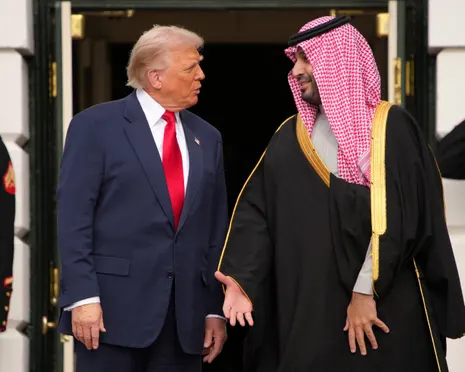
Wanderstayfinder.com – The Trump administration finalized a significant nuclear cooperation agreement with Saudi Arabia on Wednesday, potentially allowing the Gulf kingdom to enrich its own uranium supply for use in nuclear reactors. This development has prompted immediate calls for congressional oversight, with Representative Brad Sherman, a Democratic lawmaker from Los Angeles, demanding a formal review of the arrangement.
During a House foreign affairs committee hearing, Sherman drew parallels between the current Saudi deal and what he characterized as a historic error: the United States’ decision to arm the Shah of Iran during the 1970s. The congressman expressed concern that transferring nuclear technology to Riyadh could prove equally problematic in the long term.
There are those who think that the Saudi possession of nuclear technology is totally benign, but I’ve been involved in this for a long time, and I remember when the most powerful monarch in the Middle East was a good friend of America. And the Shah got his hands on important US military technology. Thank God, nothing nuclear.
Sherman questioned Mike Waltz, who serves as the US ambassador to the United Nations and previously held the position of national security adviser to Donald Trump. The congressman emphasized the volatility of regional leadership, noting that political circumstances can shift dramatically. He recalled how everything the Shah possessed in 1978 ended up in the hands of Iran’s new theocratic regime following the Islamic revolution in 1979.
Everything the Shah had in 1978 was in the mullahs’ hands in 1979. We have no idea who is going to be running Saudi Arabia 10 years from now.
Historical Precedents and Legislative Efforts
Sherman highlighted his previous legislative efforts regarding Saudi nuclear policy. In 2018, alongside then-senator Marco Rubio, he introduced the “No Nuclear Weapons for Saudi Arabia Act.” This proposed legislation would have mandated congressional approval before the United States could finalize a civilian nuclear cooperation agreement with Riyadh. The bill also called for a thorough Saudi investigation into the 2018 murder of journalist Jamal Khashoggi, an incident that US intelligence later concluded had been approved by Saudi crown prince Mohammed bin Salman.
The congressman argued that Congress should only endorse the current deal if it incorporates what he termed “the same gold-standard safeguards as our deal with the UAE.” The 2009 agreement with the United Arab Emirates required voluntary commitments to nonproliferation, including prohibitions on domestic uranium enrichment and reprocessing activities.
Is there any reason we should be bombing Iran because they won’t agree to limit their nuclear program while telling Saudi Arabia we give them the green light and they don’t even have to agree to these additional inspections?
Regional Tensions and Broader Context
When Waltz contended that US resolutions demanding Iran refrain from developing nuclear weapons had provided justification for the ongoing US-Israeli military campaign against Iran, Sherman identified what he described as significant hypocrisy. According to press reports regarding the agreement’s terms—which have not yet been presented to Congress—Saudi Arabia is not committing to the additional inspections that could verify their nuclear program is not being utilized for weapons development.
Saudi Arabia is not agreeing to the additional inspections that could make sure that their program is not used … to develop a nuclear weapon.
Sherman predicted that a resolution of disapproval would soon be introduced and invited committee members who had previously worked to prevent nuclear proliferation in the Middle East, particularly from non-democratic nations, to support the effort. This comment served as an indirect reference to Israel, which maintains nuclear capabilities despite not being officially acknowledged as such.
Related Developments
Beyond the nuclear negotiations, several other significant events unfolded. The US House of Representatives approved a $1.15 trillion defense policy bill in a vote that largely followed party lines. Democratic representatives declined to support the legislation, citing concerns about the ongoing conflict with Iran and Trump’s proposals to implement new voting restrictions across the country.
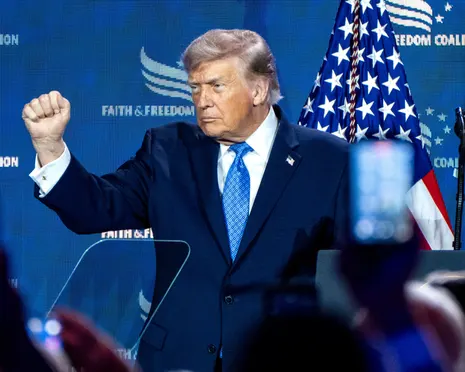
During a 75-minute speech to supporters in Georgia, Trump devoted considerable time to criticizing Jon Ossoff, the Democratic senator currently representing Georgia. In a somewhat confusing moment, Trump referred to Ossoff as “Pinky Herman” while discussing his political accomplishments.
Meanwhile, as American forces continued striking targets in Iran in response to Tehran’s blockade of the Strait of Hormuz, Iran-backed Houthi rebels in Yemen announced attacks on two Saudi oil tankers. The rebels claimed the vessels had violated a blockade near the Bab el-Mandeb Strait, a critical chokepoint for oil exports moving through the Red Sea.
In domestic politics, Alexandria Ocasio-Cortez, the progressive congresswoman from New York, publicly denied on Wednesday that Abdul El-Sayed, the Michigan Senate candidate she supports, lacks sufficient support for his campaign.
This concludes our live coverage of the second Trump administration for the day. Here are the latest developments: The Trump administration signed a nuclear agreement with Saudi Arabia on Wednesday that could enable the kingdom to enrich its own uranium for nuclear reactors. At a House foreign affairs committee hearing, congressman Brad Sherman, a Los Angeles Democrat, called for an oversight hearing of the Trump administration’s nuclear cooperation agreement with Saudi Arabia, suggesting that exporting that technology could be as big a mistake as having armed the Shah of Iran in the 1970s. The US House of Representatives passed a $1.15tn defense policy bill in a near-party-line vote, after Democrats refused to back the measure amid the war with Iran and Donald Trump’s push to impose new restrictions on voting nationwide. During his 75-minute address to supporters in Georgia, Trump took some time out from boasting about what he calls his many accomplishments to attack Jon Ossoff, the incumbent Democratic senator he referred to, confusingly, as “Pinky Herman”. As the US strikes again targets in Iran in retaliation for that nation’s blockade of the strait of Hormuz, Iran-backed Houthi rebels in Yemen claim to have attacked two Saudi oil tankers for violating a blockade near the Bab el-Mandeb Strait, a chokepoint for oil exports transiting the Red Sea. Alexandria Ocasio-Cortez, the progressive New York congresswoman, denied on Wednesday that the Michigan Senate candidate she supports, Abdul El-Sayed, lacks supp
Related SEO Topics
Frequently Asked Questions
What is House Democrat calls for congressional hearings?
House Democrat calls for congressional hearings is the main topic covered in this article, with practical context to help readers understand the subject clearly.
Why does House Democrat calls for congressional hearings matter?
House Democrat calls for congressional hearings matters because it helps readers compare options, avoid common mistakes, and make a more informed decision.
How should readers use this House Democrat calls for congressional hearings guide?
Use the key points, examples, and related links in this page as a starting point, then review the latest details before making a final decision.