
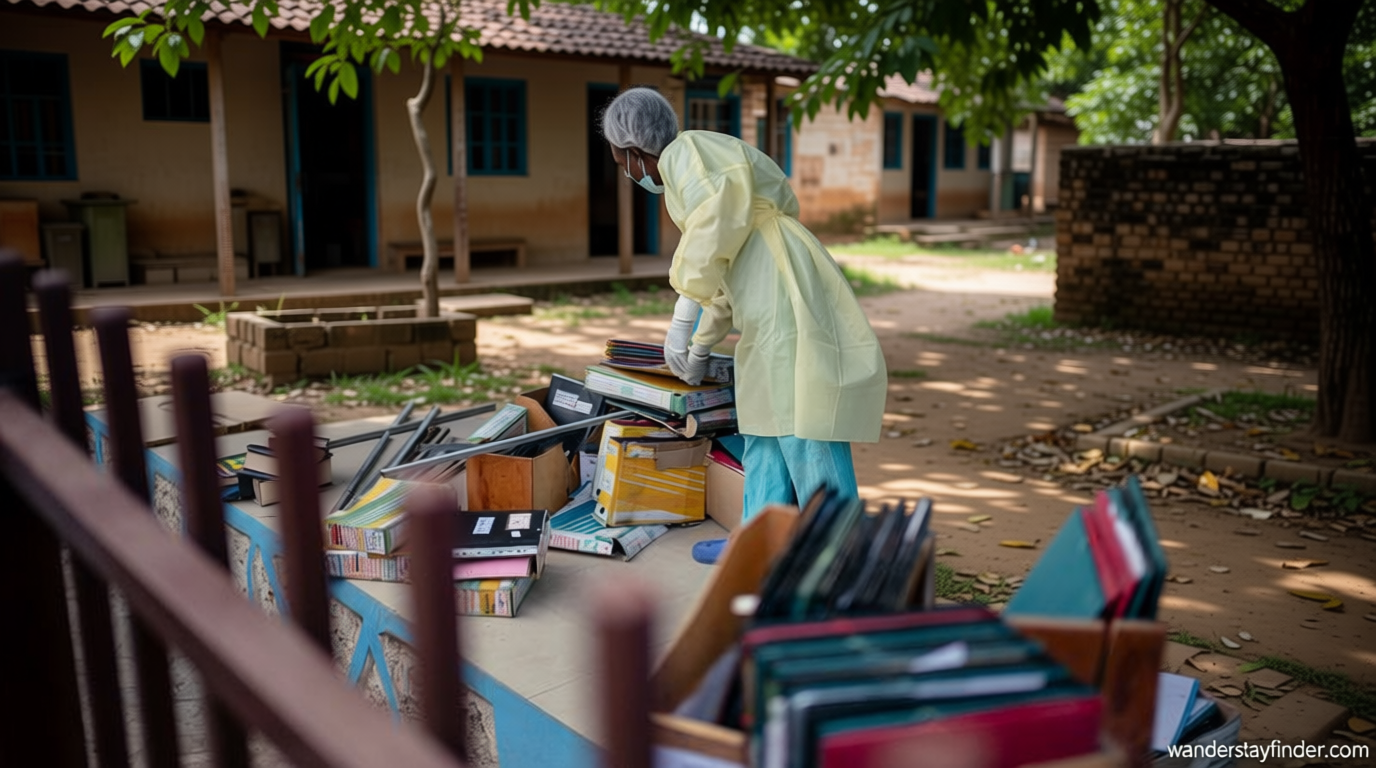
WHO Designates Congo and Uganda Ebola Outbreak as Global Health Emergency
What we know about the latest – The World Health Organization (WHO) declared on Sunday that the Ebola outbreak in the Democratic Republic of Congo (DRC) and Uganda has reached a critical level, designating it a “public health emergency of international concern.” While the situation does not yet qualify as a “pandemic emergency,” the organization emphasized the growing threat posed by the rising number of cases and at least 80 suspected fatalities. The absence of a specific vaccine for the current strain has heightened fears that the epidemic could spread beyond its current borders.
The Role of the Bundibugyo Virus
Caused by the Bundibugyo virus, this outbreak represents a new chapter in the long history of Ebola in the region. According to the Africa Centres for Disease Control and Prevention (Africa CDC), the disease spreads through direct contact with bodily fluids of an infected individual, as well as via contaminated surfaces or objects. The virus can also transmit through contact with the body of someone who has succumbed to the illness.
Common initial symptoms often include fever, muscle aches, headaches, and fatigue, which may progress to more severe manifestations like vomiting, diarrhea, and abdominal pain. In advanced stages, internal and external bleeding can occur, significantly increasing the risk of fatality. The WHO identified six known Ebola virus species, but only three—Ebola, Sudan, and Bundibugyo—are responsible for most large outbreaks.
The current epidemic is the third known instance of the Bundibugyo strain since its discovery. Previous outbreaks occurred in Uganda between 2007 and 2008, and in the DRC in 2012. MSF noted that this is the 17th recorded Ebola outbreak in the DRC since the first case was identified in 1976. The organization is now preparing to expand its efforts in the affected Ituri province, where the outbreak is centered.
Case Reports and Cross-Border Spread
As of Saturday, the UN health body reported at least 80 suspected deaths, eight laboratory-confirmed cases, and 246 suspected cases in the DRC’s remote northeastern Ituri province, which borders Uganda. Initially, WHO announced a confirmed case in Kinshasa, the DRC’s capital, but later revised its statement, stating the individual had “tested negative for Bundibugyo virus on confirmatory testing.”
In Uganda, two confirmed cases have been identified in the capital, Kampala, including one fatality. The patient’s remains were repatriated to the DRC on Saturday, while the other individual remains hospitalized. The cases, though not directly linked, were traced back to travel from the DRC, raising concerns about cross-border transmission.
“There is no cause for alarm,” stated Uganda’s media office on X, following the repatriation of the Congolese man’s body. However, the spread of the virus across multiple health zones and its entry into Uganda have sparked global apprehension. Health experts warn that without an approved vaccine or treatment, the outbreak could escalate rapidly.
Fatality Rates and Response Challenges
WHO noted that past outbreaks have recorded fatality rates ranging from 25% to 90%, with an average of approximately 50%. For the Bundibugyo strain, medical care organization Doctors Without Borders (MSF) estimated the death rate to be between 25 and 40%. Trish Newport, MSF’s emergency program manager, remarked Saturday that the “number of cases and deaths we are seeing in such a short timeframe, combined with the spread across several health zones and now across the border, is extremely concerning.”
Newport added that “In Ituri, many people already struggle to access health care and live with ongoing insecurity, making rapid action critical to prevent the outbreak from escalating further.” The region’s remote location and political instability complicate containment efforts, as resources are stretched thin and communities face disrupted access to medical facilities.
Meanwhile, the situation in the eastern DRC city of Goma has drawn attention. A spokesperson for the Rwanda-backed AFC/M23 rebel coalition confirmed at least one Ebola case in the city, which was seized by the group last year during a swift military campaign. This highlights the interplay between conflict zones and public health crises, as security challenges hinder effective response.
Global Risk and Preparedness
The WHO outlined several factors contributing to the classification of the outbreak as an international emergency. These include the increasing number of suspected cases, the potential for the epidemic to grow beyond its current scale, and the risk of the virus spreading to other countries. Nations sharing a border with the DRC are deemed “high risk for further spread,” with fears that the outbreak could reach new regions in central Africa.
Humanitarian organizations are mobilizing to address the growing crisis. MSF is scaling up its operations in Ituri province, aiming to deploy resources swiftly to combat the spread. The group emphasized that the outbreak’s location in a conflict-prone area exacerbates challenges, as both health and security infrastructure are vulnerable.
While the current situation is alarming, health officials remain vigilant. The absence of a targeted vaccine or treatment for the Bundibugyo strain means that containment efforts rely heavily on rapid detection, isolation, and community engagement. “The speed of response is essential to prevent this from becoming a larger crisis,” said a statement from MSF, underscoring the urgency of the moment.
Historically, the DRC has experienced multiple Ebola outbreaks, each with varying impacts. The 2021 epidemic in Kasai province resulted in 45 deaths, according to the US Centers for Disease Control and Prevention. This latest outbreak, though smaller in scale, could have far-reaching consequences if not controlled. The WHO’s declaration serves as a call to action for international collaboration, ensuring that the region’s health systems receive the support needed to manage the crisis effectively.
With the virus spreading across health zones and into neighboring Uganda, the global community is closely monitoring the situation. The combination of ongoing insecurity and limited medical resources in the DRC makes containment a formidable task. As cases continue to mount, the need for coordinated efforts to prevent further spread becomes more urgent than ever.





