
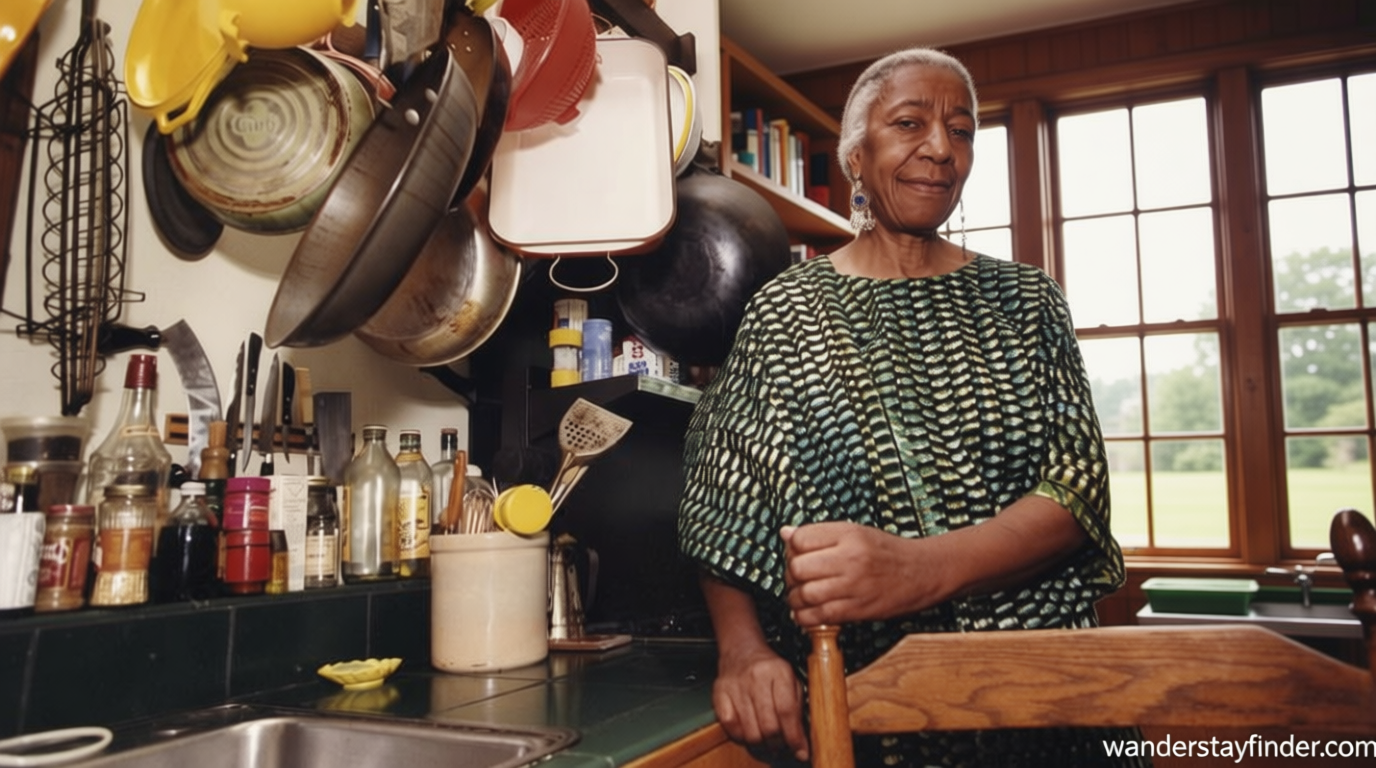
Edna Lewis built the future of American dining on Black country tradition
Edna Lewis built the future of American – Edna Lewis’s seminal cookbook, “The Taste of Country Cooking,” begins not with a recipe but with a vivid scene. In its first chapter, she paints a picture of a specific moment in time—a spring morning in Virginia—where the first thaw of snow reveals fresh chicks “chirping and pecking in the snowy slush.” This opening sets the tone for a work that redefined American culinary identity. Published in 1976 and still in print today, the book is structured around seasonal cycles, a deliberate choice that underscores the deep connection between food and the rhythms of the land. Lewis, who grew up in Freetown, a historically Black farming community in central Virginia, wove her personal memories into the fabric of the seasons, creating a narrative that transcended mere sustenance.
A legacy rooted in soil and tradition
For Lewis, food was more than a meal—it was a reflection of heritage and environment. Her early life in Freetown, where enslaved ancestors laid the foundation for agricultural practices, shaped her perspective. She described the land not as a backdrop but as a living entity, one that dictated the availability of ingredients and the timing of meals. This view, she argued, was as valid for American cuisine as the European concept of terroir, yet it had been overlooked for decades. Her work challenged the notion that Southern food was simple or unrefined, instead framing it as a sophisticated expression of culture and resilience.
Decades before the farm-to-table movement became a global phenomenon, Lewis envisioned a cuisine grounded in local abundance. Her instructions for roasting coffee beans, for instance, predated the third-wave coffee trend by over a generation. She also emphasized the art of foraging for morel mushrooms and the depth of flavor in locally raised beef, practices that are now celebrated in contemporary kitchens. By doing so, she created a blueprint for a food culture that honored the cyclical nature of Black farming, a system that had long been underappreciated in the broader American narrative.
Transforming perception: From stereotype to sophistication
When Lewis’s book debuted in 1976, the South was often portrayed as a place of excess, with its cuisine labeled as overly salty and fatty—a “heart attack on a plate,” as Southern chef Scott Peacock once described. This image persisted despite the region’s rich culinary history, which Lewis sought to illuminate. Her writing, however, reframed Southern cooking as a cornerstone of American gastronomy, one that was both hearty and elegant. Peacock, who collaborated with Lewis on a 2003 cookbook and cared for her in her final years, noted that her work was a quiet revolution rather than an immediate sensation. It resonated with those who understood the deeper layers of food culture, particularly chefs and writers who saw the value in tradition.
James Beard, the godfather of American gastronomy, recognized this early on. In a 1976 syndicated column, he praised Lewis’s rich descriptions of communal living, calling her work “extremely moved” by its authenticity. By using the language of French wines to describe Southern ingredients, Beard helped elevate the region’s cuisine in the national imagination. This was a turning point, as it positioned Southern cooking alongside European culinary traditions, challenging the stereotype that it was less refined. Yet, as Peacock recalled, the shift wasn’t instant. When he first met Lewis, he believed studying Italian cuisine was the path to culinary greatness, a mindset she gently corrected by urging him to “learn about your own cuisine before you go off studying someone else’s.”
A celebration of labor and community
“The Taste of Country Cooking” is more than a cookbook—it’s a tapestry of personal and cultural history. Lewis included details about the value of her enslaved grandmother, whose labor was both a burden and a source of pride. She also recounted the poetry readings and children’s plays that flourished in her community, illustrating how food was interwoven with the social fabric. These elements added a narrative depth that was rare in culinary texts of the era, transforming recipes into stories of identity and survival.
Her seasonal approach is evident in the way she ties meals to natural cycles. Summer thunderstorms, for example, are paired with the joy of turtle soup, while late afternoons are reserved for the family affair of ice cream-making. Emancipation Day becomes a moment of communal celebration, and December is marked by hog butchering—a process that, in her words, “is a thing of beauty,” symbolizing the labor and ingenuity of the people who created it. In other contexts, the image of hogs on scaffolds might evoke discomfort, but for Lewis, it was a testament to the resourcefulness of Black communities, a visual reminder of their culinary legacy.
Shaping modern American dining
Today, the influence of Lewis’s work is undeniable. Restaurants now build menus around the turning of seasons, and influencers promote the virtues of foraging and local sourcing. Toni Tipton-Martin, who wrote the foreword for the 50th-anniversary edition, described the book as a “personal history,” emphasizing its role in defining what American food is and has always been. “She is certainly laying down the marker that says, ‘This is who we are,’” Tipton-Martin said. “‘And this is what our food is and has always been.’” This sentiment captures the essence of Lewis’s contribution: a return to the roots of American cuisine, rooted in the land and the people who shaped it.
Despite its groundbreaking ideas, the book did not immediately shift public perception. Peacock, who worked closely with Lewis, noted that while it was “unquestionably” ahead of its time, it was more of a niche success than a mainstream hit. Yet, its impact was profound. It inspired a generation of chefs and home cooks to look beyond industrialized food and rediscover the value of traditional practices. Lewis’s emphasis on the bounty of “good soil” redefined how Americans thought about their own food, positioning it as a product of history, culture, and community effort. Her legacy endures not just in the pages of her cookbook but in the ongoing conversation about what it means to eat American.
Even after her death in 2006, the ideas she articulated in 1976 continue to shape contemporary dining. Her work laid the groundwork for a movement that now celebrates the authenticity of local ingredients and the stories behind them. In an era where industrialization had homogenized food, Lewis’s approach reminded people of the richness that comes from place and practice. Her vision of American cuisine—one that embraces the seasons, honors labor, and celebrates cultural heritage—remains a guiding light for those who seek to understand the soul of the nation’s food. Through “The Taste of Country Cooking,” she transformed the way Americans see what they eat, proving that the past is not just history but a living, breathing foundation for the future.





