What will define Elon Musk’s legacy? Doge cuts to USAID Ebola programs
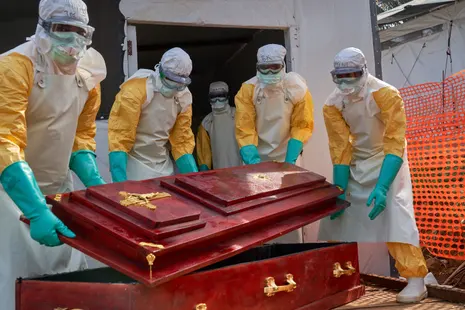
What will define Elon Musk s legacy – Elon Musk faces a growing controversy over his impact on global health initiatives, particularly his role in reducing funding for the U.S. Agency for International Development (USAID) programs aimed at combating the Ebola outbreak in the Democratic Republic of the Congo (DRC). While his companies, SpaceX and Tesla, have been grappling with financial turbulence, Musk has redirected public attention to his critique of USAID, which he claims has been dismantled or “fed into the woodchipper,” as he put it, during the previous year. This shift has sparked debates about the consequences of his budget cuts and their potential to shape his historical reputation.
Public Outcry and Defiant Claims
When confronted with evidence linking Musk’s cuts to the deaths of children and others affected by reduced Ebola detection efforts, the entrepreneur dismissed critics as “utterly evil” and “a piece of shit and a liar.” His defense centered on the assertion that U.S. tax dollars were misused to support “corrupt politicians” and “militants,” despite a lack of concrete proof. This rhetoric has drawn sharp criticism from experts, who argue that Musk’s actions have created a significant gap in global health preparedness.
“Elon’s USAID crash-out over the past week has been a thing to behold,” said Jeremy Konyndyk, a former top USAID official and president of Refugees International. “In a way, it’s helpful that Elon is doing this, because it’s putting attention back on the issue of what he did last year.”
Konyndyk, who oversaw the U.S. response to the Ebola crisis in 2014-2015, highlighted how Musk’s interventions have disrupted critical programs. “The cuts have affected global health, nutrition and education around the world,” he added. “If global health programs hadn’t been slashed in the DRC and elsewhere, the Ebola outbreak would have been detected much earlier.”
The Scale of the Impact
Davide Rasella, a research professor at the Catalan Institution for Research and Advanced Studies and head of the Global Health Impact Assessment and Evaluation Group at the Barcelona Institute for Global Health (ISGlobal), emphasized the broader implications of Musk’s budgetary choices. “It’s difficult to pinpoint exactly how many people will die as a result of these cuts,” Rasella noted. “But the important thing is the scale. There will probably be millions of deaths over the next several years.”
“When you disrupt a single piece of that [aid], you can really create more and larger damage to the entire system,” Rasella said. “This is just the beginning.”
Rasella also referenced a Lancet study that estimated 14 million deaths globally, including 4.5 million child deaths, if USAID were abolished entirely. The study’s findings have been invoked by Democratic Congressman Ro Khanna to challenge Musk’s claims of efficiency. Musk, however, has threatened legal action against Khanna and doubled down on his defense of the “department of government efficiency” (Doge), arguing that the cuts were justified and that the system had already been “screamed” into action.
Legacy and the Rush to Rewrite History
Konyndyk suggested that Musk’s dismantling of USAID is likely to be a defining aspect of his legacy. “Musk’s demolition of USAID, and the resulting suffering and death, is going to be a defining part of his legacy,” he said. “I do wonder if that’s why he’s scrambling so hard to rewrite that history now.” This sentiment aligns with Konyndyk’s observation that Musk employed a strategy of “cut until people scream, and then when people scream, you’ve cut too far, and then you restore,” a method that has been criticized for its application to public health funding.
Despite the legal requirement for USAID to exist, Konyndyk argued that the agency had already faced “some huge hits” due to Musk’s influence. “Without him, and administrators like Pete Marocco, USAID would have taken some huge hits,” he said. “But it would have survived in some form, like other health and science agencies—much diminished, much weaker, but still existing.”
Broader Implications of the Cuts
The effects of Musk’s cuts extend beyond the DRC, with global health programs experiencing a slowdown in operations and a reduced capacity to respond to emerging crises. Rasella pointed to the pandemic as a recent example of the importance of sustained funding. “After the Covid pandemic caused about 20 million deaths around the globe, it was ‘absurd’ to cut programs that would prevent and prepare for the next pandemic,” he said.
Konyndyk added that Congress could have halted the dismantling of USAID, as the agency is mandated by law to function. “USAID is required to exist by law,” he said. “What few aid programs still operate have been choked by the slow release of funding from the state department.” This lack of urgency, he argued, has allowed the damage to compound, leaving global health systems vulnerable to future outbreaks.
From Rocket Science to Public Health
Rasella noted a peculiar contrast between Musk’s approach to space exploration and his handling of public health initiatives. “Musk uses science for launching rockets,” Rasella said. “When we speak about public health and global health, we use the same statistical mathematical tools that we use to launch rockets into space.” This analogy underscores the precision with which Musk has applied his “cut until people scream” philosophy to areas where the stakes are human lives.
While the exact number of deaths caused by the cuts remains uncertain, the scale of potential harm is undeniable. Konyndyk observed that the current Ebola outbreak is a direct consequence of reduced surveillance and preparedness. “Some of these losses are already occurring,” he said. “People are absolutely dying. They’re dying in significant numbers in some places.”
As the DRC continues to grapple with the ongoing crisis, the debate over Musk’s legacy intensifies. His actions have not only raised questions about the efficacy of his budgetary strategy but also about the long-term consequences of prioritizing efficiency over human impact. Whether these cuts will be remembered as a bold experiment or a catastrophic miscalculation remains to be seen, but one thing is clear: the role of Musk in reshaping USAID’s trajectory is now central to the discussion about his influence on global health policy.