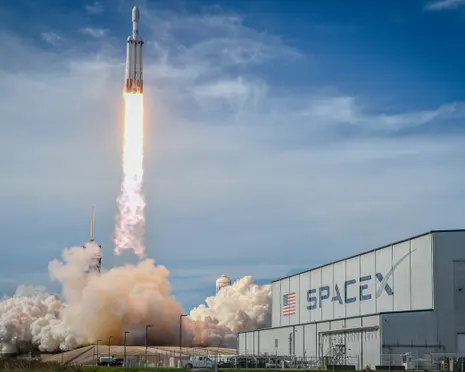
SpaceX’s Record-Breaking IPO Marks Elon Musk’s Trillionaire Status
The Historic Stock Market Debut
Wanderstayfinder.com – On Friday, SpaceX secured its largest-ever stock market debut, propelling the company’s valuation beyond $2 trillion and making Elon Musk the first individual to cross the trillionaire threshold. The initial public offering (IPO) saw shares open at $150, surging to a peak of $176 within hours, reflecting investor confidence in the firm’s future. This landmark event not only redefined aerospace innovation but also highlighted the growing market appetite for space-focused ventures, with Musk’s net worth estimated at $1.1 trillion by the end of the day.
SpaceX’s IPO was unique in its structure, featuring a fixed share price of $135 that bypassed traditional pricing mechanisms. This approach allowed investors to commit based on Musk’s ambitious vision rather than fluctuating market sentiment. Despite skepticism about the sustainability of such a high valuation, the IPO’s oversubscription—four times the $75 billion target—underscored its appeal. The company’s record-breaking performance has reignited debates about the role of future potential in valuing private enterprises.
Elon Musk’s Journey to Trillionaire Status
Elon Musk’s ascent to trillionaire status was fueled by SpaceX’s meteoric rise. The company’s initial public offering not only transformed its financial profile but also cemented Musk’s position as a global icon of innovation. His net worth, driven by SpaceX’s valuation and other ventures like Tesla, reached $1.1 trillion, surpassing all previous records. The IPO’s success was seen as a validation of Musk’s long-term strategy to revolutionize space travel and make humanity a multiplanetary species.
SpaceX’s trajectory has been marked by consistent breakthroughs, from reusable rocket technology to crewed Mars missions. The IPO’s record-breaking price tag, however, raised questions about whether the company’s financial model could support such a high market cap. Analysts pointed to SpaceX’s $18.7 billion revenue in the previous year alongside a $4.3 billion operating loss as evidence of the challenges in balancing rapid growth with profitability. Yet, the public’s enthusiasm suggests that the market remains optimistic about its future potential.
“Our mission is to build the systems and technologies necessary to make life multiplanetary,” reads SpaceX’s investor prospectus. This bold declaration, coupled with the company’s groundbreaking achievements, has positioned it as a leader in the aerospace industry. The IPO’s success reflects not only financial markets’ confidence but also a broader cultural shift toward valuing innovation over traditional metrics of profitability.
SpaceX’s IPO also symbolized a turning point for the broader tech sector, with other AI-driven firms poised to follow suit. The company’s acquisition of xAI, Musk’s artificial intelligence startup, further strengthened its position as a pioneer in both space exploration and AI. As rivals like OpenAI and Anthropic prepare for public offerings, SpaceX’s valuation serves as a benchmark for the new era of innovation-centric enterprises. The stock market’s response to the IPO indicates a growing willingness to invest in high-risk, high-reward ventures.
The event was celebrated with a symbolic ringing of the Nasdaq bell in New York City, accompanied by Elton John’s “Rocket Man.” SpaceX’s president, Gwynne Shotwell, emphasized the company’s ability to set records, stating, “Today, we make history again. We have a history of making history.” The IPO’s impact extends beyond finance, as it underscores the evolving role of private companies in shaping the future of space exploration and technological advancement.
Despite its triumph, SpaceX’s valuation remains a topic of discussion. While the IPO’s success has positioned the company as a leader in the space industry, some experts argue that the market’s reaction may overstate its current financial stability. The fixed share price and high demand for the offering have sparked debates about how accurately the market is assessing SpaceX’s long-term prospects. As the company continues to push boundaries in aerospace and AI, its stock price will likely serve as a barometer for the success of its transformative vision.