Will Andy Burnham ‘Go Big’ in Expanding the Role of the State?
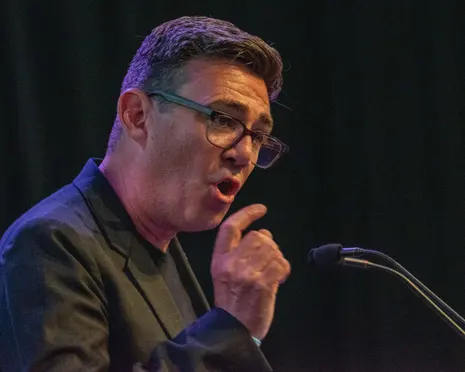
Will Andy Burnham go big in expanding – As the political landscape shifts, Andy Burnham, the newly elected PM-in-waiting, is set to unveil his vision for a more interventionist state. His recent speech, delivered in Makerfield, has already sparked significant debate, as he emphasized the need for essential services to be managed for the public good rather than private profit. The stakes are high, with his allies and critics alike scrutinizing whether he is prepared to take bold steps toward nationalization and public ownership.
Burnham’s Blueprint for Public Control
Burnham’s address in Makerfield highlighted a clear focus on sectors that underpin daily life. He pointed to the Bee Network, a unified system of buses and trams across Manchester, as a model for what could be achieved with stronger public oversight. This network, developed during his tenure as mayor, symbolizes his belief in centralized control to ensure affordability and reliability. However, the question remains: can this vision translate into broader economic reforms?
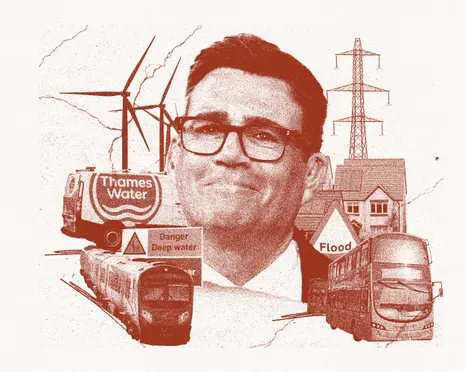
Water, energy, transport, and housing are at the core of Burnham’s agenda. These are not just services; they are lifelines that have become increasingly contentious in recent years. Critics argue that privatization has led to inefficiencies, while supporters claim market forces are essential for innovation. Burnham’s challenge is to reconcile these opposing views and demonstrate that public management can deliver both stability and progress.
The Debate Over Ownership Models
At the heart of the discussion is the distinction between public control and full nationalization. Neal Lawson, director of the progressive thinktank Compass, has underscored this nuance. “Does Andy Burnham think he can go for ‘control,’ when all of the evidence suggests these things are uncontrollable, and can only be managed in the public interest by being owned in some innovative way by the public sector?” he questioned. This raises a fundamental dilemma: how far should the state intervene in private enterprises?
Burnham’s choice of chancellor has become a focal point for this debate. Ed Miliband, a former Labour leader, is seen as the ideal candidate to push for a more radical approach. His support for nationalization aligns with Burnham’s ambitions, offering a potential alliance between leadership and policy execution. In contrast, Wes Streeting, the health secretary, has advocated for a less confrontational model, emphasizing progressive capitalism, EU alignment, and deregulation. This divergence highlights the internal dynamics of the Labour Party as it seeks to balance leftwing ideals with pragmatic governance.
A Vision for the Productive State
Mat Lawrence, director of the Common Wealth thinktank, has outlined a compelling case for public ownership in a recent policy paper. Titled The Productive State, the document argues that natural monopolies—such as utilities and transport systems—are inherently difficult to manage effectively under private hands. Lawrence and his co-author Alex Williams propose a model that prioritizes public accountability over shareholder returns, advocating for state-owned entities that operate independently but with a mandate to serve communal interests.
Lawrence’s argument draws on historical precedents, such as the Central Electricity Board, established by Stanley Baldwin’s Conservative government in 1926. This institution, which later became the British Electricity and Utilities Commission, exemplified a successful blend of public control and operational efficiency. By borrowing against its own revenues and avoiding the pressure of profit-driven agendas, it managed to lower bills and improve service quality. This example serves as a blueprint for Burnham’s current aspirations, suggesting that public ownership need not be synonymous with bureaucratic inefficiency.
Challenges and Opportunities
Common Wealth’s research underscores the economic rationale for shifting control to the public sector. The thinktank contends that private firms, driven by profit motives, often prioritize shareholder dividends over public welfare. This has contributed to rising costs and affordability crises, particularly in energy and water. For instance, the lack of investment in maintaining England’s waterways has led to persistent issues with faeces contamination, a problem that many voters feel has been neglected for too long.
Burnham’s approach also faces scrutiny from within his own ranks. While his leftwing supporters are eager to see nationalization, business leaders and industry stakeholders remain cautious. They question whether a more interventionist state can maintain the efficiency and innovation that private enterprise is often credited with. This tension reflects a broader conversation about the limits of public ownership and the role of market mechanisms in key sectors.
Public Ownership as a Democratic Imperative
Cat Hobbs, founder of the We Own It campaign, has framed the debate in terms of democratic accountability. “The arguments are fairly straightforward,” she says. “We’re talking about natural monopolies. We don’t have choice as consumers, and so what we’ve argued is that we need accountability as citizens.” This perspective highlights the political dimension of public ownership: it is not just an economic strategy but a way to empower communities and ensure that services are aligned with public needs rather than corporate interests.
The debate over nationalization also touches on issues of sovereignty and long-term planning. Burnham’s supporters argue that public control allows for more stable investment in infrastructure, reducing the volatility associated with private sector decision-making. Meanwhile, opponents warn that overreach could lead to bureaucratic stagnation, echoing concerns about the postwar nationalized industries that were often criticized for their rigid structures and inefficiencies.
As Burnham prepares to outline his economic priorities, the focus will be on whether he can navigate this complex landscape. His ability to articulate a vision that balances state expansion with practical implementation will determine the success of his agenda. The upcoming speech, a pivotal moment in his political journey, will not only test his commitment to public ownership but also reveal how he intends to address the challenges of affordability, innovation, and democratic oversight in the modern economy.