Ministers May Try to Curb Spread of Misinformation During Social Unrest
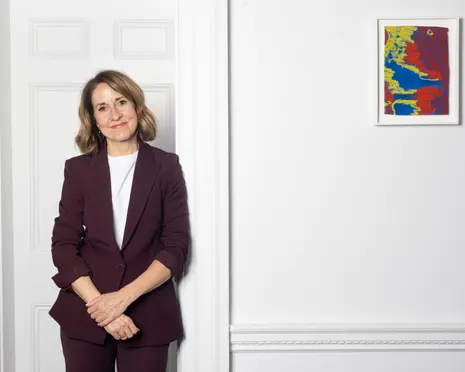
Wanderstayfinder.com – Liz Kendall, the UK’s technology secretary, has announced that the government is evaluating fresh strategies to combat the rapid dissemination of misinformation during public emergencies. Her remarks come amid growing concerns about the role of social media platforms in exacerbating unrest, particularly after recent riots in Southampton. Kendall emphasized her resolve to remain on Elon Musk’s X, stating she would not be “bullied off” the platform, which has become a focal point for spreading false narratives. The minister’s comments reflect a broader effort to address how digital spaces influence public perception during crises.
The Role of Social Media in Crisis
The current tensions in Southampton stem from public outrage over the police’s handling of the fatal stabbing of Henry Nowak. Musk’s X has amplified this issue through repeated posts about the case, drawing attention from his 240 million followers. Kendall highlighted the need for oversight, noting that social media’s algorithmic systems often accelerate the spread of misleading content. “I definitely think, particularly during moments of crisis and disorder, we need to look at what more we can do,” she said, underscoring the urgency of action to protect public safety.
“I’m going to get the government’s message out; hopefully to some people who want to hear it and definitely to those who don’t,” Kendall added, stressing the importance of clear communication in times of confusion.
Kendall referenced a report from the Commons science, innovation, and technology committee, which recommended that Ofcom establish “crisis response protocols” to hold platforms accountable for misinformation. This comes after the regulator conducted consultations on the matter, with detailed proposals anticipated this month. The committee’s investigation was triggered by the summer 2024 riots, which saw misinformation spread rapidly following the murder of three girls at a dance class in Southport. Their findings revealed that “misleading and hateful messaging proliferated rapidly online, amplified by the recommendation algorithms of social media companies.”
Challenges in Regulating Digital Spaces
Chi Onwurah, chair of the committee, criticized the Online Safety Act (OSA) for its shortcomings in addressing misinformation. “Our current regulation just isn’t up to scratch,” she said, pointing to the OSA’s inadequacy in the wake of the 2024 riots. Despite the report’s praise from the secretary of state, the legislation has yet to be updated, leaving gaps in its ability to curb harmful content. Onwurah argued that the OSA, which was not fully operational at the time of the Southport incident, failed to provide sufficient safeguards for online discourse.
“Since then, the secretary of state has told my committee that the report was ‘excellent’. However, a year after its publication, no progress has been made to update the OSA,” Onwurah noted, highlighting the disconnect between recommendations and implementation.
Kendall expanded on the need for proactive measures, suggesting that the government should not only support reliable information sources but also empower users to adjust algorithms that drive content visibility. “I think lots of people think they see this stuff coming towards them. It should be much easier for people to say ‘let’s have a reset’,” she said. This idea of user control over algorithmic settings aims to reduce the echo chamber effect, which can distort public understanding during volatile times.
Political Tensions and Platform Criticism
On Thursday, Keir Starmer, the leader of the Labour Party, took a stronger stance against Musk, accusing him of “interfering in our politics.” Kendall acknowledged her colleagues’ concerns about social media’s influence but defended her own presence on X. “I understand my colleagues, why they don’t want to be there,” she said, “but I didn’t want to be bullied off any platform.” Her commitment to engaging with the public highlights a divide within the government over the best approaches to digital regulation.
Musk’s X has played a central role in the current crisis, with his posts on the Nowak case generating widespread attention. One such post, sharing comments from far-right MP Rupert Lowe, simply read “RAGE” and was viewed over 25 million times. In contrast, Kendall’s recent post about taxpayer support for innovation at Liverpool University received 5,500 views and was shared eight times, illustrating the varying reach of political messages on the platform.
Legal Actions and Public Accountability
The Labour MP Jess Asato has taken legal steps against Musk’s XAI company, targeting the Grok AI tool for its role in spreading demeaning sexualized material. Asato’s lawsuit aims to hold the platform accountable for the content its algorithms promote. The prime minister praised her initiative, calling it “absolutely right” to take such action. This legal front adds another layer to the government’s push for greater transparency and responsibility from digital platforms.
Analysis by the human rights group Amnesty International last year revealed how X’s algorithms contributed to the “staggering amplification of hate” following the Southport murders. The report linked the rapid spread of inflammatory content to the platform’s design, which prioritizes engagement over accuracy. Kendall echoed these concerns, stressing that the OSA’s implementation process was too slow. “From the initial idea and discussion to implementation was eight years. It is a long time. It’s too long,” she said, emphasizing the need for faster legislative responses to evolving technology.
“This technology is developing so rapidly. MPs vote on a finance bill every year. It can’t be beyond the wit of man or even womankind to do things more quickly,” Kendall remarked, calling for accelerated reforms to keep pace with digital innovation.
The government’s push to address misinformation ties into broader efforts to balance free speech with public safety. While some members of Starmer’s party have expressed reservations about social media’s role, Kendall’s leadership underscores a determination to assert authority in the digital space. Her emphasis on user empowerment and algorithmic resets reflects a shift toward collaborative solutions, rather than top-down mandates.
As the debate intensifies, the focus remains on how platforms like X can be held accountable for their impact on societal stability. With the committee’s report and ongoing legal actions serving as catalysts, the government is under pressure to implement reforms that prevent misinformation from fueling unrest. Kendall’s persistent advocacy for these measures, despite the challenges of navigating political and public opinion, signals a renewed commitment to shaping the digital landscape for the public good.
In the days ahead, the outcome of these discussions could redefine the relationship between governments and social media companies. As misinformation continues to shape political narratives, the stakes for effective regulation have never been higher. Kendall’s vision for a more responsive and accountable digital ecosystem offers a blueprint for how policymakers might address the complex interplay of technology, truth, and public trust in the modern era.