The EU that the UK left no longer exists
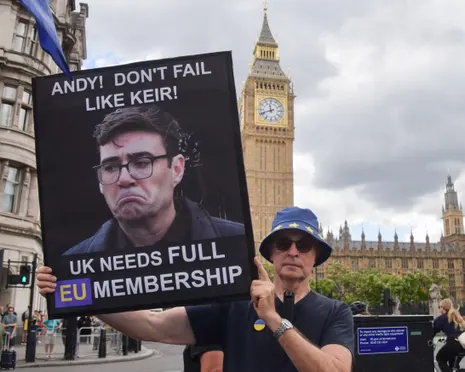
The EU that the UK left – With the UK’s current prime minister nearing the end of their term and Andy Burnham poised to take the helm, the question of Britain’s return to the European Union has reignited. Wes Streeting, once a prominent contender for the leadership and now a potential future chancellor, recently asserted that the nation should consider rejoining the EU. However, the renewed focus on reentry has largely narrowed to two key points: the economic toll of Brexit and the feasibility of regaining previous opt-outs from the Eurozone and Schengen agreements. While these concerns are valid, they overlook the broader transformation of the EU itself—a shift that challenges the very principles the UK sought to uphold upon departure.
A New Era of Fiscal Integration
The EU of 2026 has evolved into an entity that diverges significantly from the one the UK left behind. One of the most striking changes is the bloc’s increasing reliance on shared borrowing to address crises. In response to the pandemic, the EU’s budget expanded dramatically, with €100bn in loans distributed to member states to fund furlough schemes. As the health emergency deepened, an additional €750bn was allocated as grants, primarily for green and digital initiatives. These measures, though essential, signal a departure from the traditional model of national sovereignty, embedding a new level of fiscal coordination that many Eurosceptics had long predicted.
Common borrowing is no longer just a temporary strategy but a foundational aspect of EU governance. The bloc’s next long-term budget, covering 2028 to 2034, proposes a permanent fiscal capacity, allowing Brussels to access capital markets independently. This development necessitates greater supranational taxation, prompting the commission to push for EU-wide corporate and digital tax reforms. Such measures would enable the EU to sustain its financial commitments, yet they also raise questions about the balance between collective action and national autonomy. For the UK, which historically opposed such integration, this evolution represents a stark contrast to the pre-Brexit era.
“Britain should be back in the EU,” Wes Streeting declared, underscoring a growing sentiment among some UK political figures that the country’s exit has left it in a less favorable position.
Geopolitical Ambitions and Industrial Policy
The EU’s approach to security and defense has also transformed. In 2026, the bloc launched the Security Action for Europe (Safe) initiative, borrowing €150bn to bolster defense-industrial collaboration. This effort is part of a broader strategy to reduce dependence on external powers, particularly the United States, and to counteract perceived threats from China. By implementing “buy European” requirements, the EU has sought to strengthen its strategic autonomy, prioritizing domestic industries over foreign competitors. These policies reflect a shift toward using industrial strategy as a geopolitical weapon—a role the UK had traditionally resisted.
Similarly, the EU has adopted a more assertive stance in its single market, embracing interventionist measures that the UK once viewed as excessive. The proposed Industrial Accelerator Act, for instance, aims to shield European industries from global competition by offering targeted subsidies and support. This approach, while effective in countering Chinese dominance, challenges the UK’s preference for open markets. The EU’s growing emphasis on technological sovereignty further highlights this divergence, as it seeks to minimize reliance on Silicon Valley firms and promote self-sufficiency in critical sectors.
Rejoining the EU: A Challenge for British Interests
As the EU expands its role in global affairs, the question arises: would the UK want to rejoin? The answer hinges on whether the new EU aligns with Britain’s strategic priorities. The UK’s historical stance favored close ties with the United States, particularly in economic and security matters, while maintaining a cautious approach to China. However, the EU’s recent policies, including its assertive posture toward the US and its industrial protectionism, suggest a shift that could conflict with British interests. This raises the possibility that rejoining might not be as straightforward as simply reversing Brexit.
The UK’s departure has allowed it to maintain a unique position, balancing its relationships with both superpowers. Yet, as the EU’s influence grows, so does its ability to shape the global economic and political landscape. The bloc’s increasingly interventionist policies and fiscal integration threaten to erode the flexibility the UK has long championed. For the UK to rejoin, it would need to reconcile its past approach with the EU’s current trajectory, potentially redefining its role within the union.
Implications for the Future
The EU’s transformation since the UK’s exit is not merely a matter of policy change but a reimagining of its core functions. The bloc has moved beyond its initial post-Brexit identity, adopting a more centralized and proactive model. This shift is driven by the need to respond to crises with unified action, but it also signals a willingness to cede some national control in favor of collective strength. The implications for the UK are profound: rejoining would require accepting these new norms, which may not align with the country’s longstanding principles.
For British political elites, the decision to rejoin would involve navigating a complex landscape of fiscal commitments and geopolitical alignment. The public, too, might be influenced by the EU’s enhanced role in global affairs, particularly as it tackles challenges like climate change and digital innovation. Yet, the debate must extend beyond cost-benefit analysis to address whether the EU’s evolution makes it a desirable partner for the UK in the years ahead. The question is no longer just about the price of rejoining, but about the value of the new EU itself.
The UK’s exit from the EU was framed as a victory for sovereignty and independence. However, the bloc’s recent developments suggest that the UK may have inadvertently helped shape its own successor. The EU’s embrace of shared borrowing, industrial protectionism, and a more assertive foreign policy creates a structure that is fundamentally different from the one it left. For the UK to rejoin, it must be prepared to adapt to this new reality, potentially embracing policies it once opposed. The rejoin debate, therefore, is not just about the past but about the future of British-EU relations in an increasingly integrated and interventionist Europe.
In the end, the EU of 2026 is a more formidable entity, with powers that extend beyond its original mandate. Its evolution into a centralized economic and political force challenges the UK’s position, offering a compelling case for reentry but at the cost of compromising some of its core values. As the discussion continues, the key will be whether the UK can reconcile its identity with the EU’s new role—or whether the EU itself will become an obstacle to British interests, even as it beckons the nation back into its fold.