Firefighters Face Unprecedented Dilemmas as Global Wildfires Intensify
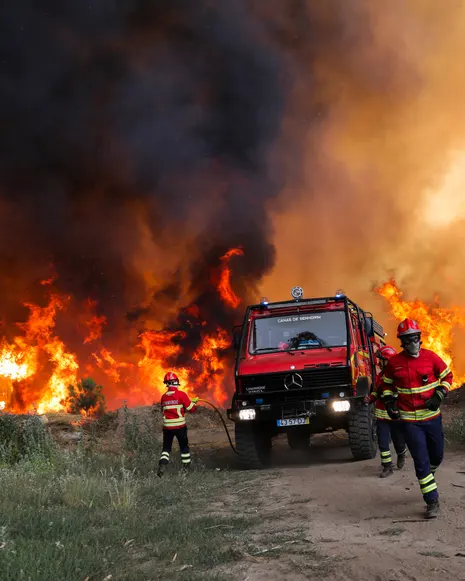
It s only going to get worse – As climate change accelerates the frequency and severity of wildfires worldwide, emergency responders are increasingly compelled to prioritize which blazes to combat. This challenge has grown particularly acute in recent years, with regions once considered safe from major fires now experiencing devastating conflagrations.
A Personal Perspective on Growing Challenges
César Alcaraz joined the firefighting service during the latter part of the 1990s, when he encountered a rapidly advancing fire that nearly overwhelmed him. Trapped with limited oxygen and depleted water supplies, Alcaraz and his fellow firefighters escaped from the Montgó mountain area in Spain, hoping additional assistance would have been dispatched. Now, almost thirty years later, serving as an officer for Alicante’s provincial fire department, he understands better the difficult decisions that leaders must make during crisis situations.
When multiple wildfires strike simultaneously, Alcaraz compares the role of firefighters to medical professionals working in overcrowded emergency rooms where critical equipment is insufficient. This challenge intensifies across Mediterranean nations and extends even to cooler climates like Britain, where flames increasingly threaten urban centers, residential areas, and green spaces.
“It’s not just about having more fires to fight, it’s the risk of operational collapse,” said Alcaraz, who monitors the command center and observes that concurrent blazes occur more frequently and earlier in the calendar year. “When two or three fires break out simultaneously, we are forced to make immediate triage decisions.”
Global Scope of the Crisis
Western Europe has experienced severe wildfires this month, resulting from consecutive heatwaves that transformed verdant landscapes into combustible material. Meanwhile, North America endures thick smoke from numerous fires. France, Portugal, and Spain each recorded unprecedented wildfire counts for this season, with France experiencing historically large burned areas and Spain losing thirteen lives.
Britain started the week with nineteen distinct fires, prompting specialists to predict a “firewave” of exceptional scale. Across the Atlantic Ocean, smoke originating from one hundred fires in northern Ontario rendered Toronto the world’s most polluted urban center on Wednesday, before drifting across American borders to affect New York City.
Research published last year revealed that Canadian wildfire smoke generated approximately 82,000 premature deaths globally in 2023, comprising 33,000 American fatalities and 22,000 European deaths. The European Union’s Copernicus monitoring service reported on Friday that summer smoke conditions produced “extremely poor” air quality alerts across regions including New Jersey, which will host the World Cup final on Sunday.
Understanding the Changing Fire Landscape
Interestingly, the worldwide pattern shows decreasing total hectares burned, primarily because vast African savanna regions previously prone to fires have been divided by agricultural development. However, where fires do occur, they tend to burn hotter, demonstrate greater unpredictability, and happen more frequently.
Elevated carbon emissions have increased worldwide temperatures, creating conditions where dried vegetation ignites more readily. Small fires can rapidly transform into massive conflagrations, expanding into forests, moorlands, urban parks, and residential gardens—areas previously less susceptible to fire damage. Researchers refer to this expanding danger zone as the wildland-urban interface.
Regional Responses and Future Outlook
French authorities have implemented resource allocation strategies to manage extreme scenarios. Julien Marion, director of France’s civil protection agency, noted that firefighters addressed between 250 and 300 simultaneous fires over three weeks while visiting the Fontainebleau forest on Thursday. Spanish firefighters, accustomed to managing only a few fires at once, now confront increased frequency and intensity.
Recent wet winter and spring seasons have promoted vegetation growth, creating additional fuel when summer dryness arrives. Combined with farmland abandonment that previously helped fragment flammable terrain, these factors compound the challenge. Spanish officials indicated on Thursday that a significant fire in rural Aragón could require multiple days to contain.
“In the end, the response capacity is limited,” said Juan Caamaño, training director at the Pau Costa Foundation, a nonprofit organization supporting Northern Ireland and other northern European regions in preparing for escalating wildfire threats. “When we face these huge fires, these extreme events, it’s like trying to put firefighters on a beach to stop a tsunami.”
In Britain, where grass fires pose greater threats than forest fires, conflagrations have erupted from metropolitan areas to national parks following an exceptionally hot summer beginning. A wildfire that devastated Walthamstow in eastern London over the previous weekend exemplified this expanding threat pattern.