
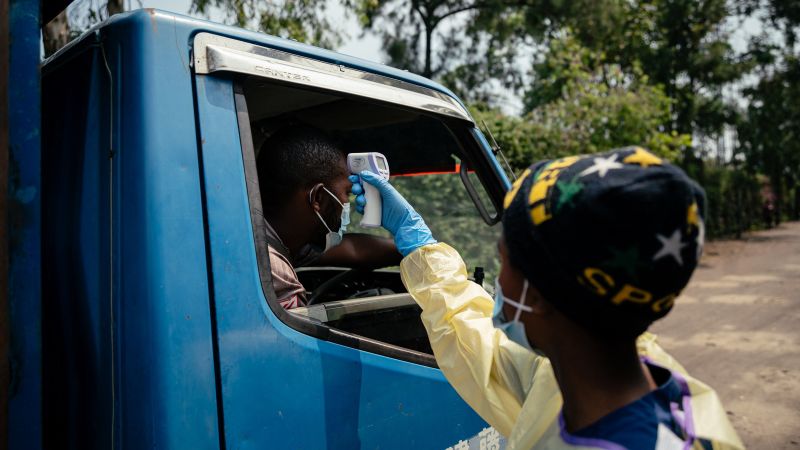
Should you worry about the Ebola outbreak? Here’s what the numbers tell us
Should you worry about the Ebola – The World Health Organization (WHO) has raised alarms over a rapidly escalating Ebola outbreak spanning the Democratic Republic of Congo (DRC) and Uganda, highlighting its potential to pose significant threats at national and regional levels. This development has triggered urgent assessments, with the organization categorizing the situation as a “public health emergency of international concern.” Despite these warnings, the global risk remains relatively low, according to WHO officials.
The Strain and Its Challenges
A specific strain of the virus, known as Bundibugyo, is identified as the source of the outbreak. Unlike other Ebola strains, Bundibugyo lacks a dedicated treatment or vaccine, complicating efforts to contain it. Dr. Tedros Adhanom Ghebreyesus, the WHO director-general, emphasized several alarming factors, including delayed detection, the high mortality rate among healthcare workers, and the rapid movement of people within the affected regions. These elements, combined with the strain’s resistance to conventional therapies, have intensified concerns about the outbreak’s trajectory.
Dr. Anne Ancia, WHO’s representative in the DRC, noted the uncertainty surrounding the actual number of infections and the extent of the virus’s spread. “We have significant uncertainty about the number of infections and how far the virus has spread,” she stated. This ambiguity underscores the need for continued vigilance and expanded monitoring efforts. While the outbreak has been officially recognized, the challenge lies in accurately tracking its reach and impact.
American Involvement and Global Response
At least one American citizen working in the DRC has tested positive for Ebola, according to the international charity Serge. German authorities confirmed that the infected individual was transferred to the country for medical care. The US Centers for Disease Control and Prevention (CDC) also announced plans to relocate six high-risk contacts to Europe for observation. Five of these individuals will be sent to Germany, while the sixth will receive care in the Czech Republic.
Dr. Peter Stafford, the symptomatic American patient, is a general surgeon specializing in burn care. He was treating patients in Bunia when he contracted the virus. His wife, Dr. Rebekah Stafford, and another doctor, Dr. Patrick LaRochelle, are believed to have been exposed but remain asymptomatic. Both are currently adhering to strict quarantine protocols. The patient’s arrival in Berlin on Wednesday was reported by German officials, where he is being treated at Charité University Hospital.
While the American case has drawn attention, the outbreak’s focus remains on the DRC and Uganda. Ugandan health authorities confirmed two cases as of Tuesday, with both linked to the DRC. The first patient, treated at a local facility, succumbed to the illness, while the second case is considered imported. In response, Uganda has implemented outbreak control measures, including enhanced surveillance and readiness protocols.
Transmission and Timeline
According to WHO, the virus spreads through direct contact with bodily fluids such as blood, vomit, or feces. It can also transmit via contaminated objects or surfaces. The incubation period ranges from two to 21 days, but individuals are not contagious until symptoms appear. This aspect of the disease’s biology makes early detection and isolation crucial.
The outbreak’s timeline reveals a critical delay in identification. WHO officials reported receiving an alert on May 5 regarding an unknown illness in Mongbwalu, a town in the DRC’s Ituri province. This alert highlighted a high mortality rate, with four healthcare workers dying within four days. The outbreak likely began “a couple months ago,” the organization said, and the detection gap of four weeks allowed the virus to spread unchecked.
Once the alert was received, the local government and WHO swiftly deployed an investigation team to the region on May 12. They collected samples for testing, marking the start of a coordinated response. However, the delayed recognition of the outbreak has raised questions about preparedness and early intervention strategies.
Dr. Tedros emphasized the “scale and speed” of the outbreak as a primary cause for concern. While the WHO has declared a public health emergency, the organization maintains that the global risk is still low. This assessment is based on the current containment measures in place and the relative stability of international transmission chains. Nevertheless, the outbreak’s potential to grow remains a focal point for health authorities worldwide.
Regional and International Implications
As of Tuesday, only 51 cases have been officially confirmed in the DRC, though at least 139 deaths are suspected to be linked to the outbreak. Nearly 600 additional cases are under investigation, indicating a broader potential spread. The WHO’s focus on regional dynamics highlights the interconnectedness of healthcare systems within the area. Dr. Tedros described the outbreak as a “deadly” and “rapidly evolving” situation, stressing the need for immediate action.
The spread of the virus within the DRC and Uganda has prompted countries to take preventive steps. These include restricting travel from the affected regions, conducting health screenings at borders, and dispatching medical resources to support local efforts. Such measures aim to minimize the risk of international transmission, though they also raise questions about the balance between containment and economic impact.
While the outbreak presents a high-risk scenario locally, its global spread remains a concern. The WHO’s evaluation of risk levels indicates that the epidemic is significant at the national and regional levels but not yet a major global threat. This classification, however, does not diminish the urgency of the situation, especially given the rare nature of the Bundibugyo strain and its ability to evade current treatments.
Health officials continue to investigate the precise origin and timeline of the outbreak. The four-week detection gap, between the first known patient in April and the official alert in May, has been identified as a key factor in the virus’s proliferation. Addressing this gap is essential to prevent similar delays in the future and to ensure rapid response to emerging health threats.





