
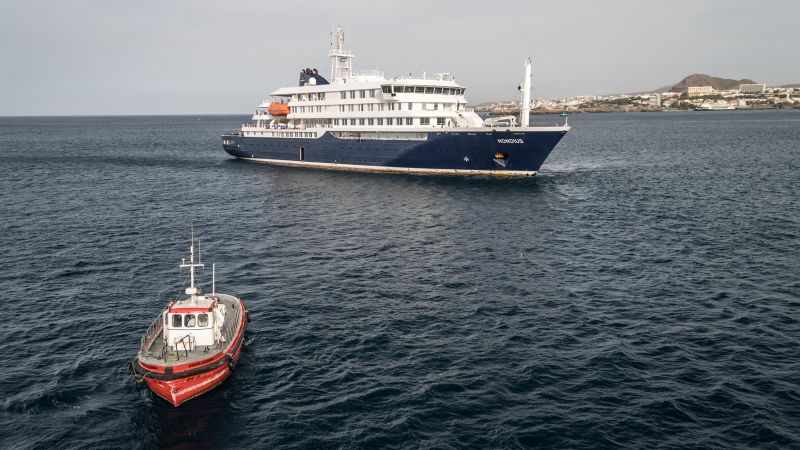
WHO Chief Reassures Worried Tenerife Residents as Hantavirus Cruise Ship Arrives
WHO chief reassures worried Tenerife residents – The World Health Organization’s (WHO) director general, Tedros Adhanom Ghebreyesus, has spoken directly to Tenerife residents to alleviate concerns over the approaching arrival of the MV Hondius, a cruise ship linked to a hantavirus outbreak. The vessel is set to dock at Granadilla port on Sunday, raising fears after three passengers were reported to have died from the virus. Tedros, who is visiting the Spanish island to oversee the evacuation, assured the public that the risk is not as severe as the global pandemic caused by the coronavirus, though he acknowledged the unease among locals.
Public Health Risk Evaluation
During a press briefing, Tedros highlighted that the current hantavirus outbreak poses a limited threat to Tenerife’s population. He stated that after thorough analysis by WHO specialists, the risk remains contained, emphasizing that the virus spreads primarily through rodent contact. “You will not encounter them. Your families will not encounter them,” he reiterated, reinforcing the measures in place to protect the island’s community. The reassurance aims to counter fears of a widespread health crisis, even as the MV Hondius approaches.
“The public health risk from hantavirus is minimal,” said WHO chief Tedros Adhanom Ghebreyesus. “We made this assessment carefully to ensure transparency and clarity.”
According to Oceanwide Expeditions, the cruise ship will arrive at 5:30 a.m. on Sunday, with passengers and crew being disembarked in controlled groups. The company emphasized the organized process to reduce potential exposure, stating that the operation will prioritize safety for both travelers and the local population. This approach aligns with the WHO’s guidance, which has been shared with Tenerife’s health officials to support the evacuation plan.
Evacuation and Medical Protocols
Spain’s government has implemented a multi-step strategy to manage the MV Hondius’s arrival. The first phase involves transporting nearly 150 passengers using sealed vehicles to prevent virus spread. These individuals will undergo medical checks before being sent to their home countries, with some requiring isolation and PCR testing. “Our goal is to ensure a controlled transfer while safeguarding public health,” said health ministry officials, who are coordinating the process with the cruise line and WHO.
Twelve Spanish passengers will be taken to a military hospital for further observation. There, they will be placed in individual rooms and monitored daily for symptoms, as confirmed by the ministry. The repatriation process includes a charter flight with a biocontainment unit, designed to isolate any infected travelers during transit. This plan reflects the collaborative efforts between Spanish authorities and international health organizations to mitigate risks effectively.
Community Reaction and Concerns
Despite the WHO’s assurances, some Tenerife residents and port workers have expressed skepticism. Earlier this week, Fernando Clavijo, the Canary Islands’ leader, voiced reservations about allowing the ship to dock, citing worries over inadequate communication about the outbreak. Protests were organized by locals to highlight these concerns, with demonstrators demanding more information and stricter safety protocols. However, Spain’s Prime Minister Pedro Sanchez has defended the decision, calling it an act of solidarity and a moral obligation to assist affected passengers.
Clavijo later reiterated his government’s stance, emphasizing the need for greater transparency. “We will no” — the statement is cut off, but his message underscores the ongoing debate about the MV Hondius’s arrival. As the ship prepares to dock, tensions remain high, with the WHO chief’s reassurance serving as a key point in the discussion over the island’s readiness to handle the situation. The outcome will depend on how well the evacuation process unfolds and the public’s response to the health risks involved.





