
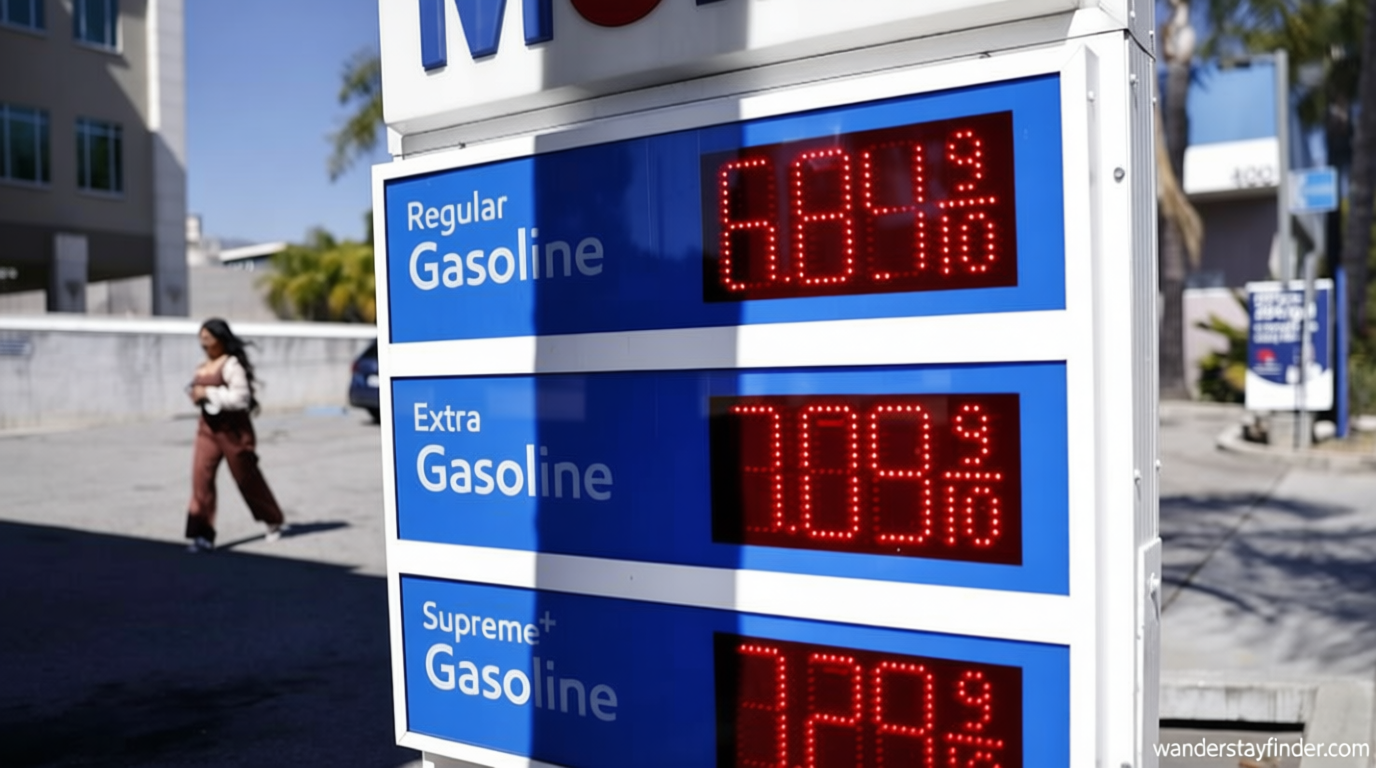
Memorial Day sticker shock: Gas prices near all-time highs
Memorial Day sticker shock – Tens of millions of Americans are set to embark on road trips this Memorial Day weekend, but they’ll face a financial challenge at the pump. Gasoline prices have reached unprecedented levels, with the national average projected to hit $4.48 per gallon by the holiday. This figure marks a 42% increase from the previous Memorial Day and stands as the second-highest recorded in history, according to GasBuddy. The only time prices exceeded this mark was in 2022, when the average reached $4.61 per gallon amid the aftermath of Russia’s invasion of Ukraine.
The ongoing conflict with Iran has thrown the global energy system into turmoil, driving prices upward despite efforts by the Trump administration to mitigate the effects. Emergency measures such as releasing oil from the Strategic Petroleum Reserve and waiving the Jones Act have been implemented, yet they’ve failed to curb the surge. The situation adds to the growing discontent among voters, who are increasingly frustrated with the Trump economy’s performance in managing everyday costs.
Summer price forecast remains uncertain
Patrick De Haan, GasBuddy’s head of petroleum analysis, warned that prices could climb further if the Strait of Hormuz remains closed. He told CNN, “The national average for regular gas could reach $5 per gallon next month if the situation in the strait persists.” This projection raises concerns, as GasBuddy now anticipates a summer average of $4.80 per gallon, which would surpass the prior summer record of $4.43 set during Biden’s presidency in 2022. “Prices were incredibly stable last summer. This summer is probably the complete opposite, perhaps the most volatile,” De Haan added, emphasizing that the outlook hinges on the geopolitical stability of the region.
Gasoline alone is costing consumers an estimated $24 billion since the Iran war began, according to Brown University’s Climate Solutions Lab. This, combined with diesel, has led to an overall $43 billion spike in energy costs, translating to nearly $200 per household. The economic strain is particularly acute for those with lengthy commutes, as rising prices eat into budgets that were already tight.
Travelers brace for higher expenses
Despite the soaring costs, a record 39.1 million Americans are expected to hit the roads this weekend, according to AAA. This number is nearly identical to the 39 million from the previous year, underscoring the nation’s reliance on personal vehicles for travel. For commuters like Chris Haenel of Pittsburgh, the financial burden is undeniable. “I used to spend $50 a week on gas, but now it’s $80,” he said. “Every day, I drive by the gas station and it’s just insane.” Haenel, who works as a computer technician, highlighted how the spike has disrupted his savings plan for retirement.
The surge in gas prices has contributed to a broader inflationary trend, pushing the U.S. inflation rate to nearly 4% in April. This marks the first time in three years that real wages—adjusted for inflation—have declined, leaving many households struggling to keep up. Haenel shared a personal account of the impact: “My wife brings home three bags of groceries, and it’s $300. I’m 60 years old, trying to save for retirement, but this is limiting how much I can save.”
Public sentiment shifts on energy policy
A recent CNN poll revealed that just 21% of Americans approve of Trump’s handling of gas prices, a stark contrast to his previous focus on energy issues as a core campaign promise. The findings show a majority of Republicans disapproving of his approach, signaling a potential shift in how the public perceives his economic stewardship. The poll also found that 75% of respondents believe the war with Iran has negatively impacted their financial well-being, highlighting the widespread concern over the energy crisis.
White House officials remain optimistic about stabilizing the situation, citing their “break-the-glass” strategies to control prices. These include releasing oil from the Strategic Petroleum Reserve, invoking the Defense Production Act, and suspending Russian oil sanctions. Taylor Rogers, a White House spokeswoman, stated, “President Trump remains committed to fully unleashing American energy dominance, lowering costs, and putting more money back in the pockets of hardworking American families.” Her statement reflects the administration’s belief that the conflict with Iran will eventually lead to lower prices.
Trump’s defense of rising costs
Trump has dismissed the current spike as a temporary inconvenience, arguing that it’s a small price to pay for preventing Iran from acquiring a nuclear weapon. “This is peanuts,” he told reporters. “I appreciate everybody putting up with it for a little while. It won’t be much longer.” However, some Americans disagree with his assessment. Gary Auerswald, a retiree in Illinois, countered, “It’s not a small price to pay.” He emphasized the ongoing hardship for families, particularly those with limited income, who are bearing the brunt of the financial strain.
The administration’s efforts to stabilize the energy market have been met with mixed reactions. While some applaud the proactive measures, others argue that the long-term effects of the Iran war will persist. As the summer months unfold, the question remains: will gas prices stabilize, or will they continue to climb, further testing the resilience of American consumers?
With the nation’s energy landscape in flux, the impact of these price increases extends beyond the immediate economic strain. They underscore the delicate balance between geopolitical tensions and domestic affordability, a challenge that will require continued attention from policymakers. As Americans prepare for the long haul of summer travel, the hope is that the administration’s strategies will bring relief, though the road to recovery remains uncertain.





