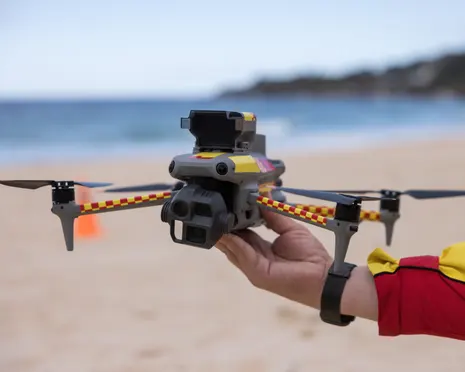
NSW Beaches to Get Dawn-to-Dusk Drone Patrols in $34m Anti-Shark Initiative
NSW beaches to get dawn to dusk – Under a new $34 million initiative, New South Wales will implement continuous drone monitoring across 70 beaches throughout the year, the state government has announced. This expanded program aims to enhance safety for swimmers and surfers by leveraging aerial technology to detect sharks earlier and provide timely alerts. Premier Chris Minns emphasized the importance of the project, stating it would help restore public confidence following a series of shark encounters and attacks, including a notable incident at Coogee Beach earlier this month.
Aerial Surveillance to Cover Major Coastal Areas
The program will initially focus on 38 ocean beaches in Sydney, stretching from Palm Beach in the northern suburbs to Cronulla in the southern region, as well as 32 additional coastal spots across the state. These beaches will be monitored daily from 1 July, with drone flights extending into the late afternoon. The initiative also plans to increase coverage at other regional beaches, featuring weekend-only patrols and extended flight hours during peak seasons. The operation will be managed by Surf Life Saving NSW, which has already used drones for school holiday surveillance along the coastline.
Minns highlighted that the new measures would create a “constant presence” in the skies over popular swimming areas. “No one can ever promise no shark interactions, but this investment is about increasing aerial surveillance so we can identify threats earlier and give people a clear heads-up when they’re in the water,” he said during a Sunday press briefing. The premier noted that the program would be a key part of the state’s broader strategy to manage shark risks, particularly in light of recent incidents that have raised concerns among beachgoers.
Technology and Expert Support
Surf Life Saving NSW’s chief executive, Steve Pearce, confirmed that drones have already proven to be “an extremely effective component” of the shark management program. He cited data showing that the drones identified and prevented over 2,000 shark interactions with swimmers and surfers this year alone, while conducting more than 100,000 flights. The expanded program will also trial new artificial intelligence systems for shark detection during the summer months, with the goal of enabling automated flights in the future.
“The use of AI is ambitious and bold,” said Associate Professor Christopher Pepin-Neff, a shark policy expert at the University of Sydney. “But we need to be realistic about what drones can do and what they can’t.” Pepin-Neff added that increased drone coverage would likely lead to more frequent discussions about sharks on Australian beaches, describing them as “wild” environments similar to the bush. “The beach is the wild,” they remarked, “so we have to adapt our strategies to that reality.”
Focus on Bull Sharks and Culling Controversies
While the program targets all shark species, Minns stressed that the initiative would not involve culling great white sharks, which are classified as a protected species. He acknowledged the difficulty of eliminating these sharks, as they travel vast distances across the ocean. “The distances these [white] sharks travel are massive,” Minns explained. “It’s not like we can knock a few off and send a message to the rest of them.”
However, the premier noted that bull sharks, which are not protected, would be under closer scrutiny. “We’re looking particularly at an audit of the number of sharks in Sydney Harbour,” he said. “If their numbers are higher than normal in the summer, we can’t rule out culling as a potential measure.” This statement drew mixed reactions from experts. Robert Harcourt, an emeritus professor of marine ecology at Macquarie University, pointed out that long-term tagging studies showed “no evidence of an increase in abundance” for bull sharks. “There is some evidence that sharks are coming down earlier and staying longer,” Harcourt added. “A cull is not a rational response to that.”
Despite these considerations, Harcourt praised the investment in drone technology, calling it a “comprehensive solution” that addresses multiple safety concerns. “Drone monitoring isn’t just about sharks; it also provides swimmer surveillance and helps mitigate other hazards,” he said. The program’s focus on early detection and real-time alerts aligns with this goal, aiming to create a safer environment for all coastal activities.
Implementation and Coverage Details
The 70 beaches selected for drone patrols include at least one in every coastal local government area, ensuring broad coverage for high-traffic zones. While the program will not cover every beach in the state, it prioritizes locations with the highest number of swimmers and surfers. Two SharkSmart listening stations in Sydney Harbour will complement the drone network by alerting beachgoers to tagged sharks, providing an additional layer of safety.
Minns also addressed concerns about the frequency of shark sightings, noting that the program would operate year-round to maintain consistent vigilance. “The expanded monitoring is a response to the growing number of interactions, not just a reaction to individual incidents,” he explained. The initiative reflects a shift toward proactive measures, with the hope that increased surveillance will reduce the likelihood of attacks without resorting to lethal methods.
As the program rolls out, experts are cautiously optimistic about its potential. Pepin-Neff emphasized the importance of public education alongside technological advancements, stating that “more eyes in the sky” could lead to better awareness and preparedness. “We need to ensure people understand the risks and the benefits of these tools,” they added. The combination of drones and AI systems is expected to streamline operations and improve response times, making the monitoring efforts more efficient.
The state government has allocated the $34 million budget to cover both the drone operations and research into AI-driven shark detection. This includes testing automated systems that could identify sharks without human intervention, a development that could revolutionize coastal safety. While the program is still in its early stages, Minns described it as a “critical step” toward protecting both people and marine life. “This is about balancing safety and conservation,” he said. “We want to keep beaches open while reducing the risk of shark encounters.”
Residents and visitors have welcomed the news, with many expressing relief at the added safety measures. “It’s reassuring to know we have more tools to protect us,” said a Sydney beachgoer. However, some critics argue that the program should be evaluated regularly to ensure its effectiveness. “We need to measure the impact of these drones over time,” Pepin-Neff suggested. “Technology is a powerful asset, but it must be used wisely.”
As the drone patrols begin, the focus will remain on monitoring and prevention rather than elimination. The state government has committed to ongoing assessments of the program, with the hope that it will set a new standard for shark management. “This is just the start of a long-term strategy,” Minns concluded. “Our goal is to make the coast safer for everyone, year after year.”
“The beach is the wild,” said Associate Professor Christopher Pepin-Neff. “With more drones in the air, that is going to mean sharks are discussed a lot more across Australian beaches.”
“A cull is not a rational response to that,” Robert Harcourt noted. “We need to treat the beach like the bush.”
The program’s success will depend on its ability to integrate advanced technology with community engagement. As the summer season approaches, the trials of AI detection systems will be closely watched, with the potential to transform how sharks are monitored in the future. For now, the expanded drone patrols represent a significant step in the state’s efforts to balance safety, conservation, and public confidence.