AusAlert test will blast emergency warning: Australia Prepares for Nationwide AusAlert Emergency Siren Test Wanderstayfinder.com – On Monday, July 27
Australia Prepares for Nationwide AusAlert Emergency Siren Test
Wanderstayfinder.com – On Monday, July 27, 2026, virtually every mobile phone across Australia will emit a distinctive emergency siren sound as part of the inaugural nationwide trial of AusAlert. This groundbreaking national warning system represents a significant evolution in how Australians receive critical safety information during disasters. The test, scheduled for 2pm AEST, will reach most smartphones along with select smartwatches and tablets, ensuring broad coverage across different device types.
What makes this alert particularly noticeable is its persistent nature. Unlike typical notifications that can be dismissed, the AusAlert sound cannot be silenced even when devices are set to “do not disturb” or silent mode. This ensures that regardless of how a person has configured their phone, the warning will be heard. The alert serves as a preparatory measure for various emergencies including bushfires, flooding events, terrorist attacks, and public health crises.
How the System Differs from Current Methods
Currently, Australian authorities rely primarily on standard SMS text messages to communicate safety information to the public. However, this approach has demonstrated limitations during major emergencies. Network congestion can prevent messages from arriving promptly or at all, with delivery reliability varying depending on the mobile service provider. The AusAlert system addresses these shortcomings by utilizing mass broadcast technology through mobile phone towers, creating a more reliable delivery mechanism.
“The existing system is based on standard SMS capability, and throughout a series of emergencies and disasters, that system has had real latency in terms of people receiving the messages,” explained Pat Hetherington, interim coordinator general at NEMA.
The new technology enables both nationwide broadcasts and localized “geofenced” alerts for specific situations such as regional flooding or boil water notices. This dual capability ensures that warnings can be tailored to affected areas while maintaining the ability to reach the entire country when necessary.
Timing and Time Zone Considerations
The test has been strategically scheduled during what NEMA describes as an “ordinary” time of day to help people recognize the alert sound in future real emergencies. The timing varies across Australia’s time zones:
For residents of New South Wales, Victoria, the Australian Capital Territory, Queensland, and Tasmania, the alert will sound at 2pm. Those in the Northern Territory and South Australia will experience the siren at 1.30pm, while Western Australians will hear it at noon. This staggered approach ensures the test captures the full breadth of the Australian population.
“On Monday 27 July 2026, a test alert will be sent to all mobile devices in Australia. This includes most phones, and some smart watches and tablets,” the National Emergency Management Agency advised.
Historical Context and Development
AusAlert emerged from recommendations made by the royal commission investigating the devastating 2019-20 black summer bushfires. These catastrophic fires highlighted the urgent need for a nationally consistent warning system that could overcome the limitations of existing infrastructure. Federal emergency management minister Kristy McBain, whose Eden-Monaro electorate suffered heavily during those fires, witnessed firsthand how some residents failed to receive critical text alerts when their phone providers experienced outages.
“The new system allows nationwide alerts as well as localised ‘geofenced’ alerts such as for floods or even warnings to boil water in emergency situations,” McBain noted.
McBain characterized AusAlert as a “far superior” system that would reach “more people in a more timely manner” compared to state government warning systems. She emphasized that existing methods would continue to operate alongside the new technology, describing AusAlert as “another tool in the toolkit” rather than a complete replacement.
Device Compatibility and Technical Details
According to NEMA guidance, mobile phones manufactured after 2019 should be capable of receiving the alert. The system will function on all compatible devices regardless of whether the user is on a call or has their phone set to silent. Approximately 80 percent of Apple iPhones and around 16 million Android devices are expected to receive the notification.
Specific compatibility requirements include iPhone models 11 and newer running iOS 26.4 or later, Apple Watch models SE2, SE3, and Series 6 and above operating watchOS 26.4 or later, and Android devices with version 12 or higher. While older Android phones and those not using iOS or Android platforms might still receive AusAlerts, Apple iPads are not currently included in the rollout.
“The only way to not receive a critical alert is to turn your mobile device off or switch it to ‘airplane mode’,” NEMA clarified in their advisory.
Hetherington described the expected sound: “What people should expect to hear is a siren that will last for about 10 seconds.” He added that the alert would be “loud enough to get people’s attention” but quieter than a traditional fire alarm, noting it would be “noticeable, but won’t be too over the top.”
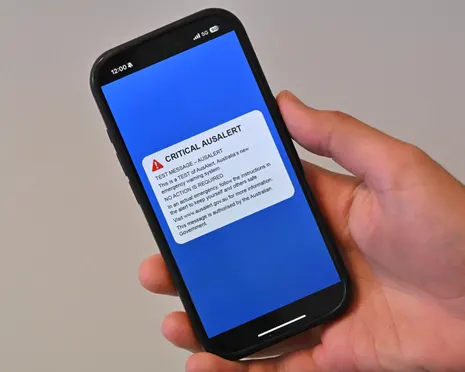
The pop-up notification will display text indicating “TEST MESSAGE” and “NO ACTION IS REQUIRED,” though the visual appearance may vary slightly depending on the device manufacturer and operating system.
Community Engagement and Concerns
Before the national test, NEMA and its deputy coordinator general Katarina Carroll engaged with thousands of organizations including schools, businesses, and funeral associations to ensure widespread awareness. This extensive consultation process aimed to minimize confusion and prepare communities for the experience.
While the system represents significant progress, it has also generated discussion regarding potential concerns. Some critics have raised questions about regional access limitations and the particular impact the loud siren might have on women and children experiencing domestic and family violence situations. These considerations reflect the comprehensive approach NEMA has taken in implementing the new warning system.
The national AusAlert system is scheduled for full launch in October, several months following this preliminary nationwide test. This phased approach allows authorities to identify any technical issues and make necessary adjustments before the system becomes operational for real emergencies across the country.
Related SEO Topics
- Home
- Artikel terkait AusAlert test will blast emergency warning
- Pauline Hanson says domestic violence prevents police from dealing with ‘real crime’ in unearthed interview
- Australia news live: Origin Energy says hackers accessed customers’ partial bank details; WA court dismisses Woodside case against activists
- Total solar eclipse books out hotels two years in advance in New Zealand city
- Six beluga whales finally leave embattled Canadian marine park
Frequently Asked Questions
What is AusAlert test will blast emergency warning?
AusAlert test will blast emergency warning is the main topic covered in this article, with practical context to help readers understand the subject clearly.
Why does AusAlert test will blast emergency warning matter?
AusAlert test will blast emergency warning matters because it helps readers compare options, avoid common mistakes, and make a more informed decision.
How should readers use this AusAlert test will blast emergency warning guide?
Use the key points, examples, and related links in this page as a starting point, then review the latest details before making a final decision.