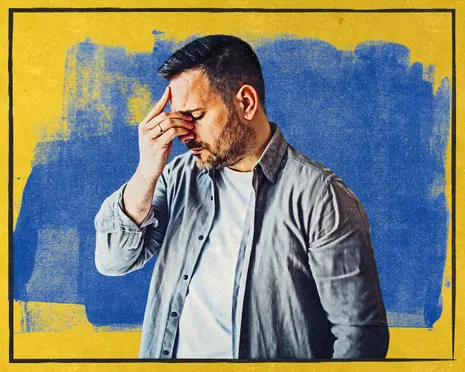
Understanding Migraines: From Ancient Remedies to Modern Science
Wanderstayfinder.com – For centuries, humanity has struggled to comprehend and treat migraines. While we have recognized this condition as a separate medical issue for thousands of years, effective solutions only emerged in recent decades. Ancient civilizations documented their approaches, and modern neuroscience has finally provided clarity on what truly happens during a migraine attack.
Historical Perspectives on Head Pain
The Ebers Papyrus, an Egyptian scroll from approximately 1550 BCE, contains one of the earliest recorded descriptions of what we now call migraines. This ancient text references a “disease of one half of the head” and prescribed anointing the scalp with fried catfish as treatment. Centuries later, Galen, a prominent Roman physician from the second century, coined the term “hemicrania”—the linguistic ancestor of our modern word. His recommended remedy involved blood-letting, which he applied to numerous medical conditions of his era.
By the twentieth century, medical thinking had shifted toward psychological explanations. Physicians proposed that repressed emotions triggered migraines, leading to the problematic assumption that women—disproportionately affected by the condition—were inherently more fragile and neurotic than men. Even as recently as twenty years ago, the vascular theory remained dominant in academic institutions. This framework attributed migraines to blood vessels within the brain expanding and contracting abnormally.
Primary versus Secondary Headaches
Before examining the neurological mechanisms, it helps to distinguish between two fundamental categories of head pain. Primary headaches arise without any underlying structural problem, while secondary headaches stem from identifiable causes ranging from stroke and meningitis to brain tumors or hemorrhage. A hangover represents a secondary headache, influenced by multiple factors including dehydration. Conversely, a cluster headache—a particularly distressing neurological condition that alcohol can trigger within minutes—falls into the primary category.
Migraines belong to the primary group but are frequently misclassified as secondary. This confusion has historically resulted in inadequate care for sufferers. Alexandra Sinclair, a professor of neurology at the University of Birmingham and chair of the British Association for the Study of Headache, explains the diagnostic challenge:
“As doctors, we’re taught to ask the right questions to determine which type of headache it is. We use the International Headache Society classification, which you can see online – but actually, for the individual patient, many headaches feel quite similar, so the precise classification can be difficult to understand.”
She adds that typical migraine symptoms include moderate to severe pain, a desire to lie down, sensitivity to light and noise, stillness, nausea, and pounding sensations often localized to one side of the head.
The Trigeminal Nerve and Chemical Triggers
Current research reveals that migraines originate from the activation of the trigeminovascular system—a complex network combining nerves and blood vessels responsible for detecting pain within the brain. At the center of this system sits the trigeminal nerve, the largest and most intricate sensory nerve in the human head. This nerve manages both sensory information, such as touch, pain, and temperature, alongside motor functions like chewing.
When dysfunction occurs, nerve fibers within this system release a chemical known as CGRP, or calcitonin gene-related peptide. This substance activates the brain’s pain pathways, producing headaches that span from moderate discomfort to complete incapacitation.
The Four Phases of a Migraine
Modern understanding identifies four distinct stages in a typical migraine episode. The first phase, called the prodrome, serves as a warning period characterized by excessive yawning, frequent urination, or unusual fatigue. During this stage, many people experience peculiar food cravings—a phenomenon that historically led to unfair blame being placed on patients.
Prof Sinclair clarifies this misconception:
“Historically, there used to be a sense of ‘Well, you may have caused your headache by eating a piece of cheese or chocolate.’ But actually, the research has completely turned that upside down. Functional brain imaging shows activation of the brain areas that might make you crave food in the 24 hours or so before the actual pain. Hence, you didn’t cause the migraine – the migraine caused the craving.”
Following the prodrome, approximately thirty percent of sufferers experience the aura phase. This stage may involve visual disturbances, numbness in facial features or extremities, or difficulties with speech. The migraine itself then unfolds, typically persisting between four and seventy-two hours. Finally, the postdrome phase arrives, during which individuals may feel depleted or exhausted for as long as two days. Only after this complete cycle concludes does the body begin returning to its normal state.