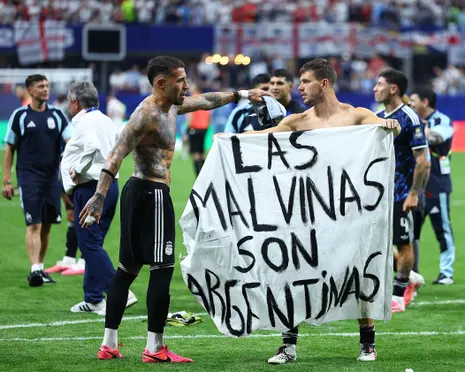
White House Supports Argentina Players After Falklands Banner
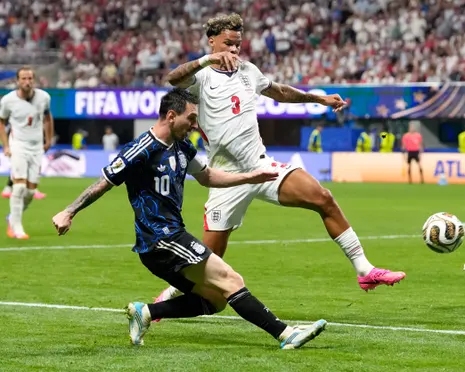
Wanderstayfinder.com – The White House backs Argentina players following a controversial moment during the World Cup semi-final. American officials have voiced strong support for the South American football team after several players displayed a banner referencing the Falkland Islands during their match against England. The game, which ended with Argentina winning 2-1 in Atlanta on Wednesday, became a focal point for diplomatic discussions between the United States and Britain.
After securing their place in the final, members of the Argentine squad revealed a banner reading “Las Malvinas son Argentinas.” This political gesture has generated considerable attention, with the White House positioning itself firmly behind the players’ right to express their views. The incident has also drawn reactions from British officials who view the display as inappropriate during a sporting event.
Free Speech Principles Upheld
Andrew Giuliani, head of the White House’s Fifa taskforce, provided clear endorsement of the Argentine players’ actions. He highlighted that American values strongly protect freedom of expression, particularly in international settings where athletes represent their nations. The White House backs Argentina players by emphasizing that the athletes should not face punishment for exercising their constitutional rights while on American soil.
We believe in our first amendment rights here in the United States of America.
Giuliani explained that the players would have ample opportunity to share their perspectives during their stay in the United States. This supportive stance from Washington adds complexity to the situation, especially as British political leadership prepares for transition. Andy Burnham, who is set to become British prime minister on Monday, now faces the challenge of addressing both the sporting and diplomatic dimensions of this controversy.
British Officials Weigh In
Keir Starmer has joined calls for Fifa to conduct a thorough investigation into the banner incident. The British leader also signaled his support for Spain ahead of the World Cup final, which Argentina will contest against the Spanish team on Sunday. Starmer’s position reflects Britain’s consistent stance on the Falkland Islands, emphasizing that self-determination belongs to the islanders.
The World Cup might not be ours, but the Falkland Islands definitely are. Our position is unchanged. Self-determination rests with the islanders and our commitment to the Falklands will never waver.
A spokesperson for Starmer clarified that while politics and football should ideally remain separate, disciplinary decisions fall within Fifa’s authority. The spokesperson extended congratulations to both nations competing in the championship match, with particular warmth directed toward Spain.
Historical Tensions Resurface
Peter Kyle, the business secretary, described the banner as a significant violation of regulations that prohibit political activities during football competitions. He stressed that keeping politics out of sport remains one of the World Cup’s core principles. The White House backs Argentina players by recognizing that athletes have different perspectives on what constitutes appropriate political expression.
The World Cup has [as] one of its central tenets that politics is separate from football. That is now a matter for Fifa. I expect Fifa to do its investigation thoroughly.
Starmer agreed with these comments, strengthening the call for comprehensive review. Fifa confirmed that its independent disciplinary committee is examining match reports and assessing all relevant factors before deciding on potential sanctions under the disciplinary code. The semi-final was expected to potentially intensify long-standing disagreements about the Falklands, a territory whose sovereignty has been contested since the 1982 conflict claimed more than 900 lives.
Recent diplomatic friction includes Argentina’s objection to HMS Medway sailing through its waters without permission during a journey from the Falklands to Chile. The British government firmly rejected this complaint. Meanwhile, the Falkland Islands government expressed disappointment that Argentina’s players chose to “tarnish” a match unrelated to the islands, noting the banner’s insensitivity given the traumatic history of the 1982 invasion.
We hope Fifa will make good on their promise to keep politics out of sport and sanction all behaviour of this nature in line with its own rules.
Precedent for such disciplinary measures exists. In 2024, Spain’s Rodri and Álvaro Morata each received one-match suspensions from Uefa for chanting “Gibraltar is Spanish” during celebrations after their European Championship victory over England in Madrid. This case demonstrates how sporting bodies handle political expressions by athletes.
Looking ahead, England and Argentina will meet in rugby’s Nations Championship on Saturday in Argentina. English players have indicated they may withdraw from the contest if any participants experience racist treatment during the match. The White House backs Argentina players as both nations navigate these overlapping sporting and diplomatic challenges.