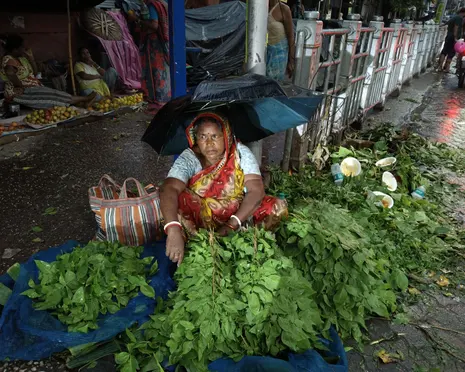
Weather Tracker: Monsoon Season Brings Vital Rainfall to Parts of Asia
Wanderstayfinder.com – Asia is now experiencing the official arrival of its monsoon season, a critical climatic event that supports the region’s agricultural and economic systems. In India, the onset was declared on 4 June in the far south-western state of Kerala, marking a three-day delay from the usual 1 June. The system has since moved further north-east into Karnataka and Andhra Pradesh, bringing significant precipitation that farmers rely on for crop cycles. While the monsoon is a seasonal phenomenon, its impact is immediate and far-reaching, influencing everything from food production to water resource management.
Scientific Underpinnings of the Monsoon System
The southwest monsoon season initiates annually due to an increasing temperature disparity between the Asian landmass and the Indian Ocean. As spring progresses, the landmass warms faster than the surrounding sea, generating a pressure gradient that pulls moist air from the ocean onto the mainland. This process intensifies when the temperature difference reaches a threshold, causing humid air to rise, form clouds, and deliver heavy rainfall across the region. The condensation of this moisture releases heat into the atmosphere, further lowering pressure over land and sustaining the cycle through the summer months.
Scientists describe this as a self-perpetuating system. The initial pressure shift creates a vacuum that draws in more oceanic air, which then fuels additional cloud formation. This feedback mechanism ensures the monsoon remains active for several months, though its intensity varies depending on atmospheric conditions. A key player in this process is the Somali Jet, a strong low-level wind system off the east African coast. It acts as a conveyor belt of moisture, transporting humid air across the Arabian Sea and into the Indian subcontinent, where it meets the warm landmass and triggers the monsoon rains.
Monsoon’s Dual Role: Lifeline and Challenge
While the monsoon is essential for sustaining life in Asia, it also poses challenges. In Kerala, coastal stations recorded up to 280mm of rain in just 72 hours between 4 and 7 June, equivalent to nearly half of London’s annual rainfall. This level of precipitation has already prompted red warnings in surrounding areas for extreme downpours, flash flooding, and landslides. The Indian Meteorological Department projects that the season as a whole will bring rainfall totals around 90% of the long-term average, though early reports suggest a potential below-normal pattern, partly attributed to the development of El Niño conditions.
Farther east, Thailand’s monsoon season began earlier than usual, on 15 May. By late June, the country had already seen 1,000mm of rain in the southwest, with another 300mm expected in the coming week. The Thai Meteorological Department warned of strong winds over the Andaman Sea, which could generate waves up to 2–3 metres in height. These conditions have forced small fishing vessels to stay anchored, as rough seas pose a threat to maritime operations. Despite the heavy rainfall, the season’s overall impact is a subject of debate, with some regions already facing surplus water and others struggling with inadequate distribution.
Regional Variations and Forecast Uncertainty
The monsoon’s arrival is not uniform across Asia. While Kerala and parts of India have seen early and intense rains, other areas may experience delayed or weaker patterns. The Indian Meteorological Department’s projections indicate that the season’s total rainfall will remain close to the historical average, but El Niño’s influence is expected to create regional disparities. This phenomenon, characterized by warmer-than-usual ocean temperatures in the Pacific, can disrupt normal weather patterns, leading to reduced precipitation in some parts of the subcontinent.
In contrast, Thailand’s early start to the monsoon has already delivered substantial rainfall. However, the forecast suggests that the season may not be as generous as usual, with concerns about the balance between excess and deficit. Farmers in Thailand and India alike are closely monitoring the weather, as the timing and amount of rainfall dictate planting schedules and harvest outcomes. For instance, in India, the delay in the monsoon’s onset has raised questions about whether crops will have enough time to mature before the dry season returns.
Monsoon’s Impact on Agriculture and Economy
The monsoon’s role in agriculture is undeniable. In India, where over 50% of farmland depends on seasonal rains, the delay in the onset has created a sense of urgency. Farmers planting rain-fed crops such as rice and cotton must act quickly to avoid missing the optimal window for sowing. The arrival of the monsoon signals the end of the dry season, allowing them to proceed with planting without the fear of prolonged droughts. However, if the rains are less than expected, it could lead to lower yields and economic strain.
Thailand, similarly, relies on monsoon rains to support its agricultural sector. The country’s early start to the season has provided a boost to rice and rubber production, but the possibility of a dry spell later in the season remains. The meteorological department’s warnings about large waves in the Andaman Sea highlight the monsoon’s dual nature as both a blessing and a potential hazard. For coastal communities, the combination of heavy rains and strong winds increases the risk of flooding, which can damage infrastructure and disrupt transportation.
Long-Term Climate Trends and Monsoon Variability
Monsoon patterns are influenced by broader climate trends, including the El Niño Southern Oscillation. As the season progresses, models suggest that these conditions could moderate the monsoon’s strength, leading to uneven distribution of rainfall. While some areas may see above-average precipitation, others could face below-normal levels, complicating water management efforts. This variability underscores the need for accurate forecasting and adaptive agricultural practices.
Regional climate models have also highlighted the potential for extreme weather events. In Kerala, the sudden influx of moisture has led to flash floods, washing away crops and displacing communities. Meanwhile, in northern parts of India, the monsoon’s advance is being tracked closely to determine if it will meet the needs of farmers in the states of Punjab and Haryana. The interplay between oceanic and atmospheric conditions continues to shape the monsoon’s trajectory, with scientists emphasizing the importance of monitoring El Niño’s progression to refine predictions.
The monsoon season is not just a natural cycle; it is a pivotal event for millions. As the system moves across the subcontinent and into Southeast Asia, its effects ripple through economies and ecosystems. While the initial rains have brought relief, the overall season’s performance will determine the success of harvests and the stability of water supplies. With climate change introducing new uncertainties, the monsoon remains both a lifeline and a test of resilience for the region.
“Strong monsoon winds over the Andaman Sea could generate waves of 2–3 metres, advising small vessels to remain ashore,” warned the Thai Meteorological Department, as the country prepares for the challenges of the season.
As the monsoon continues its journey across Asia, the interplay of science, nature,