‘Extreme fear’ among immigrants as backlash sweeps South Africa
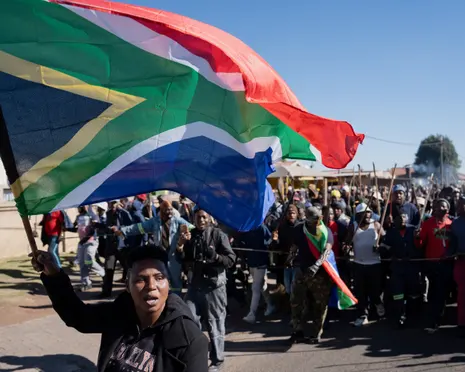
Wanderstayfinder.com – In recent weeks, African immigrants in South Africa have reported a surge in fear, driven by escalating xenophobic tensions that have resurfaced across the country. A campaign group named March & March, which has led some of the most prominent protests, has issued a stark ultimatum: those living illegally must depart by 30 June, with no clear details on the fate of those who remain. The group’s rhetoric has intensified public anxiety, particularly in communities where economic pressures and social grievances have long simmered.
The recent wave of violence has drawn international attention, with Mozambique confirming five of its citizens were killed in xenophobic attacks at the end of May. South African authorities added to the concern, stating that during a violent outbreak in Mossel Bay—a coastal town approximately 60 miles southeast of Cape Town—two Mozambicans and one South African lost their lives. Last week, an informal settlement near Kleinmond saw over 100 people from Mozambique and Malawi flee to the town hall for safety after locals demanded their departure. Many expressed a desire for government intervention, with some stating they need assistance to return to their home countries.
According to Reuters, several individuals shared their fears with the news agency. One Ethiopian entrepreneur, who relocated to South Africa in 2000 and now lives with his South African spouse, described the climate as “extreme fear” affecting nearly everyone he encounters. Despite his legal status, he noted that even documented immigrants face threats. “The sad part is it’s not because they are undocumented. But none of the legal documents will protect you from the violence,” he said, highlighting the pervasive nature of the crisis.
South Africa’s migration history is deeply intertwined with its economic development. Since the end of white-minority rule in 1994, the country has relied heavily on migrant labor, especially in its mining sector. Nelson Mandela, the nation’s first Black president, actively welcomed African migrants as a symbol of unity and progress. However, over the years, the influx of foreign workers has coincided with rising unemployment and inequality, fueling resentment among some South Africans. This sentiment has periodically erupted into violence, most notably during the 2008 riots, which claimed 62 lives and displaced over 150,000 people.
Recent surveys conducted by the Human Sciences Research Council, a state research body, reveal a sharp decline in public support for immigrants. In 2020, 25% of South Africans expressed openness to welcoming all migrants, but that figure dropped to 15% last year. The unemployment rate has climbed by 3.4 percentage points since 2020, reaching 43.1%, further amplifying frustrations. Sharon Ekambaram, head of the refugee and migrants’ program at Lawyers for Human Rights, observed that “people are struggling to hold the government to account and it’s easier to blame the migrants.”
The March & March group, founded in March 2025, has become a central force in organizing xenophobic protests. The organization’s leader, Jacinta Ngobese-Zuma, has argued that illegal immigration “ranges from 15 million to about 30 million,” emphasizing the scale of the perceived threat. She described the situation as an invasion, claiming South Africans have effectively become refugees within their own borders. Since its inception, the group has mobilized protests in cities such as Durban, Johannesburg, and Pretoria, with a notable demonstration in KuGompo City (formerly East London) on 30 March. The event followed rumors—later disproven—that a Nigerian had been crowned king in the area, sparking outrage among locals.
Ngobese-Zuma highlighted the group’s funding sources, explaining that it receives support from both concerned South Africans and online contributors. “We get our funding from concerned South Africans, but we also have a social media page where our supporters can contribute,” she told the Daily Maverick. “They contribute financially, but some contribute in kind.” This decentralized approach has allowed the movement to gain traction quickly, leveraging digital platforms to spread messages of deportation and national solidarity.
Another key figure in the protests is Ngizwe Mchunu, a radio DJ who was acquitted of instigating riots in July 2021. At that time, the riots, linked to the imprisonment of former President Jacob Zuma, resulted in over 350 deaths. Mchunu’s role in the movement has underscored the intersection of media and political discourse, as his broadcasts often amplified xenophobic narratives. As local elections approach in November, smaller parties like ActionSA and Jacob Zuma’s uMkhonto we Sizwe (MK) have aligned themselves with the protests to attract support, capitalizing on public discontent.
President Cyril Ramaphosa has attempted to balance the growing unrest, acknowledging legitimate concerns about migration in a televised address. “South Africans from every walk of life have raised concerns about migration and illegal immigration,” he said, “and these concerns are real. They deserve to be heard. They deserve to be addressed.” His administration has pledged stricter measures against illegal immigration and corruption within border agencies, signaling a shift toward more aggressive enforcement. However, critics argue that the focus on deportations has overshadowed broader systemic issues, such as poverty and job creation.
According to census data, South Africa’s foreign-born population nearly tripled between 1996 and 2022, reaching 2.4 million—representing 3.9% of the total population. This growth includes both documented and undocumented individuals, reflecting the country’s role as a hub for African migration. Yet, the increasing numbers have not alleviated tensions. For many, the fear is not just about legal status but about the erosion of social cohesion and economic opportunities. As the deadline for departures looms, the question remains: will the government’s response calm the situation, or will it deepen the divide between native and foreign residents?
The current wave of xenophobia is part of a larger pattern of displacement, driven by economic hardship and political instability in neighboring countries. Zimbabwe, for instance, has faced hyperinflation that has forced many to seek work abroad. While South Africa’s open-door policy once symbolized opportunity, it now represents a source of contention. The challenge for leaders is to address both the immediate fears of immigrants and the underlying anxieties of the local population, without losing sight of the shared goals of economic growth and social harmony.
As the movement gains momentum, its impact on daily life for immigrants grows more pronounced. Markets, schools, and neighborhoods have become sites of tension, with some families fearing for their safety. The Ethiopian couple, whose 19-year-old daughter is among those affected, encapsulates the personal toll of the crisis. “Every day and almost everyone I meet, they are in fear, extreme fear,” he said, underscoring the pervasive atmosphere of insecurity. With the government’s commitment to stricter border controls, the path forward for immigrants—and the broader implications for South Africa’s identity—remains uncertain.