Israeli Command System’s Target Detection Revealed in Military Conference
Israeli command system identified 850 000 targets – Elbit Systems, the nation’s primary defense contractor, unveiled figures suggesting that Israel’s command and control system identified approximately 1,000 potential targets daily during the first two years of the Gaza and Lebanon conflicts. The data, shared during a military conference in London, highlighted the extensive use of the Israeli Tzayad digital army program, which has been central to tracking and analyzing threats across various operational zones since 7 October 2023.
High-Volume Target Tracking Across War Zones
According to the company, the Tzayad system detected a total of 850,000 targets in real time over the two-year period, spanning multiple theatres of operation. This figure, presented by Miki Edelstein, an IDF reservist major general and executive vice-president of Elbit, illustrated the rapid pace of Israeli military activities. The data encompassed people, vehicles, and other objects, emphasizing the program’s role in facilitating immediate strike decisions from land, sea, or air.
Edelstein’s presentation, which included a slide on “high-tempo operations” by the Israel Defense Forces, noted the system’s capacity to process over 20,000 battle plans and 850,000 real-time intelligence targets. He described these targets as entities “popping up” from underground or through swift movement, stressing the need for precision strikes. However, he also acknowledged the challenge of resource limitations, as the IDF faced constraints in ammunition availability to target every identified threat immediately.
International Context and Conference Dynamics
The London event featured notable participants, including NATO’s second most senior military commander, Britain’s Air Chief Marshal Sir Johnny Stringer, and a British brigadier. Edelstein’s appearance as a “speaker to be announced” on the agenda underscored the significance of his role in discussing the integration of novel and core military technologies. His talk, part of a session focused on modern warfare strategies, provided insight into how Israel’s digital systems contribute to operational efficiency.
While the conference emphasized technological advancements, the data on target numbers raised questions about the scale of military engagement. Elbit’s figures indicated an unprecedented level of activity, with the system continuously monitoring and categorizing threats. This level of detail, however, sparked debate about the accuracy and thoroughness of targeting assessments, particularly in high-intensity scenarios.
Expert Analysis on Target Volume and Civilian Impact
Wes Bryant, a former senior targeting adviser at the U.S. Pentagon, expressed concerns about the sheer volume of targets identified. He argued that such numbers could overwhelm even the most experienced military forces. “There’s no way each and every one of the 1,000 targets per day—let alone 850,000 in total—are thoroughly analyzed for collateral damage,” Bryant stated. He highlighted the difficulty of assessing the legality of strikes when the pace of operations exceeds traditional counterinsurgency efforts in Afghanistan, Iraq, or other regions.
“Even characterizing 50 targets a day is hard enough, but possible. The 850,000 figure suggests a systemic overload that may compromise precision and accountability,” Bryant remarked.
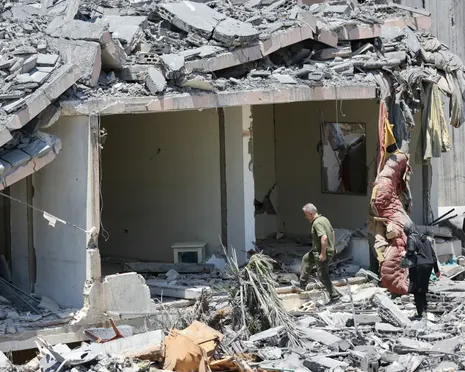
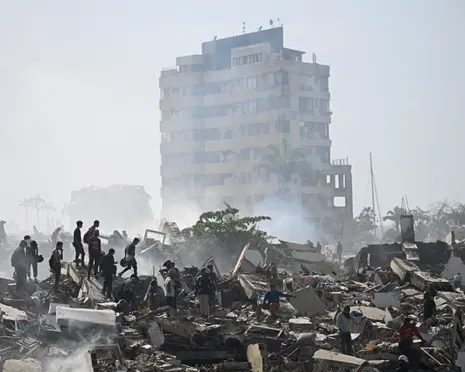
Before October 2023, Gaza housed 2.2 million residents and 300,000 buildings, according to Bryant. He suggested that the Israeli military had, at some point, targeted “up to or over half” of the territory’s population and infrastructure. This claim aligns with reports of intense attacks, which have drawn criticism for their impact on civilian lives.
Elbit’s Defense of the Target Count
When contacted by the Guardian, an Elbit spokesperson clarified that the 850,000 target count did not equate to actual strikes. Instead, the figure represented “aggregated system activity and operational data” generated by the Tzayad program across all military operations since the start of the conflict. The spokesperson emphasized that the data illustrated the volume of information processed by Israel’s digital infrastructure, rather than the exact number of enemy targets engaged.
This distinction is crucial in understanding the system’s function. While it enables real-time threat detection, the process involves analyzing vast amounts of data, including environmental changes and movement patterns. The Tzayad program, which maps friendly and enemy positions, has been further developed with AI integration, enhancing its ability to support tactical decisions in complex environments.
Broader Implications for Modern Warfare
International military leaders, including NATO officials, have observed that state-to-state or near-state conflicts are occurring at a faster rate than previous counterinsurgency campaigns. The speed of operations in Gaza and Lebanon, driven by advanced command systems like Tzayad, has created a new paradigm in warfare. Unlike slower-paced conflicts in Afghanistan or Iraq, where time allowed for thorough targeting reviews, the current situation demands rapid responses, often with limited room for error.
The UN inquiry into Israel’s actions has also highlighted the potential for large-scale civilian casualties, with findings indicating the country may be committing genocide in Gaza. This context adds urgency to the debate over the effectiveness of real-time targeting systems. While they offer tactical advantages, the data suggests that the volume of targets could strain the ability to distinguish between combatants and non-combatants.
Conclusion: Balancing Efficiency and Accountability
As the Tzayad program continues to evolve, its role in modern warfare underscores both the opportunities and challenges of digital command systems. While the 850,000 target figure reflects the intensity of Israel’s military operations, it also raises critical questions about the accuracy of targeting decisions and the long-term impact on civilian populations. The integration of AI into such systems may further accelerate decision-making, but it also necessitates robust mechanisms to ensure that every strike is both necessary and justified.