UN Agency Suspends Evacuation Amid Attack on Vessel in Strait of Hormuz
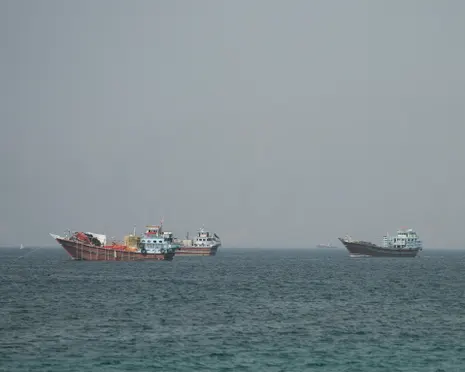
UN agency pauses ship evacuations through – The United Nations’ International Maritime Organization (IMO) has temporarily halted the evacuation of ships from the Persian Gulf via the Strait of Hormuz following reports of an attack on a vessel near Oman’s coast. The incident occurred after multiple tankers had already used the route under UN protection, raising concerns about the safety of maritime traffic in the region. The IMO’s director, Arsenio Dominguez, announced the pause on Thursday, stating that the agency would assess risks before resuming operations. This decision follows the British military’s confirmation that a projectile had struck a ship, though details about the attacker or the vessel’s identity remain unclear.
Escalating Tensions and Safety Measures
The attack came as tensions in the region intensified, with Iran previously warning ships to avoid using the strait without its approval. In a statement on X, Iran’s newly established Gulf Strait Authority emphasized that vessels transiting outside its designated corridors would no longer be guaranteed safe passage. The UK’s Maritime Trade Operations Centre reported that the struck ship suffered damage but no casualties or environmental harm, as the incident took place off the Omani coast. Despite this, the disruption has sparked renewed worries about the vulnerability of commercial shipping in the strategic waterway.
Amid the uncertainty, the IMO’s leadership has underscored the importance of verifying safety protocols for all ships in the area. The evacuation initiative, which aims to free vessels trapped in the Gulf, was suspended until the agency could confirm that the route was secure. This move highlights the delicate balance between maintaining open sea lanes and addressing potential threats from regional actors. The attack has also raised questions about the effectiveness of the UN-backed route, which was designed to reduce Iran’s influence over maritime traffic and ease pressure on global markets.
Market Reactions and Trade Implications
As the situation unfolds, oil prices have shown a slight rebound, with crude dipping below its prewar benchmark of $73 per barrel. This suggests market participants are cautiously optimistic that the situation is stabilizing, even as the attack introduces new risks. However, the volume of traffic through the strait remains significantly lower than prewar levels, with recent data indicating only a modest increase. According to Lloyd’s List Intelligence, 125 vessels crossed the strait last week, up from 33 the previous week, but this number still falls short of the daily average of 130 or more before the conflict began.
The alternative route through the strait has become a critical focus for international stakeholders. Its establishment is seen as a potential breakthrough in reducing Iran’s leverage over shipping lanes, which are vital for global oil supplies. The route, coordinated by Oman and the IMO, now serves as a lifeline for vessels navigating the region, though its success hinges on continued security assurances. The US secretary of state, Marco Rubio, recently visited the Gulf to reinforce support for the new passage, asserting Washington’s commitment to ensuring unimpeded transit. “If that stops, then we’re going to have a problem,” Rubio stated, underscoring the economic stakes of the situation.
Political Dynamics and Ongoing Negotiations
Meanwhile, the US and Iran continue to negotiate the terms of a potential interim peace deal, with the safe passage of ships through the strait emerging as a central issue. The agreement, signed last week, grants both parties 60 days to finalize details, including the management of the narrow waterway’s transit corridors. Despite behind-closed-doors talks, the negotiations have been marked by public posturing, as US President Donald Trump and Iranian officials trade accusations and claims of progress. Iran has insisted that the tentative agreement requires Israel to withdraw from Lebanon—a condition the Israeli government has rejected, adding complexity to the broader conflict.
The recent skirmishes in Lebanon between Israeli forces and Iranian-backed Hezbollah militants have further strained the fragile truce. The country reported five fatalities from Israeli airstrikes in the past two days, intensifying fears of regional escalation. These events have drawn attention to the interconnected nature of the conflicts in the Middle East, with the Strait of Hormuz serving as both a logistical and symbolic chokepoint. The attack on the vessel near Oman has reignited debates about the role of Iran in disrupting global supply chains, particularly as the US seeks to counter its influence in peace talks.
Iran has also claimed responsibility for mining the central corridor of the strait, which was previously a major transit route. The naval arm of the Islamic Revolutionary Guard Corps (IRGC) issued a warning on Thursday, urging ships to avoid the new route and threatening potential retaliation. This statement, carried by Iran’s state-run IRNA news agency, reflects the agency’s stance on safeguarding its interests while maintaining control over shipping movements. The IMO’s suspension of evacuations adds pressure to resolve these disputes, as the alternative route remains a key factor in stabilizing international trade.
Progress in Evacuation Efforts
Despite the setback, some progress has been made in freeing vessels from the region. The shipping company Maersk reported that its container ship, the Maersk Baltimore, and another chartered vessel successfully exited the strait on Thursday. This marks the latest success in a coordinated effort to assist ships stranded due to the ongoing conflict. South Korea’s president, Lee Jae Myung, confirmed on Friday that three additional vessels operated by the country are expected to depart the strait this weekend, following the exit of eight ships earlier in the day. Five remain in the area, awaiting further clearance.
The IMO’s evacuation initiative has been a critical component of the broader strategy to maintain maritime operations. While the attack has temporarily paused the process, the agency remains focused on ensuring the safe transit of vessels. The new route, which bypasses the mined central corridor, has provided a partial solution to the crisis, allowing ships to navigate the strait with reduced risk. However, the UN’s involvement is essential in guaranteeing the security of these movements, particularly as the situation remains volatile.
The international community continues to monitor developments closely, with the outcome of the UN’s assessment likely to determine the future of the evacuation plan. The attack on the vessel near Oman has not only highlighted the operational challenges but also the political and strategic dimensions of the conflict. As the US and Iran work to finalize their agreement, the success of the alternative route will play a pivotal role in shaping the next phase of the crisis. The IMO’s efforts, though temporarily interrupted, underscore the global reliance on the strait as a lifeline for energy and trade flows.
The broader implications of the incident extend beyond immediate safety concerns. The suspension of evacuations has prompted discussions about the resilience of maritime infrastructure and the need for international cooperation in securing vital shipping lanes. With the war’s impact on the strait’s traffic still evident, the world economy remains on edge, dependent on the stability of these routes for energy supplies. The IMO’s decision reflects a calculated response to the threat, balancing operational needs with the urgency of maintaining global trade momentum.