NSW Announces New Bridge for Blue Mountains Highway, Extending Closure Timeline
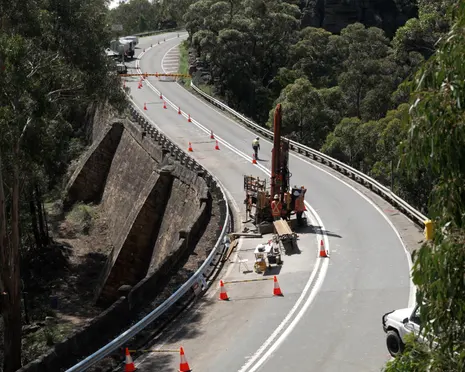
Vital Blue Mountains highway to be closed – The crucial route linking Sydney to New South Wales’ central-west region has been scheduled for another year of closure, impacting residents of the Blue Mountains and Central Tablelands who now face prolonged travel delays and alternative routes. The decision follows the discovery of critical structural cracks at Mitchells Causeway, commonly known as the “Convict Bridge,” which prompted the closure of the Victoria Pass section of the Great Western Highway in March. The historic infrastructure, dating back 194 years, has become a focal point of concern for transport authorities as they prepare to replace it with a modern solution.
Bridge Replacement Project Takes Shape
On Friday, the New South Wales government confirmed plans to construct a new bridge structure above the existing causeway, with construction set to commence shortly. This development is expected to resolve the structural instability that has kept the highway closed since March, though the road may not reopen until April or June of next year. The project marks a significant shift in approach, aiming to address long-standing issues that have plagued the aging bridge for decades.
Transport for NSW officials emphasized that the new structure would not only stabilize the site but also offer the potential for future lane expansions. This feature, absent in the current bridge, could alleviate congestion in the region as traffic demands continue to rise. The initiative is part of a broader effort to improve regional connectivity, with officials highlighting the importance of the highway to both commerce and daily commutes.
Financial Boost for Regional Communities
In a separate announcement, the government unveiled additional financial support to bolster regional businesses affected by the closure. The $20 million injection raises the grant amount available to struggling enterprises from $10,000 to $25,000, while also expanding eligibility to more areas. The package is designed to provide immediate relief, though critics argue it may not fully address the economic strain caused by the prolonged disruption.
Minister for Regional NSW, Tara Moriarty, stated that the financial assistance would be complemented by ongoing logistical support to maintain community access. This includes the provision of free coaches for commuters and a $50 million allocation to upgrade detour routes. The aim is to ensure that residents can continue to navigate the region with minimal inconvenience during the closure period.
Political and Community Reactions
Despite the outlined timeline, skepticism persists among local leaders and residents. NSW Liberals leader Kellie Sloane expressed frustration, noting the lack of confidence in the project’s progress. “There is white-hot anger in communities that have been cut off, and who will say this compensation package barely touches the sides,” she remarked. Sloane criticized the government for months of delays and broken promises, arguing that businesses cannot endure another 10-plus months without meaningful aid.
Paul Toole, the Nationals’ state MP for Bathurst, echoed these concerns, sharing the transport department’s media release on social media. The post quickly sparked over 100 comments, many of which questioned the feasibility of the proposed completion date. Residents also pointed out that the long-term upgrade, while beneficial, does not sufficiently meet the increasing needs of the central-west region. Toole suggested that work should proceed 24/7 to expedite the project, calling it a state-wide issue that demands urgent attention.
Local MP Trish Doyle defended the initiative, stating that the project goes beyond a temporary fix. “We’re not just repairing what was there for the short term,” she said. “We’re building something better—a new structure properly engineered and anchored into solid bedrock, designed to last.” Doyle emphasized the strategic importance of the highway, positioning the closure as a necessary step toward long-term infrastructure resilience.
Expert Insights on Engineering Challenges
Engineers have highlighted the complexity of the terrain as a key factor in the project’s design. Behzad Fatahi, a professor of civil and geotechnical engineering at the University of Technology Sydney, noted that the steep and narrow geography of the area presented unique challenges. “The geotechnically challenging landscape limited immediate expansion options,” he explained. “Building an independent bridge deck is a practical way forward, ensuring stability while preserving the historic causeway.”
Fatahi also addressed concerns about the lack of an additional lane in the current plan. “Some may wonder why an extra lane isn’t being constructed now, especially since the new bridge is designed for future widening,” he said. “However, expanding the bridge deck would require a wider structure, more piles, and could significantly increase costs and risks to the timeline.” He warned that even a short-term widening might create bottlenecks further along the highway, where the road narrows again.
Meanwhile, Maria Rashidi, an associate professor and director of research at Western Sydney University’s School of Engineering, praised the strategy as “technically sound and practical.” She noted that the approach effectively tackles underlying geotechnical problems while safeguarding the historical significance of the original causeway. Rashidi’s analysis underscores the balance between innovation and heritage preservation in the project’s execution.
The Nepean Blue Mountains Local Health District affirmed that the revised schedule would not disrupt essential healthcare services. This reassurance highlights the government’s commitment to minimizing the impact on critical infrastructure, even as it grapples with the challenge of restoring a vital transportation artery. However, the debate over the adequacy of the proposed measures continues, with residents and officials alike calling for more comprehensive solutions to the region’s infrastructure needs.
Looking Ahead: A Year of Transition
As the closure enters its second year, the focus shifts to the implementation phase. The selection of Seymour Whyte, a civil engineering contractor, to lead the construction marks a key milestone, with the accelerated procurement process resulting in ten submissions. This competitive approach aims to ensure the project benefits from the latest engineering expertise and innovative techniques.
While the timeline offers a degree of certainty, it also raises questions about the capacity to meet deadlines. The extended period of disruption has tested the resilience of local businesses, which rely heavily on the highway for transporting goods and services. For many, the closure represents not just a temporary inconvenience but a potential threat to their survival. As the state government moves forward with the new bridge, the hope is that it will serve as a catalyst for long-term improvements in regional connectivity and economic stability.
The project’s success will depend on its ability to deliver on promises of enhanced infrastructure and sustained support for affected communities. With the combined efforts of engineers, policymakers, and local stakeholders, the goal remains to restore a vital link between Sydney and the central-west, ensuring it meets the demands of future generations while honoring its storied past.