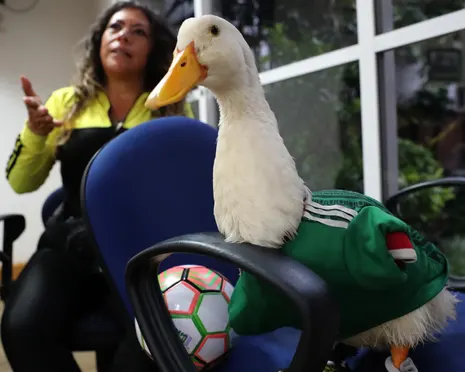
Merlín the Duck’s World Cup Journey Ends as FIFA Bans Animals from Mexico Match
Duck off – On June 24, 2026, a dramatic turn of events unfolded at El Tri’s clash with Czechia in Mexico City, as Merlín the duck was prevented from attending the match despite being a beloved symbol of the nation’s footballing fervor. The two-year-old mascot, who had captured global attention during the tournament, was denied entry into the stadium, marking a poignant moment for his human companions and millions of fans who had rallied behind his cause.
The Rise of a National Icon
Merlín’s ascent to stardom began during Mexico’s World Cup campaign, where he became an unexpected yet cherished figure. Clad in a green national team jersey, the duck has been a fixture at public events, walking alongside Carla Gómez and her son Cristian as they sold drinks across the city. His presence has not only brought joy to supporters but also transformed him into a cultural phenomenon, with his name trending on social media and his image appearing in international headlines. According to the Guinness World Records, Merlín ranks as the sixth-most famous duck globally, a title that underscores his extraordinary popularity.
Carla Gómez, Merlín’s owner, has been instrumental in shaping his public persona. She has shared countless moments of their shared adventures, from live interviews to visits with television studios, while also allowing the duck to mingle with fans and even meet Mexico’s president, Claudia Sheinbaum. “These last few days have been crazy, we’ll never stop being grateful for what we’ve experienced,” Gómez told the Associated Press, expressing her awe at Merlín’s unexpected journey to fame.
FIFA’s Rulebook and the Unseen Barrier
Despite the emotional significance of Merlín’s participation, FIFA’s regulations presented a hurdle. The governing body of international football had established a policy to restrict animals from entering stadiums, citing the need to protect their welfare. While Merlín was allowed onto the Estadio Azteca grounds to film a segment with Televisa, one of Latin America’s leading media networks, he was not permitted to watch the match from inside the stadium. This decision sparked discussions about the balance between tradition and innovation in sports culture.
The duck’s journey to the venue was meticulously planned. Under strict security protocols, Merlín was transported in a custom crate, accompanied by his human family. Fans had gathered in anticipation, eager to catch a glimpse of the animal who had become synonymous with Mexico’s World Cup campaign. However, the final stretch of his adventure was cut short by FIFA’s rules. A spokesperson confirmed that Merlín was allowed to enter the stadium perimeter but not the actual playing area, a compromise that left many supporters disappointed.
“These last few days have been crazy, we’ll never stop being grateful for what we’ve experienced,” Carla Gómez told the Associated Press. “Everyone is truly amazed by Merlín.”
Merlín’s absence from the match raised questions about FIFA’s approach to animal inclusion in football. While the policy aims to ensure safety, some argue that it overlooks the symbolic and emotional value animals can bring to sporting events. Gómez, however, remains steadfast in her belief that Merlín’s presence will still influence the team’s fortunes. “Merlín is a lucky charm, and I know that, with him, the Mexican national team will win again today,” she said, hinting at the deeper connection between the duck and the nation’s pride.
The Campaign for Merlín’s Presence
Merlín’s inclusion in the event was not a spontaneous occurrence but the result of a grassroots campaign led by his fans. Supporters had petitioned FIFA to allow the duck to attend the match, framing it as a celebration of unity and joy. Social media platforms buzzed with excitement as hashtags like #MerlínForMexico and #DuckInTheStand trended, drawing attention to the campaign’s broader message of inclusivity in sports.
While the campaign succeeded in granting Merlín access to the stadium grounds, the final decision to bar him from the match itself highlighted the complexities of FIFA’s regulations. The organization’s stance emphasizes the importance of maintaining a controlled environment for athletes, but it also leaves room for debate about the role of animals in fan engagement. Merlín’s fans, undeterred by the setback, continue to celebrate his legacy, sharing videos and photos of his appearances across the country.
A Global Phenomenon with Local Roots
Merlín’s journey is a testament to the power of unexpected stories to captivate audiences. From the bustling streets of Mexico City to the international stage, the duck has become a symbol of national pride. His activities have included promotional events, interviews, and even a memorable meeting with President Claudia Sheinbaum, further cementing his status as a cultural ambassador.
The duck’s popularity has also sparked conversations about the intersection of sports and animal rights. While FIFA’s ban is a practical measure, it has prompted discussions about whether such policies should be reevaluated to accommodate the growing role of mascots in modern football. Merlín’s case has been used by advocates to argue that animals can enhance the fan experience without compromising safety, especially when precautions are taken to ensure their comfort.
Despite the restriction, the duck’s presence during the match has not been entirely diminished. His family has ensured that his spirit is felt through other means, such as distributing small replicas of his jersey to supporters and sharing live updates on social media. Fans have expressed solidarity with Merlín, creating art, memes, and even a digital campaign to keep his story alive. The disappointment of not seeing him in the stadium has been tempered by the broader appreciation for his role in the World Cup’s success.
The Road Ahead for Merlín and Mexico
As the World Cup progresses, Merlín’s story continues to inspire. His family has already planned for future events, including potential appearances at other matches and public gatherings. Meanwhile, the Mexican national team’s performance has been a focal point for fans, with many drawing parallels between Merlín’s symbolic support and the team’s progress on the field.
FIFA’s decision to bar Merlín from the venue has sparked a mix of reactions. While some applaud the organization’s focus on athlete welfare, others criticize the inflexibility of its rules. The case has also raised awareness about the unique role of mascots in sports, particularly their ability to bridge the gap between fans and players. For now, Merlín’s family remains optimistic, believing that the duck’s presence will continue to bring positivity to the nation’s footballing journey.
Merlín’s story is more than just a quirky tale of a duck in a stadium; it reflects the evolving nature of sports culture and the unexpected ways in which communities can rally around shared symbols. As the World Cup moves forward, the world will be watching not only for Mexico’s performance but also for the legacy of a duck who has become an unlikely hero in the global spotlight.