Vietnam Police Rescue Hundreds of Cats Stolen for Meat by Animal Crime Ring
Vietnam police rescue hundreds of cats – In a dramatic operation in Ho Chi Minh City, Vietnamese authorities have intercepted a criminal network involved in trafficking cats for meat, saving over 400 felines from a grim fate. Animal welfare organizations and local media reported the bust as a significant step in combating the widespread practice of cat meat consumption, which has long been a contentious issue in the country. The multi-day effort, which unfolded last week, uncovered a network operating across southern Vietnam, with nine individuals arrested and over 500 cats seized in total.
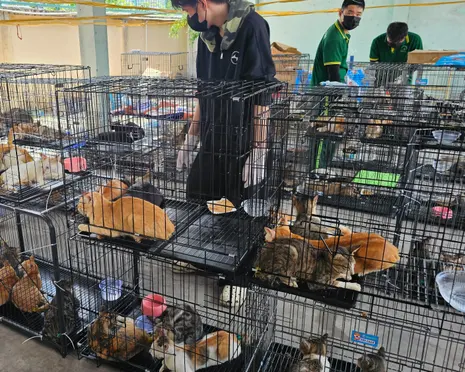
While more than 40 of the rescued cats were successfully reunited with their owners, the operation also revealed the severe conditions endured by the animals. According to animal welfare groups, several dozen of the rescued cats had succumbed to the harsh treatment, highlighting the cruelty of the trade. The discovery of 45 cages housing live cats and four ice-filled foam containers with dead cats underscored the scale of the operation. At a separate location, 21 cats were found alive, further emphasizing the chaotic and distressing environment in which the crime ring operated.
“This is a sobering reminder of the enormous scale of Vietnam’s cat meat trade,” said Karanvir Kukreja, a campaign leader for the international nonprofit Humane World for Animals. “The fact that thousands of cats are stolen, transported, and slaughtered every month across the nation is a stark indicator of the demand for this meat.” Kukreja’s comments reflect the growing concern among advocates about the ethics of the trade, which has persisted despite efforts to regulate it. The operation, he noted, serves as both a rescue and a revelation, exposing the hidden brutality behind the market.
The investigation into a series of pet thefts in the city led to the identification of the crime ring, which had been operating for years. Police stated that the suspects admitted to trapping cats in the regions of Ho Chi Minh City, Tay Ninh, and An Giang over the past three years. These areas, known for their dense populations and active markets, have become hotspots for the illegal trade. The crime ring’s activities, which included the systematic collection of cats, have contributed to a growing crisis for local wildlife and domestic pets alike.
Phuong Pham, the director of Humane World for Animals in Vietnam, described the situation as a “sad truth” of the industry. “Many of the rescued cats were pregnant, and this week saw kittens being born in police custody,” she said. “It’s a sign that even in the darkest moments of the trade, there’s hope for survival.” Pham’s statement underscores the emotional toll of the operation, as families searched for their missing pets while volunteers worked tirelessly to provide care and treatment. The presence of kittens in the rescue effort also adds a layer of urgency to the campaign against the trade, as it represents the next generation of animals at risk.
Chris Gindelhumer, a volunteer with Vietnam Cat Welfare, shared the emotional impact of the rescue. “I saw quite a lot of tears in the last few days,” he said. “It’s really beautiful to see how many Vietnamese families are coming, looking for their cats. But it’s also heartbreaking because many families were looking for their cats and didn’t find them.” Gindelhumer’s observations highlight the personal stories behind the statistics, as each cat represents a home, a bond, and a life disrupted by the illegal trade. Veterinarians and volunteers worked around the clock to stabilize the rescued animals, providing them with food, water, and medical attention during the operation.
The legal framework surrounding cat and dog meat consumption in Vietnam remains a point of debate. While the practice is permitted, vendors are required to obtain permits to verify the origin of the animals. However, this system has been criticized for loopholes that allow the illegal trade to flourish. Cities like Hoi An in central Vietnam have taken the lead in collaborating with global animal welfare organizations to curb consumption, setting an example for other regions. The recent ban on dog meat in South Korea has also sparked discussions in Vietnam about reforming its legal system to better protect pets and their owners’ rights.
Animal welfare groups have been at the forefront of raising awareness about the cat meat trade. They emphasize that the operation in Ho Chi Minh City is part of a broader movement to combat the industry’s expansion. “The event surprised a lot of people and has raised awareness among many to stop consuming cat meat,” said An Pham, a student and cat lover in Ho Chi Minh City. Pham’s words reflect the shift in public perception that has been occurring as more people learn about the suffering behind the dishes. The successful rescue of over 400 cats, coupled with the tragic loss of several dozen, has reignited debates about the ethical implications of the trade and the need for stronger enforcement.
As the rescued cats begin to recover, the focus now turns to ensuring their long-term safety and well-being. The operation has not only provided immediate relief but also exposed the systemic nature of the crime, prompting calls for stricter regulations and increased penalties for offenders. Animal rights advocates are hopeful that the attention generated by this bust will lead to lasting change, reducing the number of cats stolen each year and improving conditions for those still in the system. The presence of pregnant cats and the birth of kittens in police custody serves as a powerful symbol of resilience in the face of exploitation.
Despite the challenges, the operation has galvanized communities and organizations alike. The collaboration between local authorities and international nonprofits has demonstrated the potential for collective action to address animal welfare issues. As the case gains traction, it may inspire similar efforts in other parts of the country, creating a network of support for pets and their owners. The journey toward reform, however, will require sustained advocacy and public engagement to shift cultural attitudes and policies alike. For now, the 500-plus cats seized represent both a victory and a reminder of the work that remains to be done in the fight against the cat meat trade.
The Road Ahead
The rescue operation has set a precedent for future interventions, showcasing the importance of coordinated efforts between law enforcement and animal welfare groups. As the cats in custody continue to recuperate, the focus shifts to rehabilitation and reintegration, with volunteers working to ensure each animal receives the care it needs. The case also highlights the need for public education to reduce demand for cat meat, a goal that has gained momentum following the widespread media coverage.
While the legal system in Vietnam is being reevaluated, the challenge lies in enforcing existing laws and addressing the root causes of the trade. Animal rights advocates argue that stricter penalties for those involved in trafficking, combined with better oversight of meat markets, are essential to curbing the practice. The success of this operation, they say, proves that change is possible when communities unite to protect their pets. As the story of the rescued cats spreads, it may inspire a new wave of activism, pushing Vietnam closer to a future where cats are valued not just as food, but as companions and protected animals.