Brisbane Teenager Accused of Plotting Terror Attacks Inspired by Unabomber
Wanderstayfinder.com – A 16-year-old student from a Brisbane private school is facing charges of plotting terrorist attacks targeting the Liberal Party and the Labour Day march in 2024, following an alleged ideological shift influenced by the Unabomber. The teenager, whose identity remains confidential due to legal protections, was arrested by counter-terrorism officers during that year. The court received evidence suggesting he had prepared for an attack using common chemicals, aiming to strike premises or individuals linked to the Australian Liberal Party. Additionally, he was said to have planned to detonate explosives along the route of the Labour Day march, including a detailed sketch of an explosion at Boundary Road.
Protestant Motives and Manifesto Themes
The accused reportedly shared his vision for a future society in a message referred to by the judge as his “little future project.” This concept aligns with the anti-capitalist, anti-technology ideology attributed to Ted Kaczynski, the infamous Unabomber. Prosecutors claim the teenager had studied Kaczynski’s radical theories, which critique the industrial system and advocate for violence as a means to dismantle it. His own manifesto, which mirrors Kaczynski’s arguments, includes a 35,000-word essay condemning the technological system for contributing to societal decay. According to the court, he described the Industrial Revolution’s rapid expansion in the 20th century as a catalyst for modern problems, such as wars, famines, and loss of autonomy.
“The technological system has been a main producer for today’s societal problems,” the defendant wrote in his manifesto.
The teenager’s influence from Kaczynski was evident in his communication with friends, both online and in person. In a TikTok video, he asserted, “the Unabomber was right,” and frequently shared memes and posts about the man’s life and his 2023 death while incarcerated. The court heard that the accused had even compiled his own version of Kaczynski’s manifesto, emphasizing themes of technological overreach and capitalist greed. He also allegedly referenced a bomb-making guide, which he used to test explosives and gather materials for potential attacks.
Unabomber’s Legacy and the Case Against the Teenager
Ted Kaczynski, the original Unabomber, launched a 17-year campaign of letter bombings that resulted in three fatalities. His manifesto, Industrial Society and Its Future, criticized industrialization and called for a return to pre-modern lifestyles. The court was informed that the accused had been deeply influenced by Kaczynski’s work, which he believed justified violence against those perpetuating industrial and technological systems. Prosecutors argued that the teenager’s actions were a direct extension of Kaczynski’s philosophy, targeting figures who shape Australia’s political and economic landscape.
Commonwealth prosecutor Sue Flynn stated that the accused had spent months researching bomb-making techniques, purchasing chemicals, and testing explosives in preparation for an attack. She highlighted that the teenager communicated with friends about terrorism, explosives, and his ideological goals, with one message explicitly stating, “We need to mail bombs to people who have high influence on the industrial society.” The evidence also included the discovery of bomb ingredients in a bin at his mother’s residence during a police raid in August 2024.
Legal Proceedings and Trial Timeline
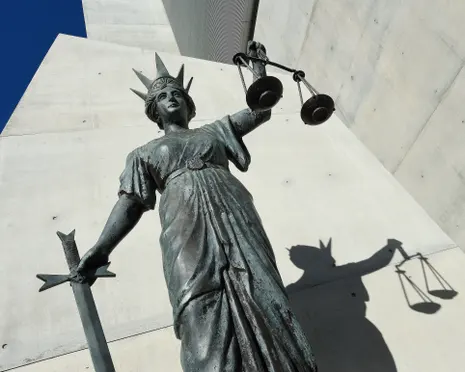
The case against the teenager began in Queensland Supreme Court, where he entered a not guilty plea. A jury of 14 members was assembled to evaluate the evidence. The trial is expected to last approximately 10 days, with prosecutors set to present their opening argument on Tuesday. Defense lawyer Laura Reece will follow with her counterpoints, aiming to challenge the link between the accused’s actions and Kaczynski’s ideology.
During the proceedings, the court will examine the accused’s alleged preparation for the attacks, including his use of over-the-counter chemicals and his detailed plans for the Labour Day march. Prosecutors plan to call University of London terrorism expert Andrew Silke as a witness, who will testify about the defendant’s exposure to Kaczynski’s ideas and the application of those theories to modern-day targets. The evidence presented thus far suggests a deliberate attempt to replicate the Unabomber’s tactics in a contemporary context.
“The defendant had copies of a bomb-making guide and tested explosives in preparation for an attack,” the prosecutor stated.
The teenager’s actions have sparked debate about the role of online platforms in spreading extremist ideologies. His use of TikTok to disseminate Kaczynski-related content highlights the digital space’s potential as a breeding ground for radicalization. Police allege that his friend’s tip-off led to his arrest, prompting the discovery of materials that could be used to assemble a bomb. The charges include one count of preparing or planning terrorist offenses between March 23 and July 29, 2024.
Contextualizing the Unabomber’s Impact
The Unabomber’s influence on the accused underscores the enduring relevance of his theories. Kaczynski’s campaign, which spanned from the late 1970s to 1995, was dismantled after his identity was revealed in 1996 following the publication of his manifesto. The document remains a cornerstone of anti-technology discourse, with its critique of industrialization resonating with some modern activists. The Brisbane teenager’s manifesto, however, expands on these ideas, linking them to Australia’s political and economic structures.
Justice Sean Cooper emphasized the gravity of the case, noting that the accused’s actions could have significant consequences for public safety. The court’s focus will be on establishing whether the teenager’s motives were indeed rooted in Kaczynski’s ideology or if he independently adopted similar views. The trial also aims to determine the extent of his planning and the coordination of his attacks with other individuals.
As the case progresses, the jury will assess the weight of the evidence against the teenager. The prosecution’s narrative positions him as a modern-day successor to Kaczynski, while the defense may argue that his actions were isolated or influenced by other factors. The trial is expected to shed light on the intersection of online radicalization and real-world terrorism, offering insights into how far-reaching the Unabomber’s legacy might be in the digital age.
Broader Implications for Counter-Terrorism
Legal experts have noted that cases like this highlight the evolving nature of terrorism, where ideological motivations can emerge from global sources and be adapted to local contexts. The Brisbane teenager’s alleged plot demonstrates how young individuals, exposed to extremist content online, may channel their frustrations into targeted violence. The use of accessible chemicals and the focus on high-profile political events suggest a calculated approach, blending traditional terror tactics with modern communication tools.
With the trial set to continue for the next several days, the evidence will be scrutinized to determine whether the accused’s actions meet the legal threshold for terrorism. The courtroom will also explore the broader societal critique embedded in his manifesto, raising questions about the balance between individual freedom and the threat of extremist ideologies. As the case unfolds, it may serve as a benchmark for future cases involving digital radicalization and the influence of historical figures like the Unabomber.