Sri Lanka Emerges as Cybercrime Hub Amid Southeast Asian Crackdowns
Wanderstayfinder.com – Sri Lanka has become a focal point for transnational cybercrime, according to experts, as Chinese-operated scam networks have shifted their operations from Southeast Asia. The relocation of these criminal enterprises follows intensified enforcement actions in countries like Cambodia and Myanmar, which have disrupted their previous bases. Sri Lankan authorities have reported a significant uptick in fraudulent activities, with law enforcement targeting foreign nationals who exploit the island nation as a staging ground for global scams.
Raid in Colombo Sparks Concern Over Scam Networks
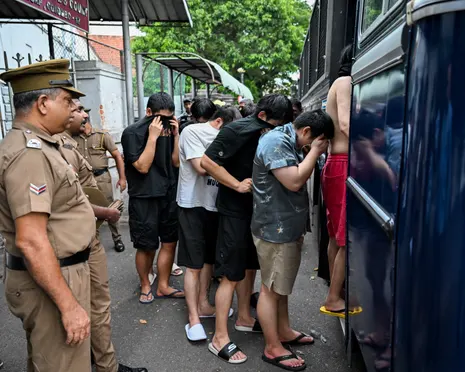
Recent police raids in Sri Lanka have uncovered evidence of sophisticated cybercrime operations. During one such operation in the capital, Colombo, officials detained 18 Chinese citizens and a Laotian individual, seizing equipment and documents that reveal the scale of their activities. The site of the raid was found to contain numerous falsified records, including counterfeit legal certifications and fabricated US Treasury documents, which claimed a company was valued at $10 billion. These materials, along with 62 passports—primarily for Chinese nationals—were left behind, suggesting the scammers had operated in secrecy before being apprehended.
“They had phones, laptops, pen drives, RAMs, a processor, a stamp to forge documents, and so many forged documents,” said an anonymous officer from the crime investigation bureau. “One certificate, which we found was also forged to show they were a business registered in the US, was framed and hung on the wall.”
Authorities have conducted over a dozen raids this year, resulting in the arrest and deportation of nearly 700 foreigners linked to scam networks. Most of these individuals entered the country on tourist visas, a trend that has drawn attention to Sri Lanka’s lax immigration policies. The shift in criminal activity is not limited to Chinese nationals, as Vietnamese, Indian, Indonesian, and other nationalities have also been implicated in these operations.
The Transnational Scam Industry’s Evolution
The global cybercrime enterprise that gained prominence in Southeast Asia over the past decade has now expanded to new regions. Originally based in fortified compounds across Cambodia and Myanmar, these operations have diversified into various schemes, from romance scams and cryptocurrency fraud to online gambling and money laundering. Chinese gangs lead this network, employing hundreds of thousands of workers, many of whom are trafficked or forced into the industry.
As pressure mounted on Southeast Asian nations, authorities launched crackdowns that forced criminals to seek alternative locations. Sri Lanka, with its streamlined tourist visa process and recently introduced “digital nomad” visas, has emerged as a preferred destination. The country also offers minimal regulations on SIM cards and internet infrastructure, along with affordable office and hotel spaces for rental. These factors create an environment conducive to cybercrime, despite the existing Chinese presence in Sri Lanka’s business and infrastructure sectors.
Experts note that Sri Lanka’s legal framework for cybercrime is still developing. Unlike stricter enforcement in Southeast Asia, the current strategy focuses on deporting foreign offenders rather than prosecuting them. This approach has allowed scammers to operate under the radar, leveraging the nation’s leniency in visa rules to avoid long-term legal consequences.
Operational Tactics and Growing Challenges
Scam networks in Sri Lanka have adopted more discreet methods to evade detection. Instead of establishing large-scale compounds, these groups operate in small teams of five, rotating between hotels, apartments, and offices every three months. This decentralized model makes it difficult for authorities to track their activities, as each location is used briefly before being abandoned.
Mark Bo, a cybercrime researcher and author of *Scam: Inside Southeast Asia’s Cybercrime Compounds*, has observed this trend for two years. He noted that Sri Lanka began appearing in Telegram posts and recruitment campaigns, signaling its role as a new hub. “After the crackdown really ramped up in Cambodia, I saw a lot more posts on Telegram channels of people saying they were moving to Sri Lanka,” Bo explained. “There’s clearly been some kind of transplanting of the exact same set-up there. It shows the challenge of controlling the industry because one of its defining characteristics is how mobile and adaptable it can be.”
The increase in cybercrime has already affected local markets. In Colombo, office space rents have surged, with some complexes seeing prices more than double due to demand from groups relocating from China. Business owners report struggling to keep up with the rising costs, while scammers continue to operate with relative impunity. The police’s focus on deportation rather than prosecution has further enabled these networks to persist, as they can easily re-enter the country under new identities.
Global Implications of the Scam Industry
Analysts warn that the migration of cybercrime operations to Sri Lanka could have far-reaching consequences. The United States estimates that over $10 billion in losses were attributed to Southeast Asian scam centers in 2024 alone. With the industry now expanding into new territories, the potential for global financial harm is growing. Sri Lanka’s strategic position—offering a mix of low oversight and access to international markets—makes it an ideal location for these criminal enterprises.
Despite the challenges, Sri Lanka’s authorities have shown resolve. The recent raid in Colombo highlights their efforts to dismantle these operations, though the scale of the problem remains daunting. The country’s lax regulations on digital infrastructure and its reputation as a tourist-friendly destination have inadvertently created opportunities for scammers to exploit. As the industry continues to evolve, there is a pressing need for stronger legal frameworks and international collaboration to address the threat.
While Sri Lanka’s government has not yet implemented comprehensive cybercrime laws, the increasing number of raids suggests a growing awareness of the issue. The shift in scam operations underscores the adaptability of these networks, which can quickly relocate to regions with less scrutiny. For now, the island nation remains a critical node in the global cybercrime landscape, with experts monitoring its development closely.
As the digital nomad visa program gains traction, it may attract more individuals to Sri Lanka, further fueling the growth of cybercrime. The country’s economic and social policies, while beneficial for tourism and business, also create a fertile ground for fraud. With the transnational scam industry now operating in Sri Lanka, the challenge for authorities is to balance economic benefits with the need to protect citizens and international targets from financial exploitation.