South African Jazz Pioneer Abdullah Ibrahim Passes Away at 91
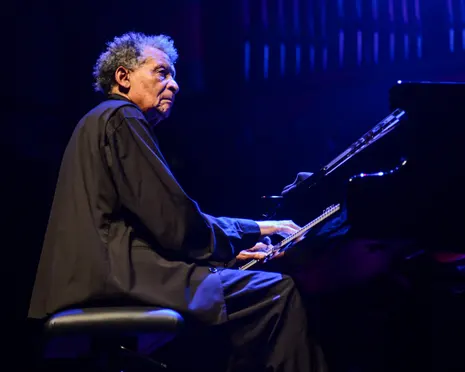
Wanderstayfinder.com – Abdullah Ibrahim, the celebrated South African jazz composer and pianist, has died at the age of 91. His family revealed the news through a statement released on Monday, expressing their grief and honoring his enduring connection to his homeland. “Abdullah passed away peacefully, with South Africa and its people in his heart,” shared Dr. Marina Umari, his partner. “His love for his country never wavered, no matter where in the world he found himself.” The announcement came as Ibrahim was in Germany, where he succumbed to an illness after a brief period of declining health.
From Cape Town to Global Recognition
Born Adolph Johannes Brand in Cape Town, Ibrahim’s journey in music began early. He composed his first pieces at the age of seven, though his professional debut occurred much later—at 15, under the stage name Dollar Brand. This moniker became synonymous with his rise in South African jazz circles during the 1950s. By the early 1960s, he had made a lasting impact, contributing to the Jazz Epistles, a groundbreaking group that captured the essence of Black South African artistry. Their debut album, *Jazz Epistle Verse One*, marked a pivotal moment as it was the first full-length jazz LP by musicians of color in the region. While their music was not overtly political, the group faced government scrutiny, highlighting the tensions of the era.
Ibrahim’s career took a significant turn in the 1960s when he relocated to Europe. There, he crossed paths with Duke Ellington, a figure he described as a “wise old man in the village” during a 2024 interview. “You have any musical problem or inspiration, you go to Ellington,” he remarked. “He has been that bulwark for many, many, many musicians.” This collaboration led to recordings with the legendary artist before Ibrahim moved to New York in 1965, further cementing his status as a global jazz figure.
A Philosophy of Movement and Resistance
Reflecting on his decision to leave South Africa, Ibrahim offered a unique perspective in 1984. “We don’t really leave, you know,” he explained. “It’s a tactical retreat. We regard ourselves as cultural freedom fighters.” This mindset underscored his belief in the importance of nurturing talent beyond borders. “When our cadres, our young people, go outside the country for training, we don’t say that they left—it’s a tactical retreat,” he added, illustrating how his work transcended geography and time.
The musician’s spiritual transformation also marked a key chapter. In 1968, he embraced Islam, which led to the renaming of his stage identity to Abdullah Ibrahim. This shift resonated deeply with his artistic philosophy, aligning his personal and professional life with a broader sense of purpose. His career spanned decades, producing over 70 albums, with the most recent released in 2023. Among these, *Mannenberg*—recorded in 1974—remains his most iconic composition. The track became a powerful symbol of resistance, often cited as an anthem for the anti-apartheid movement. It was said to have inspired Nelson Mandela during his years of imprisonment, embodying the struggle for freedom through its emotive melodies.
Legacy in Film and Music
Throughout his life, Ibrahim’s influence extended beyond jazz. He contributed to the soundtracks of several films, including the acclaimed works of director Claire Denis. Titles such as *No Fear, No Die* and *Chocolat* showcased his ability to blend traditional rhythms with contemporary storytelling. His versatility as a creator was further recognized through awards, including the German Jazz Trophy and a South African lifetime achievement honor. These accolades reflected his impact on both local and international music scenes.
John Fordham of *The Guardian* highlighted Ibrahim’s contribution to jazz, calling him “a master of blending African vocalized phrasing with a unique musical chemistry.” His compositions were not just notes on a page but cultural narratives that resonated across generations. Even in his final years, he remained active, delivering a poignant solo performance at the Cape Town International Jazz Festival in March. This event marked a bittersweet culmination of a life dedicated to art and activism.
A Voice for the People
Ibrahim’s work was deeply rooted in the socio-political landscape of South Africa. He often spoke about how the apartheid regime sought to suppress not only his music but also the very act of thinking freely. “I realised at an early age that this system of apartheid was totally against the brain of everything,” he said in 2017. “It was not just that they didn’t want you to record the music—it’s that they didn’t want you to think.” This insight framed his career as a form of resistance, using melody to challenge oppression and preserve cultural identity.
Despite his international success, Ibrahim never distanced himself from his roots. His name change to Abdullah Ibrahim in 1968 was more than a personal choice—it symbolized a commitment to his heritage and the African diaspora. As he once noted, his journey was less about leaving and more about evolving. His legacy continues to inspire musicians and activists alike, a testament to a life spent bridging art and social change. The loss of such a multifaceted figure leaves a void in the global jazz community, but his music remains a lasting reminder of his contributions to culture and freedom.