The SpaceX IPO Made Musk a Trillionaire. The Old Rules of Capitalism No Longer Apply
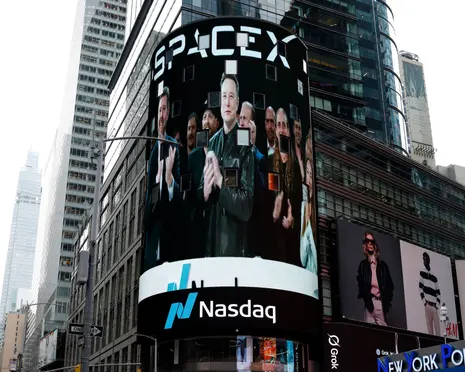
Wanderstayfinder.com – Elon Musk’s ascent to the title of trillionaire has been dramatically accelerated by the recent initial public offering (IPO) of his aerospace and satellite venture, SpaceX, which listed on the Nasdaq in early June 2026. The valuation of the company, at approximately $1.77tn, placed Musk’s personal wealth in a league of its own, surpassing the $813bn he had previously held. This meteoric rise in net worth has sparked debate about the evolving nature of wealth accumulation in the modern economy. As the first individual to achieve such a level of financial dominance, Musk’s story is no longer just one of innovation—it’s a narrative of unprecedented power in the capital markets.
The IPO’s success is not merely a reflection of SpaceX’s potential, but of the transformative forces reshaping how value is assigned in today’s financial landscape. Traditional economic principles, which rely on supply and demand to determine prices, seem increasingly secondary to the influence of hype, personal connections, and centralized control. SpaceX’s valuation, for instance, was based on a share price of $135, which is 100 times its total revenue in 2025. This figure, while ambitious, has drawn criticism for its lack of grounding in conventional financial metrics. Critics argue that such a price-to-revenue ratio is more of a testament to Musk’s charismatic appeal than to the company’s current profitability.
At the heart of the valuation lies a speculative bet on the future—a gamble that SpaceX’s mission to “extend the light of consciousness to the stars” will materialize. While interstellar exploration is inherently risky, the company’s ability to project such a vision has given it a halo effect in the market. However, this projection is not without its challenges. SpaceX has historically operated with losses, and its ambitious goals often outpace its immediate financial results. The question remains: how does a company with no consistent profit margin justify a valuation that dwarfed its earnings?
One answer lies in the intricate web of deals and partnerships Musk has orchestrated. A significant portion of SpaceX’s value is attributed to its collaboration with his artificial intelligence firm, xAI. This arrangement, which grants SpaceX access to xAI’s cutting-edge research, has been described as a self-dealing maneuver. In essence, Musk has created a system where the value of his ventures is inflated by the interconnectedness of his business empire. This has been likened to a “magic trick,” where the boundaries between companies blur, and the market becomes a vehicle for personal ambition rather than collective investment.
Beyond valuation, the IPO’s structure has raised concerns about the concentration of power. Brendan Carr, the chair of the Federal Communications Commission (FCC), has played a pivotal role in enabling SpaceX’s dominance. From the outset, Carr has been a staunch advocate for Musk’s vision, even recommending him to Trump as the ideal leader for the agency. This alignment has allowed Musk to secure regulatory approvals that expanded SpaceX’s control over Starlink satellite internet, granting it access to more than 10,300 active satellites in low Earth orbit. This monopoly has given the company unprecedented influence over global internet access and defense communications, with the FCC’s backing.
The IPO also introduced a mechanism that critics call “rigged indices.” Major stock indices, such as the Nasdaq 100, typically require a waiting period to evaluate a new company’s worth before adding it to their portfolios. However, SpaceX has successfully lobbied for a change in these rules. On May 1, 2026, the Nasdaq implemented a “fast entry” rule, allowing companies ranked among the top 40 in valuation to be included in the index without delay. This adjustment ensures that SpaceX’s stock will be automatically incorporated into major indices, linking millions of retirement accounts and university endowments to its performance. The effect is twofold: it pressures investors to buy shares, while also inflating the company’s value through mass demand.
Another element of the IPO’s design is the disproportionate voting power granted to Musk’s shares. Each share owned by the company’s insiders carries ten times the weight of shares sold to the public. This structure ensures that Musk retains total control over SpaceX’s direction, leaving shareholders with minimal influence. The board of directors, while ostensibly representing investors, has been reduced to a ceremonial role. Their decisions are often seen as symbolic rather than substantive, with no real checks or balances to counteract Musk’s authority.
Some have drawn parallels between SpaceX’s IPO and the political maneuvers of a certain former president. Just as Trump’s administration prioritized the interests of his allies, the SpaceX IPO appears to prioritize the interests of Musk and his circle. This has led to accusations of a “system in the hands of one man,” where the rules of capitalism are bent to serve personal ambition. The result is a market where the whims of a single individual can dictate the fate of an entire industry.
“Caveat emptor” – the Latin warning to buyers to be cautious – seems increasingly irrelevant. Investors are being pushed into the market not through choice, but through the inevitability of a system designed to reward those with the most influence.
As the IPO unfolds, the broader implications for capitalism are undeniable. The traditional framework of investment, where risk and reward are balanced through market forces, is being supplanted by a model where hype, connections, and centralized control determine outcomes. This shift has turned the IPO into a spectacle, with Musk’s net worth soaring while the potential consequences for ordinary investors remain unclear. The question now is whether this new paradigm of wealth creation is sustainable—or if it’s merely a fleeting chapter in the story of modern capitalism.
With the Nasdaq 100 now poised to include SpaceX within days of its listing, the financial system is increasingly aligned with Musk’s vision. The rapid integration of the company into major indices means that millions of Americans’ retirement savings and pension funds will be tied to its performance without a chance to evaluate it independently. This automatic infusion of capital creates a self-fulfilling cycle: as more investors are forced to buy shares, the stock’s value rises, and insiders capitalize on the surge before the market stabilizes. The result is a scenario where the risks are distributed unevenly, with the public bearing the brunt while Musk reaps the rewards.
Ultimately, the SpaceX IPO represents a turning point in the relationship between innovation and investment. It underscores how capitalism in the 21st century can be shaped by the charisma of a single figure, the strategic influence of regulatory allies, and the reengineering of market rules. As Musk continues to expand his empire, the line between visionary leadership and systemic manipulation grows thinner, leaving the future of capitalism to be written not in boardrooms, but in the decisions of one man with an insatiable hunger for control.