Plug-in balcony solar panels to go on sale in UK for first time

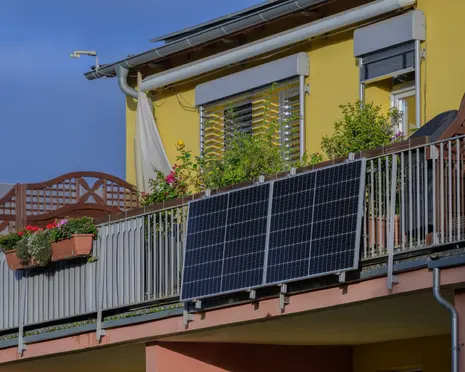
Table of Contents
UK Households Gain Access to Plug-in Balcony Solar for the First Time
Wanderstayfinder.com – For millions of renters, flat-dwellers, and homeowners without usable roof space, solar energy has long been an out-of-reach technology. That changes this Thursday, when compact plug-in solar kits hit UK retail shelves for the very first time. The move opens a door that mainland Europe has already walked through, giving British consumers a straightforward way to shave money off their electricity bills without undertaking any major construction project.
What the Products Are and Where to Buy Them
The systems in question are small, self-contained solar arrays rated at roughly 800 watts — approximately one-fifth the footprint of a conventional residential rooftop installation. Rather than requiring a dedicated inverter, wiring runs, or a planning application, each unit simply plugs into a standard wall socket. The generated current feeds directly into the property’s existing electrical circuit, powering whatever appliances are running at that moment and reducing the volume of electricity drawn from the national grid.
Argos is the first major retailer to list the kits this week. Amazon, Currys, B&Q, and Screwfix are expected to follow within the coming weeks, with entry-level systems priced between roughly £400 and £500 depending on capacity. The availability across multiple high-street and online channels signals that distributors view the category as a mainstream consumer product rather than a niche hobbyist item.
A Technology Already Proven Across Europe
Britain is not pioneering the concept. In Germany, plug-in balcony arrays have become so widespread they earned the colloquial name Balkonkraftwerk — literally “balcony power plant.” Spain has seen similar adoption, with millions of households across the continent already generating their own renewable electricity from balconies, terraces, shed roofs, and other outdoor surfaces. The UK’s entry into the market effectively closes a regulatory gap that had kept the technology off British shelves until now.
The practical appeal is immediate: no scaffolding, no structural modifications, no multi-week installation. A tenant in a fourth-floor flat or a homeowner with a south-facing patio can mount a panel, plug it in, and begin offsetting grid consumption within minutes.
Registration and Grid-Level Oversight
Despite their small size, each installed system must be registered so that Great Britain’s National Energy System Operator can track the cumulative effect of thousands — eventually millions — of distributed generators. The operator needs visibility into how the aggregate output of these panels might reduce demand for gas-fired generation or imported electricity, ensuring grid stability as penetration scales up.
What the Savings Look Like
Because an 800-watt array cannot power an entire dwelling, the financial benefit is framed as a reduction rather than a replacement. Industry estimates suggest the average household could save up to £110 per year on its electricity bill. Actual savings will fluctuate with panel orientation, seasonal sunlight hours, and day-to-day weather. A critical limitation: the new legislation authorising plug-in solar sales does not include plug-in battery storage, so households cannot bank surplus generation for evening use. The economic upside is therefore greatest for occupants who can shift flexible loads — washing machines, dishwashers, EV chargers — into sunny daytime windows.
Official and Industry Voices
Miatta Fahnbulleh, the energy secretary, framed the launch as a consumer-empowerment milestone:
“Plug-in solar is a simple, affordable way for households to take control of their energy bills and start saving straight away.”
Graham Biggart, managing director of Argos, emphasised the retail-accessibility angle:
“By making this technology more accessible, we’re putting more power in the hands of our customers and helping them explore practical ways to manage energy use at home.”
Caveats and Consumer Guidance
Consumer-advocacy voices have urged buyers to proceed with eyes open. Emily Seymour, energy editor at the Which? consumer group, highlighted several practical hurdles:
“These smaller systems will generate less electricity than conventional rooftop solar and won’t be suitable for every home. People may need planning permission or the consent of the building owner before going ahead, so it will be important to check your own circumstances before making a purchase.”
She added that safety considerations deserve attention, particularly regarding the compatibility of older electrical installations, the secure mounting of panels on balconies or railings, and the risk of consumers misusing equipment outside its intended parameters.
Joanna O’Loan, a manager at the Energy Saving Trust, struck a more measured note while acknowledging the broader significance:
“While the savings will vary from home to home, plug-in solar panels will give more people greater control over their energy use and costs. As these products become more widely available, access to clear and reliable information is essential to help people make informed choices that are right for their home and budget.”
Broader Implications
The introduction of plug-in solar into UK retail marks a structural shift in how distributed generation is conceived. Rooftop solar, typically 3–6 kW, has historically required ownership of a building, planning approval, and a several-thousand-pound outlay. By collapsing the barrier to a few hundred pounds and a wall socket, the new category extends renewable generation to the tens of millions of Britons who rent their homes or live in multi-storey flats — demographics that have been almost entirely excluded from the solar market to date.
At the grid level, even modest per-unit output multiplies across a large installed base. If adoption mirrors the trajectory seen in Germany, where balcony arrays have grown from a curiosity to a visible feature of residential streetscapes, the cumulative effect could meaningfully flatten peak-demand curves and reduce reliance on gas peaking plants. The registration requirement gives the system operator the data needed to manage that transition safely.
For the individual buyer, the calculus is straightforward: a modest upfront cost, a small annual saving, a reduced carbon footprint, and a degree of energy independence previously unavailable to non-roof-owning households. The technology is not a panacea, and its limitations — weather dependence, lack of bundled storage, orientation constraints — are real. But as a first step toward household-level renewable generation for a previously locked-out segment of the population, the Thursday launch represents a genuinely new chapter in UK energy policy.
Related Reading
Frequently Asked Questions
What is Plug in balcony solar panels to go?
Plug in balcony solar panels to go is the main topic of this guide. The article explains the context, practical details, and next steps readers should understand.
Why does Plug in balcony solar panels to go matter?
Plug in balcony solar panels to go matters because readers are looking for a useful answer, not just a short summary. Good content should match search intent and help them decide what to do next.