Iran seeks to criminalise all contact with foreign media in ‘chilling’ crackdown

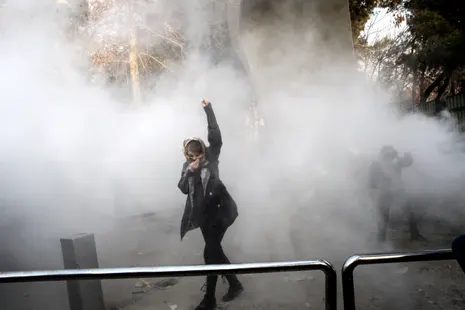
Table of Contents
Iran Criminalises Foreign Media Contact
Wanderstayfinder.com – Iran seeks to criminalise all contact between its citizens and international news outlets under a bill now moving through parliament. The draft would require prior authorisation from the intelligence ministry before any Iranian speaks with, photographs for, or shares information with a foreign-based media organisation. Human-rights groups characterise the measure as a sweeping attempt to cut the population off from outside reporting, a pattern that has tightened sharply since the January 2025 anti-regime protests.
The scope extends well beyond professional reporters. Any individual who posts a visible-to-abroad image, exchanges photographs, or liaises with a foreign civil-society group could face prosecution. Social-media platforms labelled as “financed” by a foreign state — Instagram and X are named examples — would also fall under the bill, so that ordinary posting visible to international audiences might itself trigger legal action.
Penalties, Scope, and the North Korea Comparison
Moein Khazaeli, an Iranian human-rights attorney who works out of Dadban, a legal-counselling centre serving activists nationwide, explained that the draft contemplates six-month-to-two-year prison terms for unauthorised interviews, image exchanges, or any other liaison with a foreign media entity. The provision is not confined to the United States or Israel; contact with outlets in any country could qualify as a criminal act under the text.
“It means any kind of interview, contact, or sending photographs to them could lead to six months to two years’ imprisonment. Not just the US and Israel, but any contact with foreign media in any country could be considered a crime if one doesn’t inform the intelligence ministry beforehand.” — Moein Khazaeli
Khazaeli warned that the trajectory risks pushing the country toward a state of total information isolation comparable to North Korea’s media environment, where virtually all external communication is state-controlled and unapproved contact with the outside world is treated as a national-security threat.
A Photographer’s Fifteen-Year Sentence
The practical stakes of this legislative direction became visible this month when Yalda Moaiery, a 44-year-old photographer with two decades of experience documenting life inside Iran, received a fifteen-year prison sentence in Tehran. She was convicted over her photographic coverage of the US-Israeli military campaign against Iran. Although the formal charge was brought under the espionage statute enacted after last year’s twelve-day war, Khazaeli noted that the broader legislative push signals a systematic effort to regulate and penalise every form of contact between Iranians and foreign media institutions.
Moaiery first drew international attention in 2019 after publicly rebuking then-President Donald Trump for using one of her photographs — taken at a demonstration near Tehran University — to justify sanctions she argued were harming ordinary Iranians, including members of her own family.
“This image shows my people and is for my people, and shouldn’t be abused by these men in Washington.”
Now, she said, the irony is bitter: she was sentenced in absentia for covering the US-Israeli war and accused of media activity that allegedly strengthened and aided Israel and the United States.
“I have been a critic of Israel and its policies all my life. I am not an Israel supporter, never, ever. And I have always been a critic of American politics. It was like something that you are against, and they want to stick it to you. So it’s hard. It’s super hard.”
Moaiery had previously been arrested and handed an eight-year sentence in 2022, though she later benefited from a general amnesty. This time, she fears the verdict will be enforced and she will spend years behind bars.
“Of course, I am scared. The only thing that I’m worried about is wasting my 15 years. When I get out, I’ll be 60 years old.”
Severing Society from Global Information
Bahar Ghandehari, director of advocacy at the Center for Human Rights in Iran (CHRI), framed the proposed law as far more than a targeting of journalists or citizen reporters. In her assessment, the measure represents an attempt to criminalise the free flow of information itself, effectively isolating the entire population from international discourse.
“It is not simply an attack on journalists and citizen journalists; it is an attempt to sever the whole society from the flow of information.”
Frequently Asked Questions
Who does the proposed bill cover? Any Iranian citizen — journalists, academics, photographers, or ordinary social-media users — who communicates with a foreign media outlet or foreign-financed platform without prior intelligence-ministry authorisation.
What penalties does the draft prescribe? Prison sentences ranging from six months to two years for unauthorised contact, interviews, or image exchanges with foreign media entities.
Which social-media platforms are named in the bill? Instagram and X are cited as examples of platforms deemed “financed” by a foreign government, bringing their use within the bill’s scope.
What happened to photographer Yalda Moaiery? She received a fifteen-year sentence in absentia this month for photographic coverage of the US-Israeli military campaign, charged under the espionage statute enacted after last year’s twelve-day war.
When did the current wave of repression intensify? Human-rights advocates trace the escalation to the mass anti-regime demonstrations of January 2025, after which restrictions on media contact and information flow tightened markedly.