Why are European leaders staying silent after our summer of climate shock?

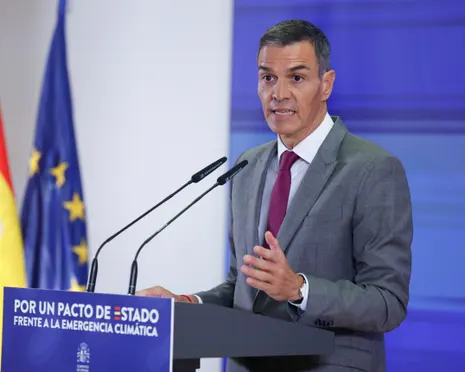
Table of Contents
Europe’s Summer of Fire and Silence: Why Leaders Are Going Quiet on Climate
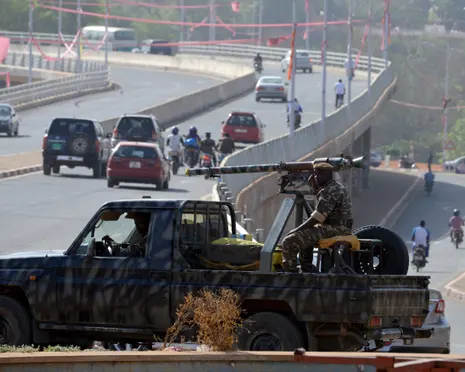
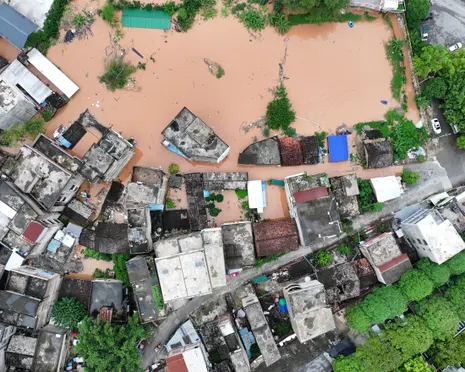
Wanderstayfinder.com – Four consecutive heatwaves have turned the continent into a furnace this summer. Thermometer records have been obliterated, wildfires of unprecedented scale have consumed forests and threatened settlements, and tens of thousands of excess deaths have been attributed to the extreme heat. By every measurable indicator, Europe is now the fastest-warming region on Earth, its temperatures climbing at roughly twice the global average. And yet, walk into any capital’s parliament or listen to the major policy addresses delivered over the past weeks, and you will hear almost nothing. The climate crisis, its causes, and the sweeping structural changes required to survive it remain conspicuously absent from the political conversation.
The silence is so total that even a radical-left figure had to break it explicitly. At the summer congress of France Insoumise last weekend, Jean-Luc Mélenchon – the veteran firebrand who, according to polling released this week, stands as the most probable challenger to Marine Le Pen in next year’s presidential second round – told delegates that the crisis demands a total overhaul of daily life, production systems, and trade architecture.
“We’re going to have to change everything – the way we live, the way we produce, the way we trade.”
Mélenchon went further, arguing that the phrase “climate change” itself has become a kind of linguistic anaesthetic. Its gentle, almost clinical tone, he warned, masks an experience that will feel, for ordinary people, like stepping onto an alien world every time they walk out the front door.
The Numbers Behind the Silence
The physical reality is unambiguous. Simon Stiell, head of the UN climate body, has described the current trajectory of impacts as “reaching national emergency levels.” Europe’s rate of warming – roughly double the planetary mean – means that what was once a once-in-a-century heat event is now a seasonal regularity. The excess mortality toll from this summer alone runs into the thousands, a figure that dwarfs most other causes of death in the months affected.
French voters, for their part, have registered the shift in their own bodies and their own poll responses. An Ipsos survey conducted in mid-July showed environmental protection surging twelve percentage points from June to claim the fourth-ranked position among the public’s top anxieties. The pollster characterised the jump as a reaction to what it called “a first real experience of what the hell of a significantly hotter world might look like.”
Le Monde, in a blunt editorial, accused the political class of collective cowardice. The paper described a landscape of “silence from some politicians and inadequate pronouncements or demagoguery from others,” and warned that “decision-makers on both the right and the left are losing credibility.” What citizens demand, the editorial insisted, is a coherent political message that converts into concrete action and illuminates the path forward rather than obscuring it.
London and Berlin: Different Flavours of Evasion
The pattern is not confined to France. In Britain, Labour party activists have grown increasingly uneasy that the government has mounted no significant political campaign on climate, even as the visible damage – flooded streets, collapsed infrastructure, hospital admissions from heatstroke – becomes harder to ignore. Voters, activists note, are arriving at the conclusion that action is necessary faster than their own party is willing to say so out loud.
In Germany, Chancellor Friedrich Merz broke his long summer silence this week by acknowledging that steps are required to “curb climate change and adapt to the consequences.” The qualifier mattered: he specified that such steps must not come at the expense of German industry. Throughout the preceding weeks, however, Merz had been accused of deliberately avoiding the topic, a calculation aimed at denying oxygen to the climate-sceptic, far-right AfD, which has made scepticism about warming a cornerstone of its electoral appeal.
The Exceptions That Prove the Rule
A handful of leaders have spoken plainly. Spain’s prime minister, Pedro Sánchez, has long maintained that climate change is a killer, not an abstraction. Recently he sharpened the point: addressing symptoms alone is insufficient; the imperative is to reduce the causes themselves.
“It’s not enough to address the consequences; what we have to do is reduce its causes.”
In France, centre-left presidential candidate Raphaël Glucksmann has called for an “ecological transformation” that would end fossil-fuel dependence and pledged, should he win the presidency (a prospect most observers regard as vanishingly slim), a hundred-day programme of what he terms an “ecological revolution.”
These voices, however, remain outliers. Jean Jouzel, one of France’s most senior climatologists, describes the broader political class as having “simply not yet engaged with the reality of global heating.” In his view, leaders must confront the problem head-on rather than managing it through omission.
Why the Silence Persists
Jouzel locates the root cause in temporal horizon. Politicians, he argues, operate on electoral cycles. Their operative goal is to avoid visible damage during their own tenure in office. A genuine leader, by contrast, must possess the courage to plan across medium- and long-term horizons that extend well beyond any single term.
Layered atop that short-termism are two additional pressures. First, political polarisation: populist and far-right parties across the continent have successfully recast green regulation as an “ideological mantra” imposed by elites on “ordinary working people.” Second, the cost-of-living squeeze: households already grappling with elevated energy bills, persistent food-price inflation, and wages that have stagnated for years are unlikely to celebrate demands for further financial sacrifice in service of a climate benefit that remains abstract and distant. Carbon taxes and boiler-replacement mandates carry measurable electoral risk, and most mainstream parties have calculated that risk as too high to bear.
From Carbon Cuts to Culture Wars
The practical consequence of this political vacuum is a drift in the public debate. With long-term decarbonisation policy effectively frozen at the national level, attention has migrated toward localised adaptation measures – and those measures have, perhaps inevitably, become new fronts in Europe’s culture wars. Air conditioning, once a niche luxury in much of continental Europe, has become a flashpoint: who pays for it, where it is installed, what its electricity demand means for grids already strained by heat-driven peak loads, and whether its proliferation represents sensible adaptation or a surrender to the very warming it is meant to counter. The question, once purely technical, now carries the full weight of partisan identity.
The summer is over. The heat records it produced will stand in the statistical archives for decades. What remains unresolved is whether Europe’s political class will find the language – and the will – to match the scale of what the atmosphere has already delivered.
Related Reading
Frequently Asked Questions
What is W hy are European leaders staying?
W hy are European leaders staying is the main topic of this guide. The article explains the context, practical details, and next steps readers should understand.
Why does W hy are European leaders staying matter?
W hy are European leaders staying matters because readers are looking for a useful answer, not just a short summary. Good content should match search intent and help them decide what to do next.