South African police arrest two Thai men for allegedly smuggling parrot eggs

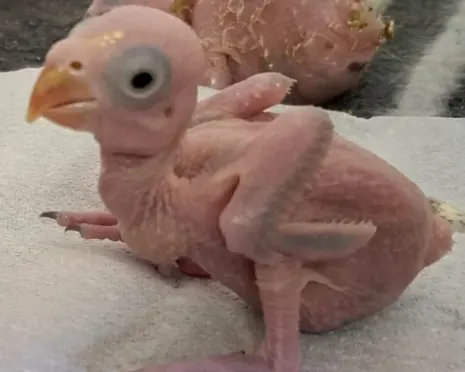
Table of Contents
South African Police Arrest Two Thai Men Over Parrot Egg Smuggling
Wanderstayfinder.com – South African police arrest two Thai nationals at Johannesburg’s OR Tambo International Airport in separate operations targeting the covert trade in endangered parrot eggs. The two seizures — one involving 50 eggs and the other 418 — were carried out weeks apart under coordinated intelligence briefings, according to the country’s environment ministry, which confirmed both cases in a public statement.
Two Seizures, One Pattern
The earlier interception came on 16 July, when a 23-year-old Thai man was stopped at the airport terminal attempting to carry 418 parrot eggs packed inside two improvised incubator bags. Four weeks later, on 20 August, a 50-year-old Thai national was detained after carrying 50 bird eggs concealed in a hand-luggage bag fitted with a homemade warming device meant to keep developing embryos alive during transit. Preliminary ministry investigations indicated the eggs belonged to CITES-listed parrot species, though the specific taxa were not disclosed.
Thailand’s diplomatic mission in Pretoria did not respond to requests for comment on either suspect. The scale of the July shipment — nearly half a thousand eggs in a single traveller’s luggage — points to an organised commercial pipeline rather than an isolated attempt, a pattern the ministry said prompted the follow-up operation in August.
Enforcement, Welfare, and the Broader Trade
Both consignments were transferred to staff at the National Zoological Garden in Pretoria, where the eggs are being incubated under controlled conditions. The ministry reported that several have already hatched and that the chicks are receiving intensive veterinary and husbandry care. Final disposition — release, accredited breeding programme, or long-term care — awaits species identification and health assessments.
“The illegal collection and trafficking of parrot eggs pose a serious threat to wild bird populations and animal welfare. Eggs are often concealed in improvised incubation devices and transported under conditions that significantly compromise their viability and endanger the welfare of developing embryos and hatchlings.”
According to the ministry, South African police arrest two Thai suspects as part of a joint operation led by its Environmental Management Inspectorate — colloquially the “Green Scorpions” — working alongside police intelligence, border-control, and endangered-species units. The inspectorate functions as South Africa’s dedicated wildlife-crime enforcement arm, combining field investigation with airport and port surveillance. Its deployment on egg-trafficking cases signals that authorities now treat the trade with the same operational seriousness as rhino-horn smuggling.
Parrots and other psittacine birds command premium prices in East and Southeast Asian pet markets, where demand for exotic companion birds remains robust. Eggs offer a cheaper, more compact way to move genetic material across borders compared with shipping fully grown birds, yet the journey from egg to fledgling is fragile. Improvised hand-luggage incubators rarely replicate the precise temperature, humidity, and turning schedules embryos require, meaning many arrive damaged or dead. Every egg removed from a nest also denies a breeding pair its reproductive output, compounding population-level harm.
Frequently Asked Questions
Where were the two Thai men arrested? Both were detained at OR Tambo International Airport in Johannesburg, South Africa, in separate operations on 16 July and 20 August.
How many eggs were seized in total? A combined 468 parrot eggs — 418 in the July case and 50 in the August case.
What happened to the eggs after seizure? They were handed to the National Zoological Garden in Pretoria for controlled incubation. The ministry confirmed that several have hatched and the chicks are under veterinary care.
Which agency led the enforcement action? The environment ministry’s Environmental Management Inspectorate (“Green Scorpions”) coordinated the operations with police intelligence, border-control, and endangered-species units.
Were the specific parrot species identified? No. The ministry stated the eggs belonged to CITES-listed parrot species but did not name the taxa.