US Postal Service rule tightens mail-in voting despite court orders blocking changes

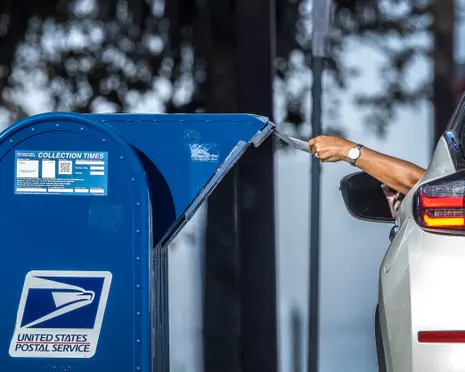
Table of Contents
US Postal Service Rule Tightens Mail-In Voting
Wanderstayfinder.com – The US Postal Service rule tightens the conditions under which states may ship mail-in and absentee ballots for federal races. Finalized on a Friday evening and posted online ahead of formal Federal Register publication the following week, the regulation would require state election offices to transmit voter-identification data — including names and ballot-linked barcodes — to the Department of Homeland Security before the postal carrier transports any ballot. Two federal court injunctions, one from California and one from Massachusetts, currently block the changes from taking effect. The agency nonetheless published the final text, signaling its intent to activate the requirements the moment those judicial barriers are lifted.
How the Verification Checkpoint Would Operate
Under the finalized framework, states must supply lists of registered voters and associated ballot identifiers to DHS and other designated agencies through a newly created digital system called the Federal Ballot Mail Portal. The USPS would then apply specific preparation standards to what it labels “Federal Ballot Mail” envelopes before any delivery occurs. If a state fails to meet those standards or to submit the required data, the postal service would decline to transport the affected ballots.
In practical effect, no ballot would move through the postal network unless the voter’s identity had been cross-referenced against a DHS-maintained eligibility list for that state. The mechanism inserts a federal verification checkpoint between the moment a voter mails a ballot and the moment it reaches a counting facility.
Court Injunctions and the Administration’s Parallel Legal Track
The final rule’s own text acknowledges that the two injunctions presently bar implementation. The agency stated plainly that it is prepared to execute the new restrictions the instant those orders are dissolved. The rule further specifies that the Portal and its associated verification process will become active at the time of publication of the system of records governing the Portal.
“If the government obtains timely relief from the 2026 injunctions, implementation immediately thereafter will provide election officials as much time as possible before the next election to comply with the rule’s preparation standards for Federal Ballot Mail envelopes, and to prepare to submit data to the Federal Ballot Mail Portal, before the mail-in and absentee ballots subject to this rule are mailed (which generally occurs in September or thereafter, as determined by state law).”
Despite the stays, the administration has continued pressing its legal strategy. The federal government has filed suit against thirty states plus the District of Columbia, alleging those jurisdictions have refused to hand over lists of eligible voters as an executive order demands. The final rule’s language treats the injunctions as temporary obstacles rather than permanent constraints.
The regulatory action traces directly to an executive order signed by President Donald Trump in March of this year. That order prohibits the USPS from delivering ballots to any voter who does not appear on a federal DHS-designated eligibility list. The implementing rule translates that prohibition into operational requirements: states must supply names and barcodes for every mail-in ballot in federal elections so the carrier can verify eligibility before transport. The political stakes are considerable — nearly one in three Americans cast a ballot by mail in the 2024 general election cycle, making postal delivery a central pillar of the voting process for tens of millions of citizens.
The proposed rule drew an extraordinary volume of public comment. The USPS reported receiving more than 200,000 responses during the open comment period, a figure that underscores how deeply the question of ballot transport touches ordinary voters across every state.
Frequently Asked Questions
When would the new mail-ballot restrictions take effect? They cannot take effect until the two federal court injunctions (California and Massachusetts) are dissolved or vacated. The USPS has stated it will implement the rule immediately upon obtaining timely judicial relief.
What must states do to comply? States must transmit registered-voter lists and ballot-linked barcodes to DHS through the Federal Ballot Mail Portal and meet specific envelope-preparation standards before the USPS will transport any mail-in or absentee ballot for a federal race.
Does this affect every ballot or only federal ones? The rule applies to mail-in and absentee ballots cast in federal elections. State-only elections are outside the scope of the finalized regulation.
How many states are currently in litigation with the federal government over voter-list requirements? The administration has sued thirty states plus the District of Columbia, alleging they have refused to provide the voter-eligibility lists the executive order demands.