First deportation flight lands in Haiti after TPS suspension

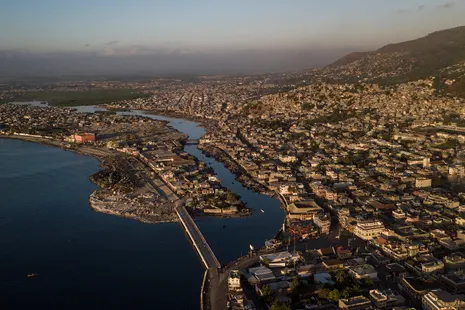
Table of Contents
Deportees Touch Down in Cap-Haïtien as Haiti’s Gang Crisis Meets Washington’s Immigration Crackdown
Wanderstayfinder.com – More than 160 Haitian nationals stepped off an Immigration and Customs Enforcement charter plane in Cap-Haïtien on Thursday, marking the first deportation flight to the Caribbean island since the US Supreme Court validated President Donald Trump’s authority to revoke Temporary Protected Status from roughly 350,000 Haitians residing in the United States. The choice of landing site was dictated not by preference but by peril: Port-au-Prince’s main international airport remains effectively unusable for US government purposes amid sustained gang violence, and Washington has maintained a ban on American commercial flights to the capital through at least early September.
The deportees arrived dressed in white, many with faces obscured as cameras rolled. Almost every passenger declined to speak with journalists present at the tarmac. Several indicated privately that they feared being identified and targeted by the armed groups that, by most estimates, control approximately 70 percent of Port-au-Prince and vast stretches of surrounding territory.
A Country Where Americans Are Told Not to Go
The irony of the operation is difficult to overlook. The US Department of State’s own travel advisory for Haiti sits at its maximum alert level. The State Department’s website instructs American citizens plainly:
“Do not travel to Haiti for any reason. US citizens are we at risk due to crime, terrorism, kidnapping, unrest, and limited health care.”
That same government, however, is now compelling hundreds of thousands of Haitians to return to precisely those conditions. The flight in question was the first of its kind since the Trump administration formally terminated TPS for Haitian nationals living and working in the US, and it followed explicit warnings delivered to Haitian authorities that removals would accelerate.
What Happened at the Airport
Cap-Haïtien, the nation’s second-largest city, sits roughly 150 kilometers north of the capital along a coastal highway that passes through multiple gang-controlled checkpoints. Jean Négot Bonheur Delva, director general of Haiti’s national office of migration, confirmed to the Miami Herald that the manifest included individuals born in Chile and the Dominican Republic who were nonetheless routed to Haiti because they held a Haitian parent. The deportees were reportedly handed the equivalent of US$76.40 upon arrival — a sum that falls short of even a basic bus fare from Cap-Haïtien to Port-au-Prince, though officials suggested it might cover passage through a handful of toll-like checkpoints along the way.
ICE is understood to have operated eight flights from the United States to Haiti during the current calendar year. Among them was a July 16 departure specifically carrying deportees with prior criminal records, a category that had previously been processed through separate channels.
The Legal Path That Got Here
TPS, enacted by Congress in 1990, was designed as a temporary shield for foreign nationals already in the US when a natural disaster, epidemic, armed conflict, or other extraordinary and short-lived crisis makes return to their home country unsafe. For Haitians, the designation was renewed repeatedly over decades as political instability, earthquakes, cholera outbreaks, and now gang warfare kept the country in a state of perpetual emergency.
The program’s termination for Haitians was sealed earlier this month when US District Judge Ana Reyes in Washington, DC lifted a court-ordered stay on deportations, acting on the strength of a Supreme Court ruling that backed the administration’s effort to wind down the program. The high court’s decision effectively forecloses most avenues for judicial redress, leaving affected individuals with little recourse short of executive clemency or legislative intervention.
The Trump administration has pursued a broader strategy of stripping TPS designations from nation after nation, and the Haitian case represents the largest single cohort affected by that campaign.
Voices from the Affected Community
Crish O’Mara Vignarajah, president and CEO of the immigrant-serving nonprofit Global Refuge, called the situation a “stunning contradiction,” arguing that an administration which advises its own citizens against all travel to Haiti while simultaneously compelling hundreds of thousands of Haitians into those same dire circumstances represents “an unconscionable abdication of our moral responsibility.”
Critics also point to the economic role that TPS holders play in the US labor market. Josiane Valsaint, a Haitian national who held TPS, wrote for the Guardian:
“We work hard, we pay our taxes, we give back to our communities and we are a big part of the engine that keeps the United States workforce in many essential industries moving. We deserve to stay here, with our families and loved ones.”
From the other side of the policy divide, Markwayne Mullin, secretary of the Department of Homeland Security, framed the choice in blunt terms earlier this month:
“These individuals can either self-deport or we’ll arrest you and send you back. It’s that simple.”
What Comes Next
With the judicial stay lifted and the Supreme Court ruling in place, immigration officials have signaled that removal operations will continue at an increased tempo. For the roughly 350,000 Haitians who held TPS, the practical question is no longer whether deportation will occur but when, and under what conditions. For those already on the ground in Haiti, the question is more immediate: how to navigate a landscape where armed groups dictate movement, where the currency of daily survival is cash paid at checkpoints, and where the country’s own government struggles to project authority beyond a handful of neighborhoods in the capital.
The flight that touched down in Cap-Haïtien on Thursday was, by the administration’s own accounting, a routine logistics operation. For the passengers aboard it, it was the beginning of a journey through a country their own government has told them not to enter.
Related Reading
Frequently Asked Questions
What is First deportation flight lands in Haiti?
First deportation flight lands in Haiti is the main topic of this guide. The article explains the context, practical details, and next steps readers should understand.
Why does First deportation flight lands in Haiti matter?
First deportation flight lands in Haiti matters because readers are looking for a useful answer, not just a short summary. Good content should match search intent and help them decide what to do next.