Drowned the day her visa came through: the tragedy of a Moroccan footballer trying to reach Ceuta

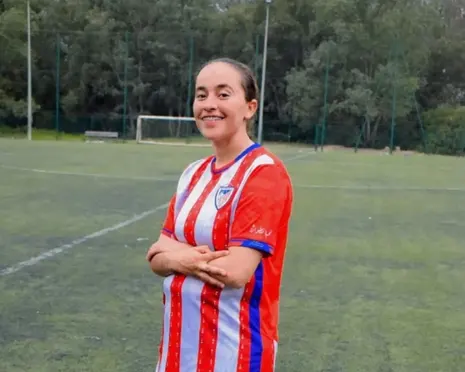
Table of Contents
A Tragic Irony: Moroccan Footballer Drowned Hours After Visa Approval
Wanderstayfinder.com – The cruel twist of fate that claimed Faten Ben Omar El Azizi’s life came on the very day her dreams of reaching Europe seemed within reach. The 26-year-old footballer from Tétouan, northern Morocco, drowned while attempting to swim to the Spanish exclave of Ceuta on July 30. Just hours before her death, her mother Jamilla received a phone call informing her that Faten’s Spanish visa had been approved.
What makes this tragedy even more poignant is that Faten had been applying for the visa informally, without expecting it to be granted. Her mother later learned of the approval only after receiving the call from an official who asked to speak to Faten directly. “No, I am her mother,” Jamilla replied. The official then explained that her daughter should travel to the consulate in Tangier with her identity card to collect the visa.
Football as a Path to a Better Life
Faten’s passion for football was evident from an early age. She spent years playing in Morocco’s regional league for Moghreb Atlético Tetuán, a team whose distinctive kit mirrors the colors of the famous Spanish club Atlético Madrid. Her coach remembers her dedication to training, which took place on Tuesdays on the pitch and Thursdays at the beach near Tétouan, where she lived with her mother and extended family.
Despite her love for the game, making a sustainable living through women’s football in Morocco proved impossible for Faten. Her team paid her approximately 260 dirham, or £21, when they won a match, and nothing when they lost. This meager income was insufficient to support her mother, two siblings, and other relatives after her father passed away when she was just 12 years old.
To supplement her earnings, Faten worked in Tétouan’s oldest cemetery, where she cleaned graves and sold bunches of rayhan, or basil, to mourners. In Muslim funeral traditions, this herb is associated with blessings, making her work both practical and symbolic. Her mother Jamilla recalls that her daughter constantly dreamed of reaching Europe through football, hoping to train and develop as a player in a more supportive environment.
The Mass Crossing to Ceuta
Ceuta, a Spanish territory located on Morocco’s northern coast, has long served as a gateway for Moroccans seeking opportunities in Europe. The city’s proximity to Tétouan makes it a natural destination for those attempting to cross by swimming or walking through the border. On the morning of July 30, Faten spontaneously decided to try her luck crossing to European territory, unaware that her visa was about to be approved.
Unfortunately, Faten was not alone in her attempt. She became one of at least 141 people who perished during last month’s extraordinary mass crossing to the Spanish territory, according to the migrant rights group Caminando Fronteras. The total death toll reached nearly 150 people, with most victims either drowning in the waters or being crushed at the land border. Believed to be predominantly under the age of 35, these young lives were lost in pursuit of a better future.
Economic Pressures and Youth Unrest
The tragedy of Faten and hundreds of others reflects broader economic challenges facing Morocco. Nearly 40% of young people aged 15 to 24 were unemployed last year, while those who do find work often earn low wages. Morocco’s gross minimum wage in the non-agricultural private sector stands at approximately £270 per month, barely enough to cover basic living expenses for many families.
Simo, a 20-year-old who recently returned to Morocco after the mass crossing into Ceuta, echoed Faten’s sentiments. “Like Faten, many of my friends and myself cannot find work in our country. It’s difficult to build a future here,” he said. These economic pressures have fueled social tensions, with the deaths coming less than a year after a wave of youth-led demonstrations swept across Morocco. The protests, the largest since the 2011 Arab Spring, criticized the underfunding of healthcare and education amid heavy spending on expensive stadiums as the country prepares to co-host the 2030 World Cup with Spain and Portugal.
“She dreamed of reaching Europe through football,” says her mother, Jamilla.
A Family’s Heartbreak
After Faten disappeared, her family searched through the night. A young man eventually came to their house and asked whether she had been wearing a tracksuit. He explained that she had struck her head during the crossing. Jamilla could not bring herself to enter the room where the bodies of those who died were being kept. “I did not want that image engraved in my memory,” she said. Instead, her sister went in to identify the body.
For Jamilla, the heartache continues. After learning that Faten had made the crossing, she found out that her other two children had gone as well. Her eldest son reached Ceuta and phoned her, but Jamilla is still awaiting news of her 14-year-old daughter, who remains missing. Faten is now buried in the cemetery where she once worked, a final resting place that connects her to the community she served and the dreams she carried until the end.
The 2030 World Cup has become a symbol of national ambition for Morocco, yet it has also sharpened the debate over public priorities. As the country invests heavily in infrastructure and stadiums, the stories of young Moroccans like Faten remind the world of the human cost of economic inequality and the desperate lengths people will go to in search of opportunity.
Related Reading
Frequently Asked Questions
What is Drowned the day her visa came?
Drowned the day her visa came is the main topic of this guide. The article explains the context, practical details, and next steps readers should understand.
Why does Drowned the day her visa came matter?
Drowned the day her visa came matters because readers are looking for a useful answer, not just a short summary. Good content should match search intent and help them decide what to do next.